THE ADVENTURE COLLECTIVE® · Independent discovery and booking for outdoor travel

Swap a single hotel room for a sampler of Koh Samui: golden shrines, a famed mummified monk, a waterfall plunge and panoramic coastline views in one efficient half‑day loop. This guided tour is a compact, practical introduction to the island’s culture and landscapes.
Swap a single hotel room for a sampler of Koh Samui: golden shrines, a famed mummified monk, a waterfall plunge and panoramic coastline views in one efficient half‑day loop. This guided tour is a compact, practical introduction to the island’s culture and landscapes.
The minivan eases out of a narrow lane and the island opens like a map rendered in palms and sea: blue flats to the east, jagged inland ridges brushed with rubber trees to the west. On a six‑hour circular route, visitors trade a single hotel room for the island’s public rooms — shrines, viewpoints and a waterfall where the water seems to test your balance as much as your camera skills.
Verified experiences and guided adventures in the surrounding area.
Operated by Travstore Travel Management Co., Ltd · Koh Samui, Surat Thani
The minivan eases out of a narrow lane and the island opens like a map rendered in palms and sea: blue flats to the east, jagged inland ridges brushed with rubber trees to the west. On a six‑hour circular route, visitors trade a single hotel room for the island’s public rooms — shrines, viewpoints and a waterfall where the water seems to test your balance as much as your camera skills.
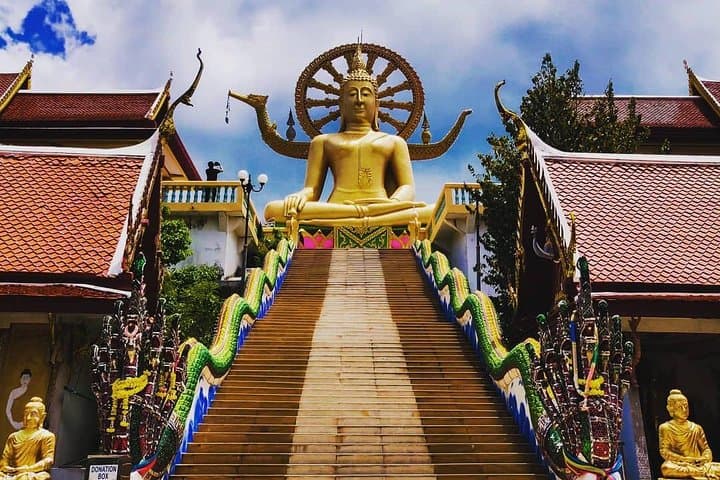
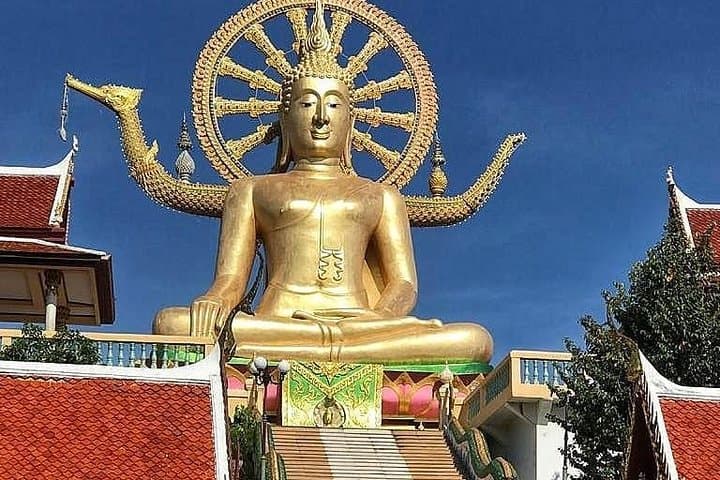
The tour stitches together Koh Samui’s most recognizable stops with local texture. First is the Big Buddha: a gilded figure seated on a hill above Bang Rak, its gaze sweeping the Channel and calling pilgrims and photographers alike. Wat Khunaram follows, quieter and more intimate; the shrouded remains of Luang Pho Daeng, known as the “mummy monk,” sit preserved in a glass case, a reminder of regional Buddhist devotion and the intersection of faith and mortality.
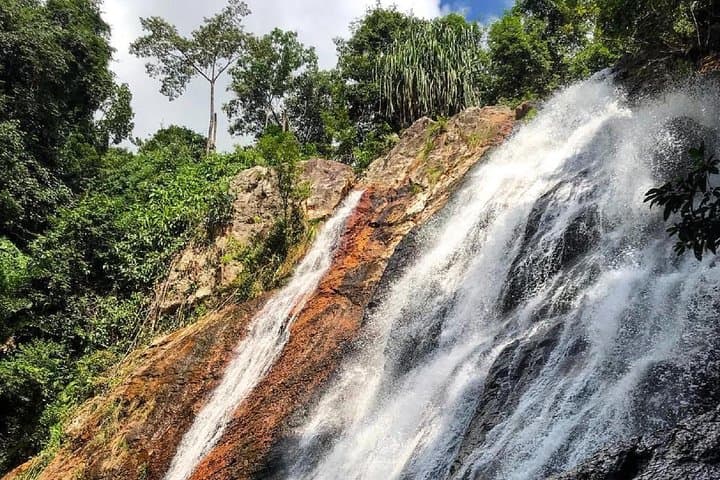
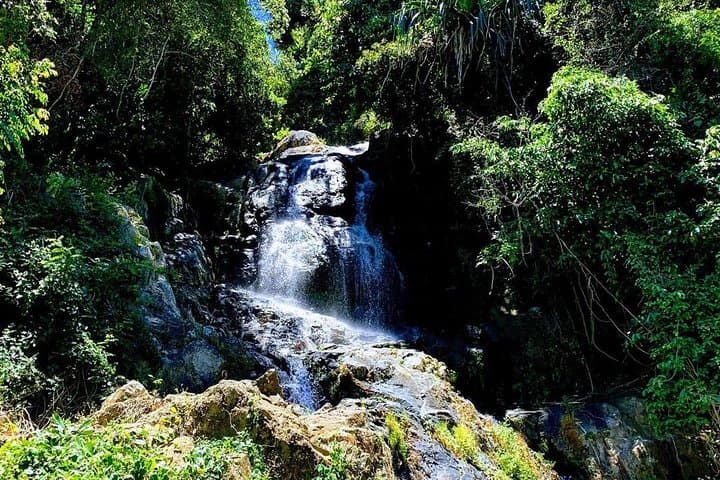
Inland, the island’s geology is humble but honest — granite outcrops and shallow streambeds shaped by intermittent rain. Na Muang’s so-called Virgin Waterfall tumbles over pinkish rock steps, forming pools that invite a brief, cooling stop. The Chaweng Viewpoint finishes the loop, offering a low, panoramic sweep over the island’s longest beach and the crescent of development that frames it.
Koh Samui’s modern identity grew from fishing villages and coconut plantations; many of the temples you visit rose from community patronage in the 20th century and now serve both worship and tourism. The island still trades on small, distinct neighborhoods — Hua Thanon’s old‑style fishing houses feel a world away from Chaweng’s bars — and the guide’s English narration fills in names, stories and small practicalities.
Practically: this is a shared, guided loop with round‑trip transfer and hotel pickup about 30–60 minutes before departure. Expect multiple short walks, stair climbs at temples and uneven paths at the waterfall; wear sturdy sandals or light hikers. Bring sun protection and a small towel for the waterfall; a modest dress code applies at temples (shoulders and knees covered). The tour requires a minimum of two guests to run, so confirm pickup details at least 48 hours before your date.
Timing matters. Morning tours avoid midday heat and give softer light on the statue; afternoon departures catch Chaweng from a different angle and cooler breezes inland. A competent English guide is included; entrance fees to listed sites are typically handled by the operator. For travelers who want a compact primer on Samui — culture, coastline and a few well‑kept local secrets — the half‑day city tour is efficient, tactile and refreshingly human in scale.
moderate.
6 hours.
Moderately active — comfortable walking 2–4 km total with some stair climbs and short uneven trails.
Yes — shared round‑trip transfer is included; pickups start approximately 30–60 minutes before the tour time and must be confirmed 48 hours in advance.
A single traveler can book, but the tour requires a minimum of two people and may be cancelled if the minimum isn’t met.
The tour includes guide service, insurance and shared transfers; some site entrance fees are included as listed, but meals are not provided unless specified by the operator.
People of varied ages can join, but the tour involves walking and stairs; travelers with serious cardiovascular conditions are advised not to take the tour.
Most stops involve short walks of 10–30 minutes on paved or well‑trodden paths, plus short uneven sections at the waterfall.
Cover shoulders and knees; a lightweight sarong or scarf is a convenient and respectful option.
Koh Samui developed from fishing and coconut plantations; many island temples were community projects that later became focal points for visitors.
Tour operators encourage reduced plastic use and respectful behavior at sacred sites; stick to marked paths at waterfalls to prevent erosion and protect local vegetation.
Travstore Travel Management Co., Ltd operates guided outdoor trips and adventures with an emphasis on safety, stewardship, and memorable experiences.
The minivan eases out of a narrow lane and the island opens like a map rendered in palms and sea: blue flats to the east, jagged inland ridges brushed with rubber trees to the west. On a six‑hour circular route, visitors trade a single hotel room for the island’s public rooms — shrines, viewpoints and a waterfall where the water seems to test your balance as much as your camera skills.
The minivan eases out of a narrow lane and the island opens like a map rendered in palms and sea: blue flats to the east, jagged inland ridges brushed with rubber trees to the west. On a six‑hour circular route, visitors trade a single hotel room for the island’s public rooms — shrines, viewpoints and a waterfall where the water seems to test your balance as much as your camera skills.
The tour stitches together Koh Samui’s most recognizable stops with local texture. First is the Big Buddha: a gilded figure seated on a hill above Bang Rak, its gaze sweeping the Channel and calling pilgrims and photographers alike. Wat Khunaram follows, quieter and more intimate; the shrouded remains of Luang Pho Daeng, known as the “mummy monk,” sit preserved in a glass case, a reminder of regional Buddhist devotion and the intersection of faith and mortality.
Inland, the island’s geology is humble but honest — granite outcrops and shallow streambeds shaped by intermittent rain. Na Muang’s so-called Virgin Waterfall tumbles over pinkish rock steps, forming pools that invite a brief, cooling stop. The Chaweng Viewpoint finishes the loop, offering a low, panoramic sweep over the island’s longest beach and the crescent of development that frames it.
Koh Samui’s modern identity grew from fishing villages and coconut plantations; many of the temples you visit rose from community patronage in the 20th century and now serve both worship and tourism. The island still trades on small, distinct neighborhoods — Hua Thanon’s old‑style fishing houses feel a world away from Chaweng’s bars — and the guide’s English narration fills in names, stories and small practicalities.
Practically: this is a shared, guided loop with round‑trip transfer and hotel pickup about 30–60 minutes before departure. Expect multiple short walks, stair climbs at temples and uneven paths at the waterfall; wear sturdy sandals or light hikers. Bring sun protection and a small towel for the waterfall; a modest dress code applies at temples (shoulders and knees covered). The tour requires a minimum of two guests to run, so confirm pickup details at least 48 hours before your date.
Timing matters. Morning tours avoid midday heat and give softer light on the statue; afternoon departures catch Chaweng from a different angle and cooler breezes inland. A competent English guide is included; entrance fees to listed sites are typically handled by the operator. For travelers who want a compact primer on Samui — culture, coastline and a few well‑kept local secrets — the half‑day city tour is efficient, tactile and refreshingly human in scale.