THE ADVENTURE COLLECTIVE® · Independent discovery and booking for outdoor travel

Under an hour from Tirana, this half-day private hike leads to Pellumbas’s prehistoric Black Cave and the Erzen River’s narrow canyons—combining karst geology, ancient sites, and a chance to swim in crystal pools. Practical, short, and rich in local history.
Under an hour from Tirana, this half-day private hike leads to Pellumbas’s prehistoric Black Cave and the Erzen River’s narrow canyons—combining karst geology, ancient sites, and a chance to swim in crystal pools. Practical, short, and rich in local history.
You leave Tirana with the city receding behind you—apartment blocks and traffic noise trading places for pine-scented air and a ribbon of asphalt that climbs toward limestone ridges. In under an hour the van drops you at Pellumbas’s rutted lane and you set off: a 40-minute forest walk that threads through beech and oak, the trail alternating between soft soil and exposed limestone that glints like old bone.
Verified experiences and guided adventures in the surrounding area.
Operated by HeyAlbania · Pellumbas, Tirana County
You leave Tirana with the city receding behind you—apartment blocks and traffic noise trading places for pine-scented air and a ribbon of asphalt that climbs toward limestone ridges. In under an hour the van drops you at Pellumbas’s rutted lane and you set off: a 40-minute forest walk that threads through beech and oak, the trail alternating between soft soil and exposed limestone that glints like old bone.
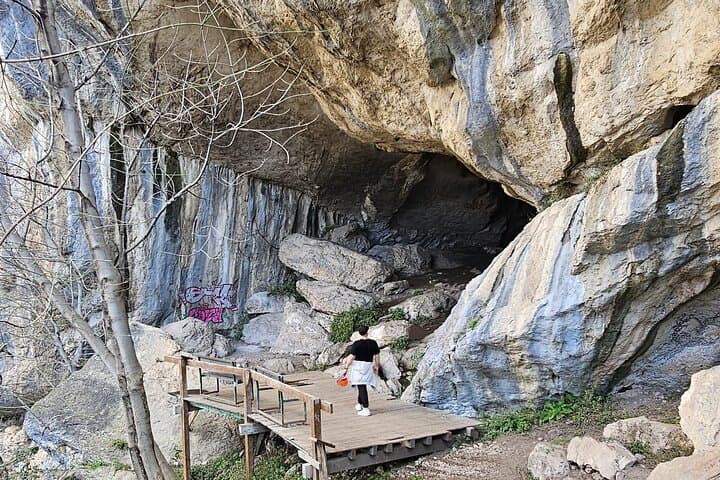
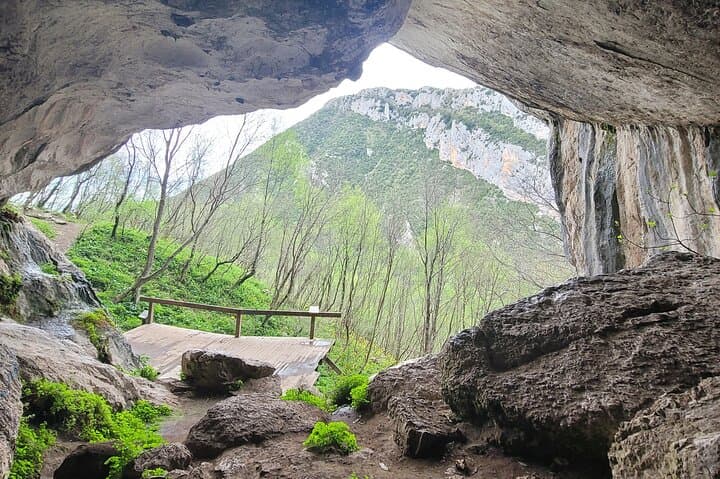
The Black Cave at Pellumbas is the trip’s anchor. It sits at the lip of a karst plateau carved over millennia, its mouth yawning into cool shadow. Guides fit you with helmets and lamps—safety is built in—and lead through chambers where prehistoric people once sought shelter. Archaeologists have found stone tools and charcoal layers here, clues to human activity in the late Paleolithic and Neolithic eras. The rock itself tells another story: calcite flows, scalloped walls, and narrow passages that widen into vaulted rooms where drops of condensation keep time.
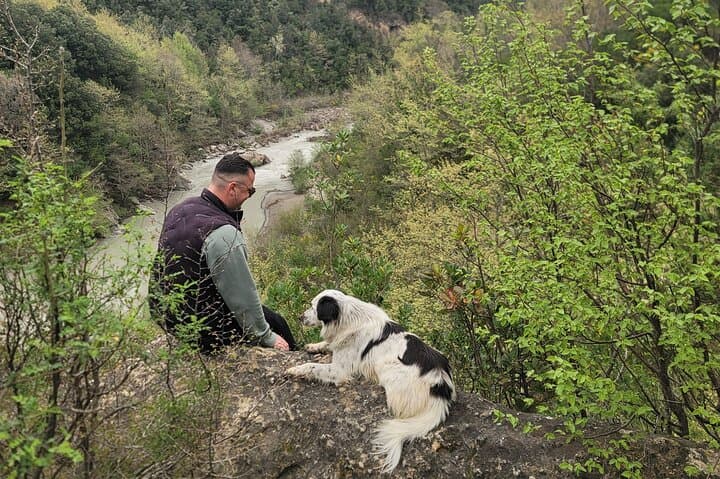
Exiting the cave, the landscape shifts. The Erzen River has cut a tight canyon through the same limestone, and the trail drops to small pools of crystalline water. In summer the current dares you to wade; in shoulder seasons the pools reflect cliff faces and the occasional kingfisher darting like a bright punctuation mark. Local villagers still maintain stone huts and terraced plots in the valley—simple markers of a rural life that has changed little despite Tirana’s expansion.
Practical edge: this is a half-day, moderately paced outing—expect 5–6 hours door-to-door. Trails are well defined but uneven, with short steep sections and loose rock. The provider supplies bottled water, a sandwich, helmets, and lights; bring your own layered clothing, sturdy shoes, and a small pack for extra layers and a towel if you plan to swim.
Timing matters. Morning hikes cut through cool air and give clearer light in the cave; afternoons warm the river and make dips more inviting. Respect the karst: avoid touching fragile formations and keep sunscreens and soaps away from the water. If you’re curious about archaeology or geology, ask your guide—local knowledge brings the cave’s human and geological history into sharp, tangible focus.
Whether you come for the prehistoric chambers, the narrow canyon, or a brisk dip in the Erzen, this outing distills central Albania into a concentrated half-day—accessible from Tirana but stubbornly wild enough to feel like a genuine escape.
moderate.
5–6 hours.
Suitable for travelers with moderate fitness: comfortable with 40–60 minutes of uphill walking and short uneven terrain.
The walk from the meeting point in Pellumbas village to the cave entrance is about 40 minutes on a well-marked trail with some short uphill sections.
Yes—guides provide safety helmets and lighting for exploring the cave’s interior.
Yes, there are calm pools suitable for swimming in warm months; always check guide recommendations about current and depth before entering.
The tour is aimed at light to moderate adventurers; children and seniors with reasonable mobility can join but should be able to handle uneven ground and some climbs.
Pickup is offered from Tirana hotels; the drive to Pellumbas village is roughly 40–50 minutes depending on traffic and route.
Don’t touch delicate stalactites or stalagmites, avoid wasting water, and do not use soaps or sunscreens in river pools to protect the aquatic ecosystem.
Pellumbas Cave contains archaeological layers with stone tools and hearths showing human use in late Paleolithic and Neolithic periods, making it one of Albania’s significant prehistoric sites.
The canyon and river are sensitive karst and freshwater habitats—practice leave-no-trace, avoid contaminating water, and follow guide instructions to limit erosion and disturbance.
HeyAlbania operates guided outdoor trips and adventures with an emphasis on safety, stewardship, and memorable experiences.
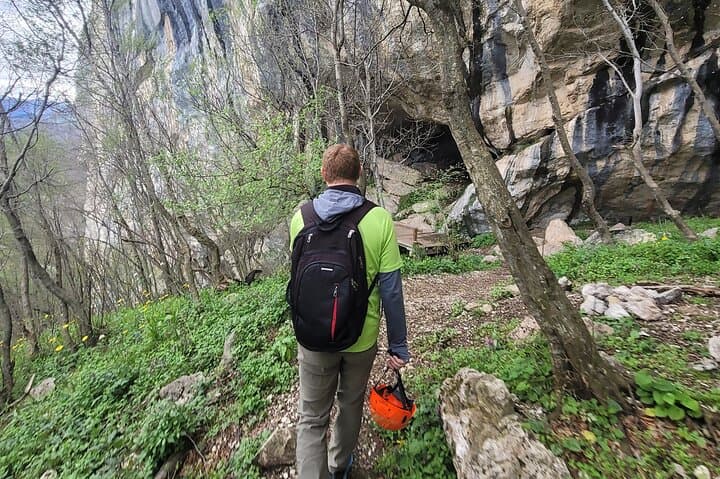
You leave Tirana with the city receding behind you—apartment blocks and traffic noise trading places for pine-scented air and a ribbon of asphalt that climbs toward limestone ridges. In under an hour the van drops you at Pellumbas’s rutted lane and you set off: a 40-minute forest walk that threads through beech and oak, the trail alternating between soft soil and exposed limestone that glints like old bone.
You leave Tirana with the city receding behind you—apartment blocks and traffic noise trading places for pine-scented air and a ribbon of asphalt that climbs toward limestone ridges. In under an hour the van drops you at Pellumbas’s rutted lane and you set off: a 40-minute forest walk that threads through beech and oak, the trail alternating between soft soil and exposed limestone that glints like old bone.
The Black Cave at Pellumbas is the trip’s anchor. It sits at the lip of a karst plateau carved over millennia, its mouth yawning into cool shadow. Guides fit you with helmets and lamps—safety is built in—and lead through chambers where prehistoric people once sought shelter. Archaeologists have found stone tools and charcoal layers here, clues to human activity in the late Paleolithic and Neolithic eras. The rock itself tells another story: calcite flows, scalloped walls, and narrow passages that widen into vaulted rooms where drops of condensation keep time.
Exiting the cave, the landscape shifts. The Erzen River has cut a tight canyon through the same limestone, and the trail drops to small pools of crystalline water. In summer the current dares you to wade; in shoulder seasons the pools reflect cliff faces and the occasional kingfisher darting like a bright punctuation mark. Local villagers still maintain stone huts and terraced plots in the valley—simple markers of a rural life that has changed little despite Tirana’s expansion.
Practical edge: this is a half-day, moderately paced outing—expect 5–6 hours door-to-door. Trails are well defined but uneven, with short steep sections and loose rock. The provider supplies bottled water, a sandwich, helmets, and lights; bring your own layered clothing, sturdy shoes, and a small pack for extra layers and a towel if you plan to swim.
Timing matters. Morning hikes cut through cool air and give clearer light in the cave; afternoons warm the river and make dips more inviting. Respect the karst: avoid touching fragile formations and keep sunscreens and soaps away from the water. If you’re curious about archaeology or geology, ask your guide—local knowledge brings the cave’s human and geological history into sharp, tangible focus.
Whether you come for the prehistoric chambers, the narrow canyon, or a brisk dip in the Erzen, this outing distills central Albania into a concentrated half-day—accessible from Tirana but stubbornly wild enough to feel like a genuine escape.