THE ADVENTURE COLLECTIVE® · Independent discovery and booking for outdoor travel

Experience the carved red corridors of Antelope Canyon and the sweeping Colorado River loop at Horseshoe Bend on a focused half-day tour from Page, Arizona. Expect narrow sandstone slots, short hikes, guided access on Navajo land, and powerful photo opportunities.
Experience the carved red corridors of Antelope Canyon and the sweeping Colorado River loop at Horseshoe Bend on a focused half-day tour from Page, Arizona. Expect narrow sandstone slots, short hikes, guided access on Navajo land, and powerful photo opportunities.
You arrive as the canyon inhales and exhales—light punching through narrow slots, sandstone walls warming from deep rust to honey, and the Colorado River daring you from far below at Horseshoe Bend.
Verified experiences and guided adventures in the surrounding area.
You arrive as the canyon inhales and exhales—light punching through narrow slots, sandstone walls warming from deep rust to honey, and the Colorado River daring you from far below at Horseshoe Bend.
These landscapes are products of time and force: Navajo Sandstone laid down as ancient dunes in the Jurassic, later fractured and sculpted by wind, water and the steady abrasion of the Colorado River. The slot canyons here run through Navajo Nation land and carry cultural and spiritual significance; local guides interpret both geology and living traditions during guided visits.
Upper Antelope is famous for sunbeams in mid-summer; Lower Antelope is narrower with ladders and tighter turns; Canyon X sits slightly off the main route with dramatic, less-crowded angles. Horseshoe Bend is a short but exposed trail to a wide overlook where the river loops below—an iconic geological amphitheater.
Practical guidance: expect about a four-hour outing overall, with 20–60 minutes inside a slot canyon and a 1.5-mile round-trip walk to the Horseshoe Bend overlook (roughly 150 ft of modest elevation change on sandy, uneven footing). Wear closed shoes with traction, bring 1–2 liters of water, and time your visit early morning or late afternoon to avoid the midday heat and peak crowds; mid-day is best for Upper Antelope light beams. Flash floods can close canyons—check weather and go with a licensed Navajo guide who manages permits. Pack sun protection, a compact tripod if you photograph, and move deliberately in narrow sections. With awareness and respect, this half-day run through Arizona’s sculpted rock offers sharp visuals and approachable adventure.
moderate.
4 hours.
Moderate fitness: ability to walk on uneven, sandy surfaces, climb short ladders/stairs and stand for periods.
Access to Antelope Canyon is on Navajo Nation land and requires a guided tour; guides handle permits and navigation of the slots.
The trail from the parking area to the Horseshoe Bend overlook is about 1.5 miles round-trip with roughly 150 feet of modest elevation change on sandy terrain.
Light beams in Upper Antelope are most visible in summer around late morning to early afternoon (roughly 11:00–1:30), though timing varies with season and weather.
Lower Antelope has ladders and narrow sections that can be challenging; horseshoe overlook is more accessible but involves uneven sand—check with your tour operator about accessibility options.
These canyons lie on Navajo Nation land; the area’s carved sandstone records Jurassic dune fields and centuries of Indigenous ties and stewardship.
Follow Leave No Trace principles, stay on established trails, and respect Navajo guides and rules—limited-tour access helps protect fragile canyon interiors.
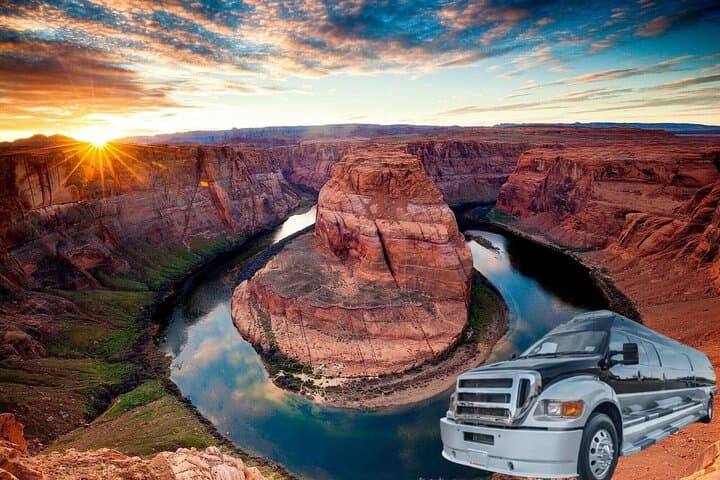
You arrive as the canyon inhales and exhales—light punching through narrow slots, sandstone walls warming from deep rust to honey, and the Colorado River daring you from far below at Horseshoe Bend.
You arrive as the canyon inhales and exhales—light punching through narrow slots, sandstone walls warming from deep rust to honey, and the Colorado River daring you from far below at Horseshoe Bend.
These landscapes are products of time and force: Navajo Sandstone laid down as ancient dunes in the Jurassic, later fractured and sculpted by wind, water and the steady abrasion of the Colorado River. The slot canyons here run through Navajo Nation land and carry cultural and spiritual significance; local guides interpret both geology and living traditions during guided visits.
Upper Antelope is famous for sunbeams in mid-summer; Lower Antelope is narrower with ladders and tighter turns; Canyon X sits slightly off the main route with dramatic, less-crowded angles. Horseshoe Bend is a short but exposed trail to a wide overlook where the river loops below—an iconic geological amphitheater.
Practical guidance: expect about a four-hour outing overall, with 20–60 minutes inside a slot canyon and a 1.5-mile round-trip walk to the Horseshoe Bend overlook (roughly 150 ft of modest elevation change on sandy, uneven footing). Wear closed shoes with traction, bring 1–2 liters of water, and time your visit early morning or late afternoon to avoid the midday heat and peak crowds; mid-day is best for Upper Antelope light beams. Flash floods can close canyons—check weather and go with a licensed Navajo guide who manages permits. Pack sun protection, a compact tripod if you photograph, and move deliberately in narrow sections. With awareness and respect, this half-day run through Arizona’s sculpted rock offers sharp visuals and approachable adventure.