THE ADVENTURE COLLECTIVE® · Independent discovery and booking for outdoor travel

Ride the ropeway over steaming fissures, taste the famed black eggs cooked by volcanic heat, then relax on a pirate-ship cruise across Lake Ashi. This six-hour van tour compresses Hakone’s elemental geology and lakeside calm into one accessible day trip.
Ride the ropeway over steaming fissures, taste the famed black eggs cooked by volcanic heat, then relax on a pirate-ship cruise across Lake Ashi. This six-hour van tour compresses Hakone’s elemental geology and lakeside calm into one accessible day trip.
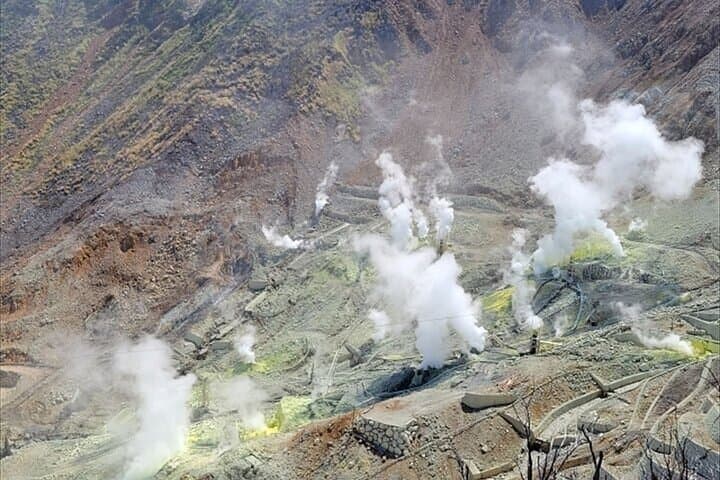
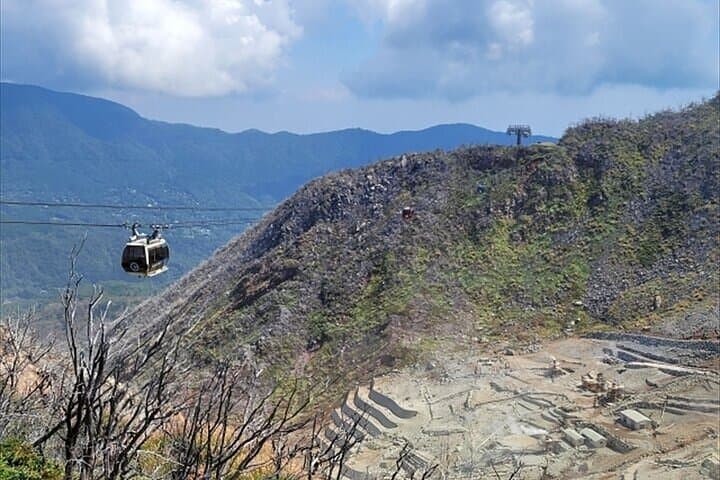
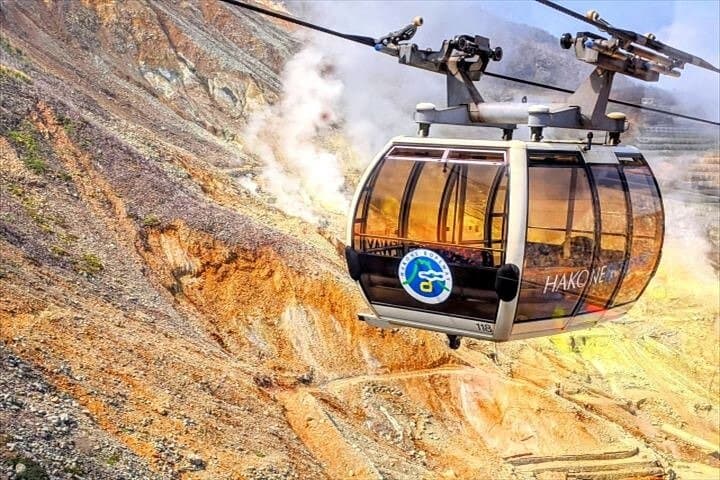
You step off the van into a high wind that smells faintly of eggs and iron; steam threads up from the valley like a rope of breath. Below, the gondolas of the Hakone Ropeway glide over pocked terrain where fumaroles exhale white and yellow and the earth itself seems to be cooking. Around you, tourists cluster at railings, cameras angled toward skittering vents and the new glass Ibuki Deck that juts out over the maw of Owakudani.
Verified experiences and guided adventures in the surrounding area.
Operated by Shizuoka TaaS Travel · Hakone, Kanagawa
You step off the van into a high wind that smells faintly of eggs and iron; steam threads up from the valley like a rope of breath. Below, the gondolas of the Hakone Ropeway glide over pocked terrain where fumaroles exhale white and yellow and the earth itself seems to be cooking. Around you, tourists cluster at railings, cameras angled toward skittering vents and the new glass Ibuki Deck that juts out over the maw of Owakudani.
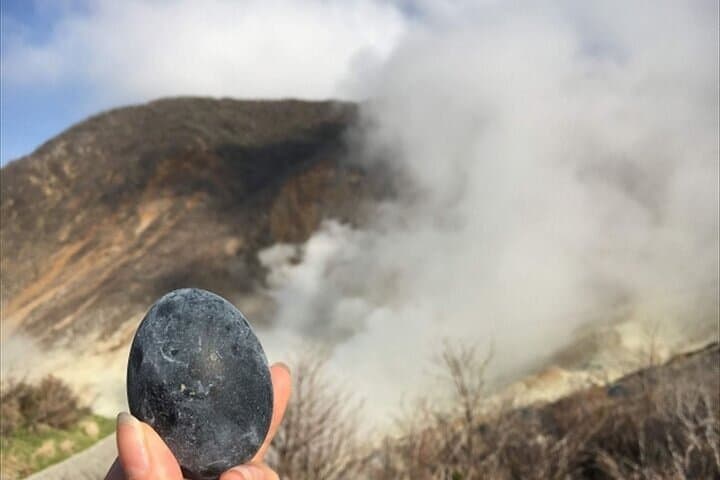
This is a place the 19th-century Japanese named Jigokudani — "Hell Valley" — a blunt geological description that still fits. Owakudani formed when Mount Hakone’s caldera collapsed some 3,000 years ago; later eruptions and ongoing geothermal heat made the valley an energetic knot of sulfur and steam. Locals turned that raw power into a culinary curiosity: eggs boiled in hot springs come out with blackened shells from the mineral-rich water. One is a short, sensory ritual — brittle shell, warm yolk, a pungent aftertaste — and a souvenir story to take home.
The tour folds these elements together with an ease that suits first-time visitors. You ride the ropeway for a vertiginous overview, walk short boardwalks that give safe proximity to vents, then descend toward Lake Ashi where the scene softens into alpine water and cedar forest. The pirate-ship cruise on Lake Ashi is theatrical but practical: it reorients you, presenting views of the volcanic ridge and, on clear days, a framing of Mount Fuji across the water.
Culturally, Hakone is equal parts onsen town and modern sightseeing hub. The area supported Edo-period travelers moving along the Tokaido; today’s visitors follow a similar route of transit and refreshment — ropeway, steam, lake, and a soak later in the day.
Practical guidance: bring layers (wind and sulfur can make it chilly even in summer), a light face covering if you’re sensitive to fumes, and cash for the black eggs and small museum admissions. The terrain at Owakudani is short and mostly boardwalk, suitable for most fitness levels, but footwear with good traction helps after rain. Allow roughly six hours for the full van tour, ropeway, short walks, and the Lake Ashi cruise. Expect the ropeway or parts of Owakudani to close during high volcanic alert levels; always check local advisories before you go.
This van tour packages dramatic geology and lake-side calm into a single day — a compact introduction to Hakone’s raw forces and refined pleasures. Time your visit for clearer air if you want Fuji framed behind the ropeway, and leave space in your itinerary for a quiet onsen afterward: the earth will still be working when you return.
easy.
6 hours.
Suitable for most fitness levels; includes short boardwalk walks and light standing; minimal uphill walking.
The advertised duration is about six hours, including ropeway rides, time at Owakudani, and the Lake Ashi cruise.
Yes — the eggs are cooked in geothermal water and are a local specialty; if you have shellfish or mineral sensitivities consult a guide or skip them.
Yes — the ropeway and access to Owakudani can close temporarily during high volcanic alert levels or severe weather; check local advisories the morning of your trip.
Much of the route uses paved paths and boardwalks; some viewpoints and transfers may be uneven — contact the operator for detailed accessibility arrangements.
Mount Fuji is visible from Lake Ashi and some ropeway viewpoints on clear days; visibility depends on weather and season.
The tour includes English-speaking guides, though they may not be certified interpreters; check with the operator about language needs in advance.
Hakone long served as a checkpoint and rest stop on the old Tokaido route between Edo and Kyoto; the area’s volcanic features shaped travel, settlement, and onsen culture.
Owakudani’s fragile geothermal terrain is protected — stick to boardwalks, avoid touching vents, and follow signage to minimize erosion and exposure to hazardous gases.
Shizuoka TaaS Travel operates guided outdoor trips and adventures with an emphasis on safety, stewardship, and memorable experiences.
You step off the van into a high wind that smells faintly of eggs and iron; steam threads up from the valley like a rope of breath. Below, the gondolas of the Hakone Ropeway glide over pocked terrain where fumaroles exhale white and yellow and the earth itself seems to be cooking. Around you, tourists cluster at railings, cameras angled toward skittering vents and the new glass Ibuki Deck that juts out over the maw of Owakudani.
You step off the van into a high wind that smells faintly of eggs and iron; steam threads up from the valley like a rope of breath. Below, the gondolas of the Hakone Ropeway glide over pocked terrain where fumaroles exhale white and yellow and the earth itself seems to be cooking. Around you, tourists cluster at railings, cameras angled toward skittering vents and the new glass Ibuki Deck that juts out over the maw of Owakudani.
This is a place the 19th-century Japanese named Jigokudani — "Hell Valley" — a blunt geological description that still fits. Owakudani formed when Mount Hakone’s caldera collapsed some 3,000 years ago; later eruptions and ongoing geothermal heat made the valley an energetic knot of sulfur and steam. Locals turned that raw power into a culinary curiosity: eggs boiled in hot springs come out with blackened shells from the mineral-rich water. One is a short, sensory ritual — brittle shell, warm yolk, a pungent aftertaste — and a souvenir story to take home.
The tour folds these elements together with an ease that suits first-time visitors. You ride the ropeway for a vertiginous overview, walk short boardwalks that give safe proximity to vents, then descend toward Lake Ashi where the scene softens into alpine water and cedar forest. The pirate-ship cruise on Lake Ashi is theatrical but practical: it reorients you, presenting views of the volcanic ridge and, on clear days, a framing of Mount Fuji across the water.
Culturally, Hakone is equal parts onsen town and modern sightseeing hub. The area supported Edo-period travelers moving along the Tokaido; today’s visitors follow a similar route of transit and refreshment — ropeway, steam, lake, and a soak later in the day.
Practical guidance: bring layers (wind and sulfur can make it chilly even in summer), a light face covering if you’re sensitive to fumes, and cash for the black eggs and small museum admissions. The terrain at Owakudani is short and mostly boardwalk, suitable for most fitness levels, but footwear with good traction helps after rain. Allow roughly six hours for the full van tour, ropeway, short walks, and the Lake Ashi cruise. Expect the ropeway or parts of Owakudani to close during high volcanic alert levels; always check local advisories before you go.
This van tour packages dramatic geology and lake-side calm into a single day — a compact introduction to Hakone’s raw forces and refined pleasures. Time your visit for clearer air if you want Fuji framed behind the ropeway, and leave space in your itinerary for a quiet onsen afterward: the earth will still be working when you return.