THE ADVENTURE COLLECTIVE® · Independent discovery and booking for outdoor travel

In seven hours you’ll trade Tokyo’s pulse for steaming vents, a torii rising from glassy water, and a private loop through volcanic valleys, lakeside shrines and restorative onsen. This custom day tour pairs geology and culture with practical local knowledge to make the most of a short visit.
In seven hours you’ll trade Tokyo’s pulse for steaming vents, a torii rising from glassy water, and a private loop through volcanic valleys, lakeside shrines and restorative onsen. This custom day tour pairs geology and culture with practical local knowledge to make the most of a short visit.
You step off the Shinkansen and the air changes — cooler, a little sweet with wood smoke, and carrying a faint sulfur tang from a mountain that still remembers its heat. In seven hours this private tour will stretch that first impression into a compact, cinematic day: a cedar-lined approach to a vermilion torii rising from a black-water lake, a pirate ship cutting an ink-still surface, steam vents hissing like a restless animal below a rim of volcanic rock.
Verified experiences and guided adventures in the surrounding area.
Operated by 高橋りえ子 · Hakone, Kanagawa
You step off the Shinkansen and the air changes — cooler, a little sweet with wood smoke, and carrying a faint sulfur tang from a mountain that still remembers its heat. In seven hours this private tour will stretch that first impression into a compact, cinematic day: a cedar-lined approach to a vermilion torii rising from a black-water lake, a pirate ship cutting an ink-still surface, steam vents hissing like a restless animal below a rim of volcanic rock.
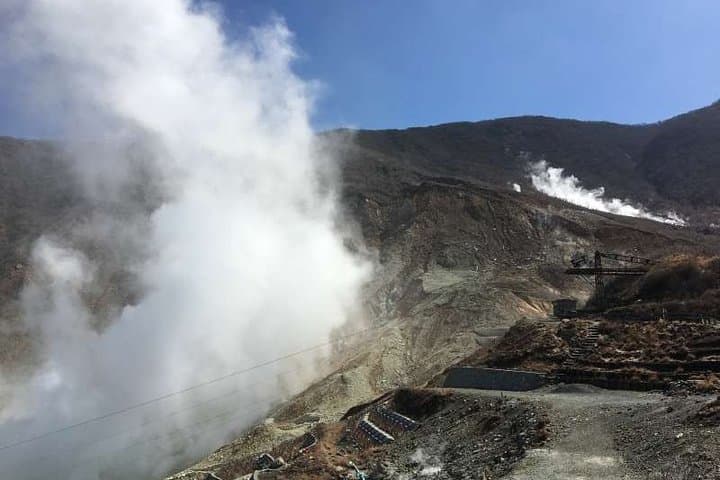
Hakone’s landscape reads like a geography lesson and a shrine calendar at once. The valley you drive through is the rim of an ancient caldera; Owakudani is the living throat of that system — cracked ground, sulfur plumes, and the small, smoky rituals of local vendors selling kuro-tamago (black eggs boiled in mineral springs) that have earned a folk reputation for adding seven years to your life. Below, Lake Ashi formed where the caldera collected rain and snowmelt; its long western shore is where mountain worship and pilgrimage converged in the Edo period, guarded by the reconstructed Hakone Checkpoint that once controlled traffic along the Tokaido road.
Culture here is practical and ceremonial: shrine gateways frame views rather than block them, and public baths shape the day. The Hakone Open-Air Museum adds a modernist beat — sculptures splayed across lawns, a Picasso wing that feels intentionally out of scale with the rough-hewn mountains.
This private one-day tour is built to be flexible. The operator recommends Lake Ashi and Owakudani as anchor stops and gives you one or two customizable choices — the museum, Hakone Shrine, an onsen soak, or the reconstructed checkpoint. Your guide meets you at Odawara or at a requested Tokyo pickup (note: if you ask for pickup from central Tokyo, you cover the guide’s Shinkansen fare).
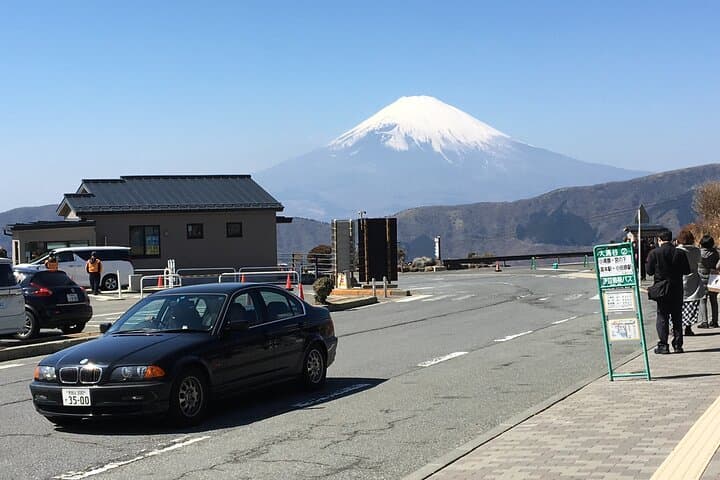
Practicalities matter. Leave Tokyo early for clearer views of Fuji; haze builds by midday. Wear comfortable walking shoes and quick layers — mountain weather shifts fast. Onsen visits require basic etiquette: wash before entering, no swimsuits in most baths, and tattoos can be restricted. The pirate-ship crossing of Lake Ashi is short but exposed; bring a wind layer.
Timing and tickets: the private format compresses travel time but still runs ~7 hours; allow extra time if you plan a long onsen soak or museum visit (the Open-Air Museum often charges separate admission). Photography rewards patience: wait for low angles of light at the lakeshore and the torii when the wind drops. Above all, treat Hakone’s steam and stones with respect — volcanic landscapes are alive and, for a day, they set the pace.
easy.
7 hours.
Suitable for most fitness levels; expect moderate walking on uneven ground and short stair sections at shrines and viewpoints.
Your guide meets you at the Shinkansen exit at Odawara Station by default; pickups in Tokyo or Yokohama can be arranged if you cover the guide’s Shinkansen fare.
Admissions such as the Hakone Open-Air Museum entry or certain onsen fees are typically not included and may require separate payment.
Yes when conditions are clear—early starts increase the chance; clouds and haze in summer or after noon can obscure views.
Yes—the itinerary notes the experience is suitable for all fitness levels, though there are short walks, steps at shrines, and uneven volcanic terrain to consider.
Yes; the tour is private and customizable — choose one or two destinations in addition to Lake Ashi and Owakudani, like the Open-Air Museum or an onsen.
The guide will adapt the itinerary; on high-alert days Owakudani can close and you’ll be offered alternate viewpoints, longer time at other sites, or an extended museum/onsen visit.
Hakone was a vital checkpoint on the Edo-period Tokaido route; the reconstructed Hakone Checkpoint preserves the area’s role in controlling travel and trade.
Hakone’s volcanic terrain is sensitive—stay on marked paths, dispose of waste properly, and respect onsen rules to minimize human impact.
高橋りえ子 operates guided outdoor trips and adventures with an emphasis on safety, stewardship, and memorable experiences.
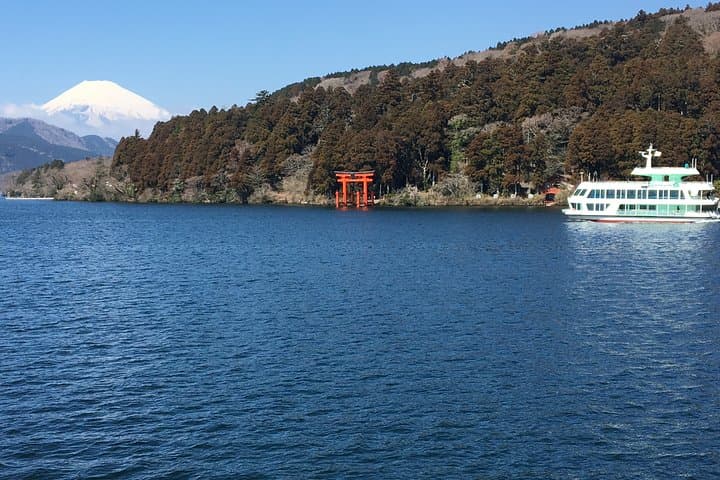
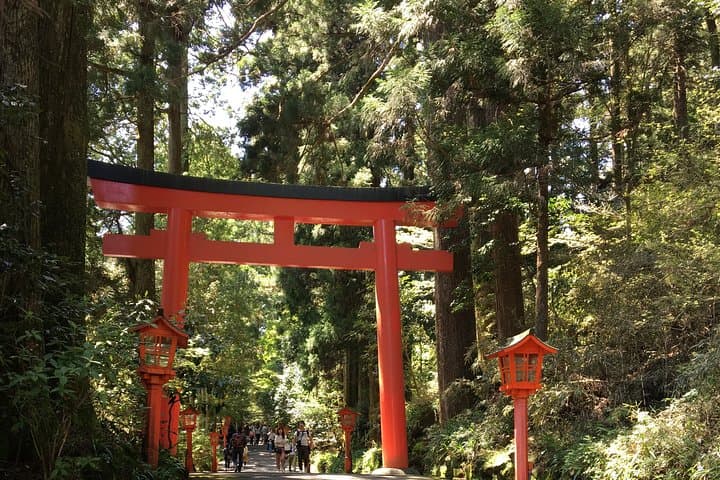
You step off the Shinkansen and the air changes — cooler, a little sweet with wood smoke, and carrying a faint sulfur tang from a mountain that still remembers its heat. In seven hours this private tour will stretch that first impression into a compact, cinematic day: a cedar-lined approach to a vermilion torii rising from a black-water lake, a pirate ship cutting an ink-still surface, steam vents hissing like a restless animal below a rim of volcanic rock.
You step off the Shinkansen and the air changes — cooler, a little sweet with wood smoke, and carrying a faint sulfur tang from a mountain that still remembers its heat. In seven hours this private tour will stretch that first impression into a compact, cinematic day: a cedar-lined approach to a vermilion torii rising from a black-water lake, a pirate ship cutting an ink-still surface, steam vents hissing like a restless animal below a rim of volcanic rock.
Hakone’s landscape reads like a geography lesson and a shrine calendar at once. The valley you drive through is the rim of an ancient caldera; Owakudani is the living throat of that system — cracked ground, sulfur plumes, and the small, smoky rituals of local vendors selling kuro-tamago (black eggs boiled in mineral springs) that have earned a folk reputation for adding seven years to your life. Below, Lake Ashi formed where the caldera collected rain and snowmelt; its long western shore is where mountain worship and pilgrimage converged in the Edo period, guarded by the reconstructed Hakone Checkpoint that once controlled traffic along the Tokaido road.
Culture here is practical and ceremonial: shrine gateways frame views rather than block them, and public baths shape the day. The Hakone Open-Air Museum adds a modernist beat — sculptures splayed across lawns, a Picasso wing that feels intentionally out of scale with the rough-hewn mountains.
This private one-day tour is built to be flexible. The operator recommends Lake Ashi and Owakudani as anchor stops and gives you one or two customizable choices — the museum, Hakone Shrine, an onsen soak, or the reconstructed checkpoint. Your guide meets you at Odawara or at a requested Tokyo pickup (note: if you ask for pickup from central Tokyo, you cover the guide’s Shinkansen fare).
Practicalities matter. Leave Tokyo early for clearer views of Fuji; haze builds by midday. Wear comfortable walking shoes and quick layers — mountain weather shifts fast. Onsen visits require basic etiquette: wash before entering, no swimsuits in most baths, and tattoos can be restricted. The pirate-ship crossing of Lake Ashi is short but exposed; bring a wind layer.
Timing and tickets: the private format compresses travel time but still runs ~7 hours; allow extra time if you plan a long onsen soak or museum visit (the Open-Air Museum often charges separate admission). Photography rewards patience: wait for low angles of light at the lakeshore and the torii when the wind drops. Above all, treat Hakone’s steam and stones with respect — volcanic landscapes are alive and, for a day, they set the pace.