THE ADVENTURE COLLECTIVE® · Independent discovery and booking for outdoor travel

Skip the trains and let Hakone unfold from a leather-upholstered back seat. This private full-day chauffeured tour stitches together Owakudani’s fumaroles, Lake Ashi’s torii, world-class museums and onsen rituals into an effortless, curated day.
Skip the trains and let Hakone unfold from a leather-upholstered back seat. This private full-day chauffeured tour stitches together Owakudani’s fumaroles, Lake Ashi’s torii, world-class museums and onsen rituals into an effortless, curated day.
The day begins at Hakone-Yumoto, where a glossy chauffeur’s car waits like a quiet promise. You slide into a leather seat, the city hum left behind, and the road begins to climb into the volcanic rim of Hakone. From the windows, cedar-dark slopes give way to broad views; steam rises from fumaroles at Owakudani, and on clear days Mount Fuji punctures the horizon like a white-capped guardian.
Verified experiences and guided adventures in the surrounding area.
Operated by Nature Retreat Tour · Hakone, Kanagawa Prefecture
The day begins at Hakone-Yumoto, where a glossy chauffeur’s car waits like a quiet promise. You slide into a leather seat, the city hum left behind, and the road begins to climb into the volcanic rim of Hakone. From the windows, cedar-dark slopes give way to broad views; steam rises from fumaroles at Owakudani, and on clear days Mount Fuji punctures the horizon like a white-capped guardian.
This private, full-day loop is less about a single trail and more about moving through Hakone’s layered story: Edo-era travelers who paused at Hakone’s checkpoint, artisans drawn to volcanic glass and lacquer, and the modern reinvention of the region as a cultural escape. Geology animates everything here — calderas and lava flows sculpted the basin that holds Lake Ashi, and hydrothermal vents keep the ground warm enough to boil eggs black and fill the air with sulfur. That is Owakudani’s mood: raw, loud, and oddly domestic with its roadside vendors selling the famed kuro-tamago.
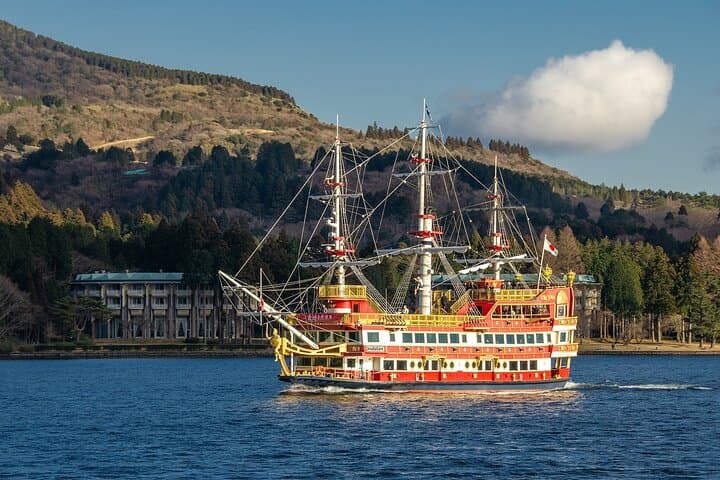
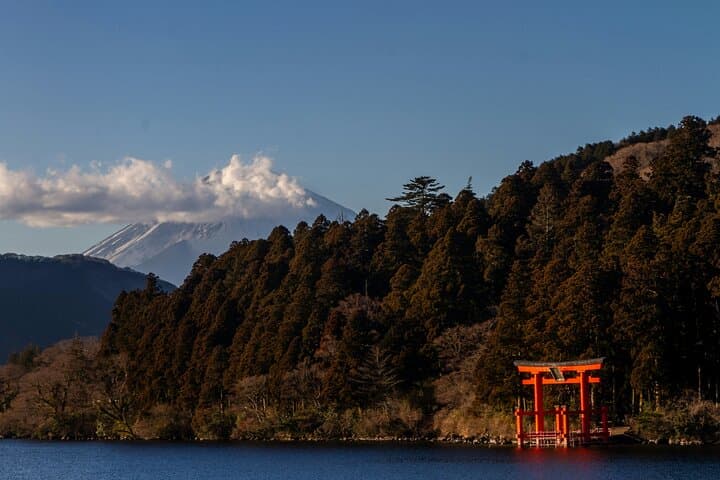
The tour’s rhythm is deliberate. A private vehicle and ropeway fares included mean you skip queues and stitch together Hakone’s best stops: Owakudani’s sulfur smoke, the mirror calm of Lake Ashi with its red torii, shrine groves draped in cedar, and a string of boutique museums — from glasswork to Impressionist canvases in a building that makes light feel like an exhibit. Guides adapt the day to your interests: art lovers linger at the Pola or Lalique collections; families can choose the open-air sculpture museum and hands-on glass blowing; those after quiet choose forest walks and a therapeutic onsen footbath.
Practicality grounds the indulgence. The route covers an 8-hour window with modest walking at each stop — paved paths, museum steps, and short stair climbs rather than long hikes. Weather governs the best views of Fuji: mornings and late afternoons are clearest, while mid-summer brings humid afternoons and occasional rain. Owakudani’s access can close when volcanic activity spikes; a flexible itinerary is part of the experience. Note: Japan’s service culture means no tipping is required; instead, allow time for slower, courteous exchanges.
For travelers who want a curated day without logistics friction, this chauffeured loop is efficient, private, and richly textured — a practical way to absorb Hakone’s art, onsen culture, and geology without sacrificing comfort. Bring layers, expect a few short walks, and let the valley’s steam and the lake’s glassy surface do the rest.
easy.
8 hours.
Light—suitable for travelers who can handle several short walks and stairs; no sustained hiking required.
Yes—the tour is private with a chauffeured vehicle that meets at Hakone-Yumoto and returns there; specific pickup points can be arranged in advance.
Ropeway fares are included, but most museum admissions are not—check with the operator or plan to pay on-site.
Yes—the tour is fully flexible within the 8-hour window; guides tailor stops to art, nature, or cultural preferences.
No—tipping is not customary; excellent service is part of the experience, and payments cover the service provided.
Yes—stroller access and infant seats are available, and the tour includes low-impact walking appropriate for families.
Operators typically reroute to alternative viewpoints or extend museum time; closures are common and handled with flexible planning.
Hakone grew as a strategic checkpoint on the old Tokaido route and later developed into an onsen and cultural destination shaped by volcanic activity.
Owakudani’s ecology is sensitive to volcanic fumes; visitors are asked to stay on designated paths and support museums and onsen that practice low-impact tourism.
Nature Retreat Tour operates guided outdoor trips and adventures with an emphasis on safety, stewardship, and memorable experiences.
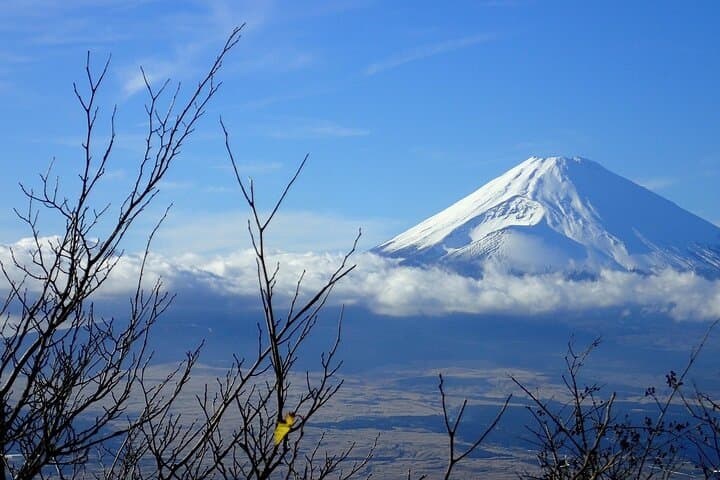
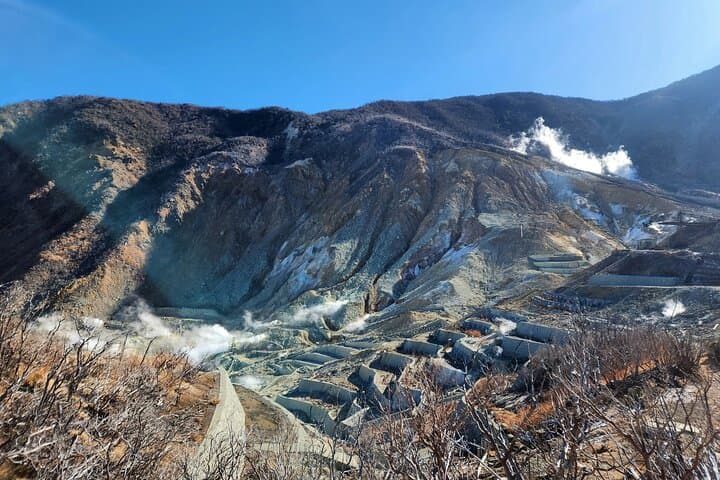
The day begins at Hakone-Yumoto, where a glossy chauffeur’s car waits like a quiet promise. You slide into a leather seat, the city hum left behind, and the road begins to climb into the volcanic rim of Hakone. From the windows, cedar-dark slopes give way to broad views; steam rises from fumaroles at Owakudani, and on clear days Mount Fuji punctures the horizon like a white-capped guardian.
The day begins at Hakone-Yumoto, where a glossy chauffeur’s car waits like a quiet promise. You slide into a leather seat, the city hum left behind, and the road begins to climb into the volcanic rim of Hakone. From the windows, cedar-dark slopes give way to broad views; steam rises from fumaroles at Owakudani, and on clear days Mount Fuji punctures the horizon like a white-capped guardian.
This private, full-day loop is less about a single trail and more about moving through Hakone’s layered story: Edo-era travelers who paused at Hakone’s checkpoint, artisans drawn to volcanic glass and lacquer, and the modern reinvention of the region as a cultural escape. Geology animates everything here — calderas and lava flows sculpted the basin that holds Lake Ashi, and hydrothermal vents keep the ground warm enough to boil eggs black and fill the air with sulfur. That is Owakudani’s mood: raw, loud, and oddly domestic with its roadside vendors selling the famed kuro-tamago.
The tour’s rhythm is deliberate. A private vehicle and ropeway fares included mean you skip queues and stitch together Hakone’s best stops: Owakudani’s sulfur smoke, the mirror calm of Lake Ashi with its red torii, shrine groves draped in cedar, and a string of boutique museums — from glasswork to Impressionist canvases in a building that makes light feel like an exhibit. Guides adapt the day to your interests: art lovers linger at the Pola or Lalique collections; families can choose the open-air sculpture museum and hands-on glass blowing; those after quiet choose forest walks and a therapeutic onsen footbath.
Practicality grounds the indulgence. The route covers an 8-hour window with modest walking at each stop — paved paths, museum steps, and short stair climbs rather than long hikes. Weather governs the best views of Fuji: mornings and late afternoons are clearest, while mid-summer brings humid afternoons and occasional rain. Owakudani’s access can close when volcanic activity spikes; a flexible itinerary is part of the experience. Note: Japan’s service culture means no tipping is required; instead, allow time for slower, courteous exchanges.
For travelers who want a curated day without logistics friction, this chauffeured loop is efficient, private, and richly textured — a practical way to absorb Hakone’s art, onsen culture, and geology without sacrificing comfort. Bring layers, expect a few short walks, and let the valley’s steam and the lake’s glassy surface do the rest.