THE ADVENTURE COLLECTIVE® · Independent discovery and booking for outdoor travel

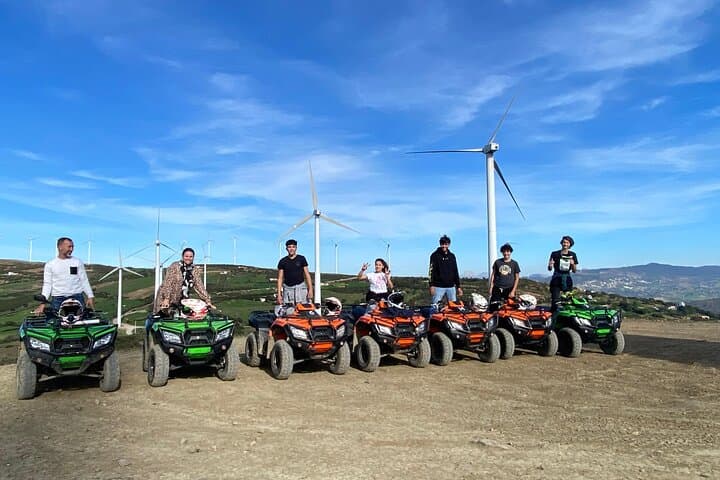
Drive into the Rif foothills from Tangier on a guided quad tour that mixes dirt tracks, rocky fire roads and local culture. In 2–3 hours you’ll cross terraced fields and shepherding routes with a local guide at the helm.
Drive into the Rif foothills from Tangier on a guided quad tour that mixes dirt tracks, rocky fire roads and local culture. In 2–3 hours you’ll cross terraced fields and shepherding routes with a local guide at the helm.
You pull away from Tangier’s harbor in an air‑conditioned van, the city’s low-rise blocks slipping past as the road climbs toward the Rif foothills.
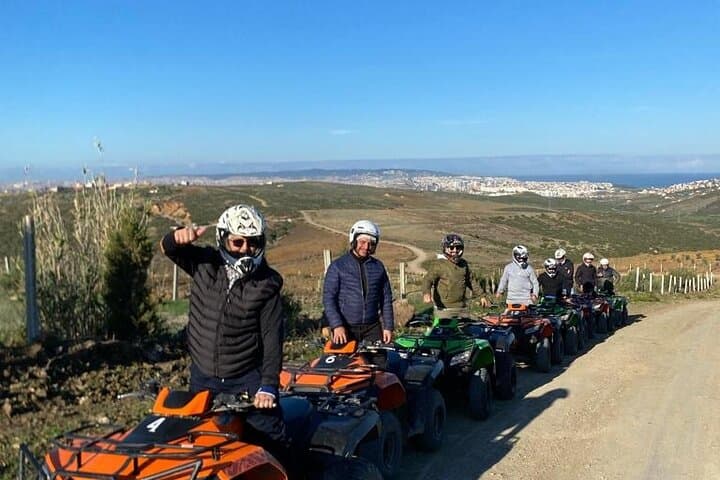
In thirty minutes the urban blur gives way to scrub, terraced olive plots and tracks that spider into the hills—this is where the quads wait, engines ready and dust already rising.
The Rif is a folded northern Moroccan range of limestone and clay, carved by rivers and shepherded for centuries by Amazigh (Berber) communities. From the trails you’ll see small stone villages, fields of barley and the occasional cedar‑dusted ridge; on clear days the Atlantic glints to the west, daring you to look away from the line of rutted track ahead.
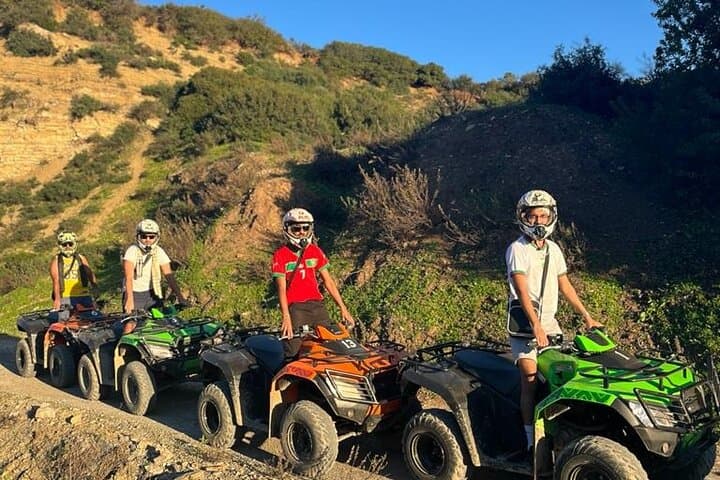
Riding a guided quad here is primarily about terrain: expect 2–3 hours of mixed dirt tracks, rocky fire roads and short technical pitches that focus on balance and throttle control rather than long climbs. The operation supplies helmets and basic gear and can accommodate riders from about 10 to 70 years old, making it accessible to a wide range of travelers.
Practicalities matter—bring a closed‑toe shoe, sunglasses or goggles for dust, and a small daypack with water. Morning departures are cooler and give better light for photos; afternoons bring warmer winds and more dust. Guides are local and will point out cultural details—water cisterns, terraced fields and seasonal grazing patterns—while keeping the pace steady for mixed‑ability groups.
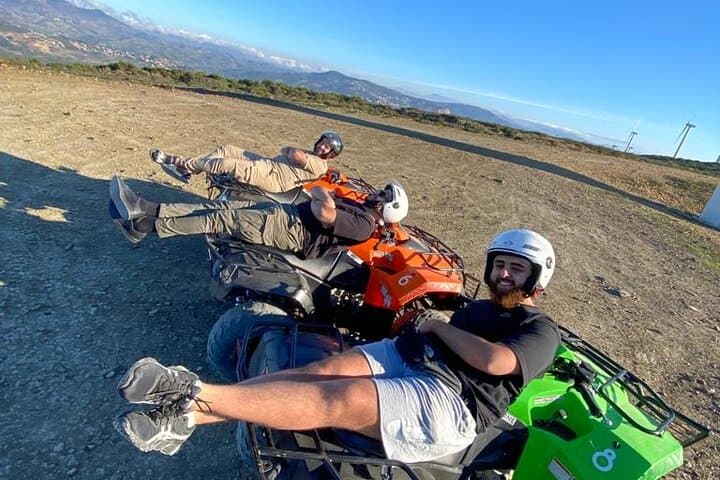
The result is a short, kinetic way to experience northern Morocco: the smell of herbs on the wind, the chatter of a guide in Arabic or French, and the satisfying clatter of a quad under you as the landscape pushes back.
Verified experiences and guided adventures in the surrounding area.
Operated by Tours ChicoTaxi · Tangier, Tanger‑Tetouan‑Al Hoceima
You pull away from Tangier’s harbor in an air‑conditioned van, the city’s low-rise blocks slipping past as the road climbs toward the Rif foothills.
In thirty minutes the urban blur gives way to scrub, terraced olive plots and tracks that spider into the hills—this is where the quads wait, engines ready and dust already rising.
The Rif is a folded northern Moroccan range of limestone and clay, carved by rivers and shepherded for centuries by Amazigh (Berber) communities. From the trails you’ll see small stone villages, fields of barley and the occasional cedar‑dusted ridge; on clear days the Atlantic glints to the west, daring you to look away from the line of rutted track ahead.
Riding a guided quad here is primarily about terrain: expect 2–3 hours of mixed dirt tracks, rocky fire roads and short technical pitches that focus on balance and throttle control rather than long climbs. The operation supplies helmets and basic gear and can accommodate riders from about 10 to 70 years old, making it accessible to a wide range of travelers.
Practicalities matter—bring a closed‑toe shoe, sunglasses or goggles for dust, and a small daypack with water. Morning departures are cooler and give better light for photos; afternoons bring warmer winds and more dust. Guides are local and will point out cultural details—water cisterns, terraced fields and seasonal grazing patterns—while keeping the pace steady for mixed‑ability groups.
The result is a short, kinetic way to experience northern Morocco: the smell of herbs on the wind, the chatter of a guide in Arabic or French, and the satisfying clatter of a quad under you as the landscape pushes back.
easy.
2–3 hours.
Light fitness; riders should be able to handle short periods of standing and quick weight shifts on the quad.
No—most guided tours are suitable for beginners; the guide will give a safety briefing and basic operation instructions.
Operators commonly accept riders from around 10 years old; confirm with the provider for passenger and solo riding rules.
Yes—round‑trip transportation from Tangier is typically included in the tour price.
Closed‑toe shoes, comfortable pants, sun protection and a light layer for changing temperatures; goggles or sunglasses are recommended.
The Rif has long been inhabited by Amazigh (Berber) communities and was shaped by small‑scale agriculture and pastoralism; its geology reflects folded Mesozoic strata and river erosion.
Stay on designated tracks to avoid damaging fragile soils and terraces; support local operators who manage waste and respect grazing areas.
Tours ChicoTaxi operates guided outdoor trips and adventures with an emphasis on safety, stewardship, and memorable experiences.
You pull away from Tangier’s harbor in an air‑conditioned van, the city’s low-rise blocks slipping past as the road climbs toward the Rif foothills.
In thirty minutes the urban blur gives way to scrub, terraced olive plots and tracks that spider into the hills—this is where the quads wait, engines ready and dust already rising.
The Rif is a folded northern Moroccan range of limestone and clay, carved by rivers and shepherded for centuries by Amazigh (Berber) communities. From the trails you’ll see small stone villages, fields of barley and the occasional cedar‑dusted ridge; on clear days the Atlantic glints to the west, daring you to look away from the line of rutted track ahead.
Riding a guided quad here is primarily about terrain: expect 2–3 hours of mixed dirt tracks, rocky fire roads and short technical pitches that focus on balance and throttle control rather than long climbs. The operation supplies helmets and basic gear and can accommodate riders from about 10 to 70 years old, making it accessible to a wide range of travelers.
Practicalities matter—bring a closed‑toe shoe, sunglasses or goggles for dust, and a small daypack with water. Morning departures are cooler and give better light for photos; afternoons bring warmer winds and more dust. Guides are local and will point out cultural details—water cisterns, terraced fields and seasonal grazing patterns—while keeping the pace steady for mixed‑ability groups.
The result is a short, kinetic way to experience northern Morocco: the smell of herbs on the wind, the chatter of a guide in Arabic or French, and the satisfying clatter of a quad under you as the landscape pushes back.
You pull away from Tangier’s harbor in an air‑conditioned van, the city’s low-rise blocks slipping past as the road climbs toward the Rif foothills.
In thirty minutes the urban blur gives way to scrub, terraced olive plots and tracks that spider into the hills—this is where the quads wait, engines ready and dust already rising.
The Rif is a folded northern Moroccan range of limestone and clay, carved by rivers and shepherded for centuries by Amazigh (Berber) communities. From the trails you’ll see small stone villages, fields of barley and the occasional cedar‑dusted ridge; on clear days the Atlantic glints to the west, daring you to look away from the line of rutted track ahead.
Riding a guided quad here is primarily about terrain: expect 2–3 hours of mixed dirt tracks, rocky fire roads and short technical pitches that focus on balance and throttle control rather than long climbs. The operation supplies helmets and basic gear and can accommodate riders from about 10 to 70 years old, making it accessible to a wide range of travelers.
Practicalities matter—bring a closed‑toe shoe, sunglasses or goggles for dust, and a small daypack with water. Morning departures are cooler and give better light for photos; afternoons bring warmer winds and more dust. Guides are local and will point out cultural details—water cisterns, terraced fields and seasonal grazing patterns—while keeping the pace steady for mixed‑ability groups.
The result is a short, kinetic way to experience northern Morocco: the smell of herbs on the wind, the chatter of a guide in Arabic or French, and the satisfying clatter of a quad under you as the landscape pushes back.