THE ADVENTURE COLLECTIVE® · Independent discovery and booking for outdoor travel

Follow the ridge above the Gravina di Matera on a three-hour private excursion that explores cliff-dwellings, the rock church of San Nicola all'Ofra and a karst Bat Cave with Paleolithic finds. Expect uneven trails, dramatic overlooks and an up-close look at local archaeology.
Follow the ridge above the Gravina di Matera on a three-hour private excursion that explores cliff-dwellings, the rock church of San Nicola all'Ofra and a karst Bat Cave with Paleolithic finds. Expect uneven trails, dramatic overlooks and an up-close look at local archaeology.
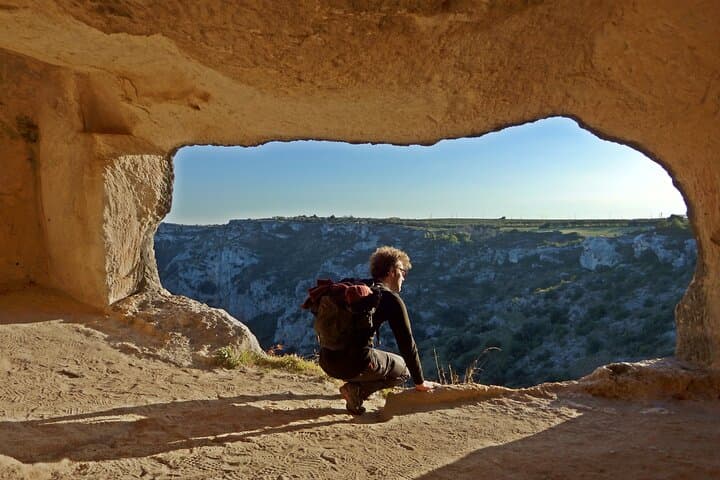
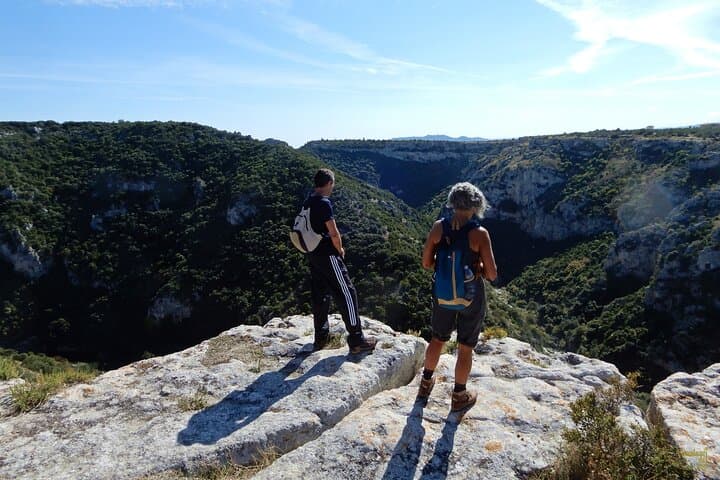
You step off the narrow road and the ravine opens like a cut in the limestone—the stream far below a thin ribbon, the cliffs around you scored with caves and carved rooms. The air is mineral-dry; wind moves through tunnels and carries the high, sudden silhouette of a black stork across the gorge.
Verified experiences and guided adventures in the surrounding area.
Operated by Viandanti del Sud · Matera, Basilicata
You step off the narrow road and the ravine opens like a cut in the limestone—the stream far below a thin ribbon, the cliffs around you scored with caves and carved rooms. The air is mineral-dry; wind moves through tunnels and carries the high, sudden silhouette of a black stork across the gorge.
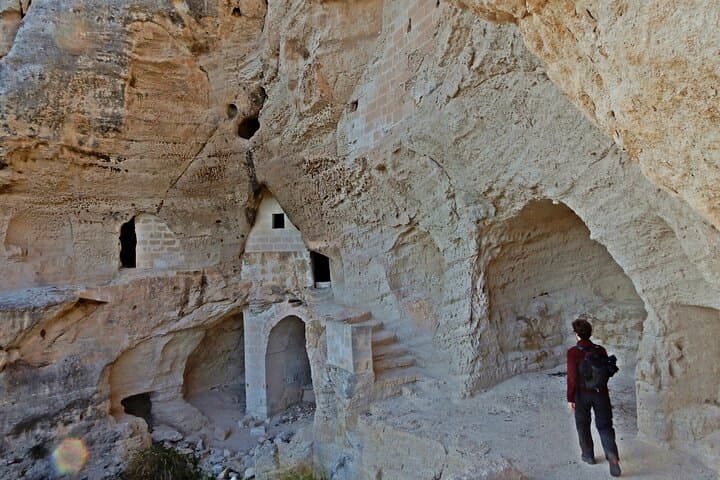
This three-hour private excursion follows the ridge above the Gravina di Matera, a karst ravine formed by millennia of water cutting soft calcarenite. The route passes cliff-dwellings and the rock church of San Nicola all'Ofra—multi-level rooms, cisterns and frescoed niches hewn into the stone—and continues to a karst complex known as the Bat Cave, a paleolithic site where archaeologists found tools, tombs and fossils now housed in Matera’s collections.
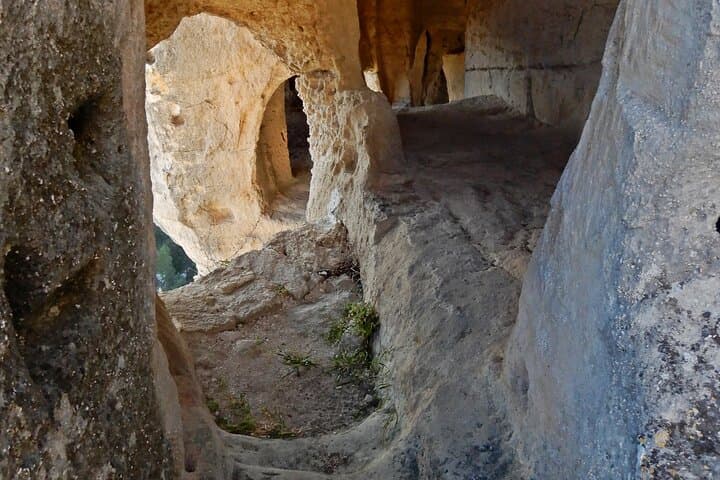
Culturally, the trail reads like a living archive: Sassi-era cave habitation, medieval hermitages, and local legends about treasures and Barbarossa’s hunt for hoards. Geologically, the ravine is a textbook of erosion: narrow tunnels, collapsed roofs and terraces where scrub and Mediterranean grasses cling.
Practical guidance: wear grippy shoes and bring at least 1–1.5 liters of water; much of the walk is uneven and exposed. Expect limited shade and short, steep sections—not technical rope work but uneven footing. Respect cave closures and nesting seasons for birds; avoid using lights or loud noise inside caves to protect bat colonies. The tour is short but rich—bring a camera, a light jacket for tunnel breezes, and enough time to linger at overlooks for clear views of Matera’s Sassi from the rim.
moderate.
3 hours.
Light to moderate fitness required; able to walk 2–4 miles on uneven terrain with short steep sections.
It’s a moderate, mostly non-technical walk with uneven footing and short steep sections; suitable for most active visitors.
Visitors can enter many cave areas on the guided route, but some passages are restricted to protect archaeological sites and bat colonies; follow your guide’s directions.
This private tour includes pickup and private transportation as listed in the tour inclusions.
Yes—families are welcome but parents should consider uneven terrain and supervise children near cliff edges and cave openings.
The Gravina di Matera sits beside the Sassi, where cave dwellings date back millennia; 19th-century archaeologists found Paleolithic tools and fossils in local caves.
Stick to marked routes, avoid entering sealed cave sections, and minimize light and noise to protect nesting birds and bat colonies; local guidelines aim to balance tourism with fragile karst ecology.
Viandanti del Sud operates guided outdoor trips and adventures with an emphasis on safety, stewardship, and memorable experiences.
You step off the narrow road and the ravine opens like a cut in the limestone—the stream far below a thin ribbon, the cliffs around you scored with caves and carved rooms. The air is mineral-dry; wind moves through tunnels and carries the high, sudden silhouette of a black stork across the gorge.
You step off the narrow road and the ravine opens like a cut in the limestone—the stream far below a thin ribbon, the cliffs around you scored with caves and carved rooms. The air is mineral-dry; wind moves through tunnels and carries the high, sudden silhouette of a black stork across the gorge.
This three-hour private excursion follows the ridge above the Gravina di Matera, a karst ravine formed by millennia of water cutting soft calcarenite. The route passes cliff-dwellings and the rock church of San Nicola all'Ofra—multi-level rooms, cisterns and frescoed niches hewn into the stone—and continues to a karst complex known as the Bat Cave, a paleolithic site where archaeologists found tools, tombs and fossils now housed in Matera’s collections.
Culturally, the trail reads like a living archive: Sassi-era cave habitation, medieval hermitages, and local legends about treasures and Barbarossa’s hunt for hoards. Geologically, the ravine is a textbook of erosion: narrow tunnels, collapsed roofs and terraces where scrub and Mediterranean grasses cling.
Practical guidance: wear grippy shoes and bring at least 1–1.5 liters of water; much of the walk is uneven and exposed. Expect limited shade and short, steep sections—not technical rope work but uneven footing. Respect cave closures and nesting seasons for birds; avoid using lights or loud noise inside caves to protect bat colonies. The tour is short but rich—bring a camera, a light jacket for tunnel breezes, and enough time to linger at overlooks for clear views of Matera’s Sassi from the rim.