THE ADVENTURE COLLECTIVE® · Independent discovery and booking for outdoor travel

Spend a half-day tracking Grand Teton wildlife with a naturalist, then snowshoe to a private ranch for a hearty Wyoming steak dinner. This guided winter safari combines spotter scopes, local history, and an easy-paced outdoor meal under wide, cold skies.
Spend a half-day tracking Grand Teton wildlife with a naturalist, then snowshoe to a private ranch for a hearty Wyoming steak dinner. This guided winter safari combines spotter scopes, local history, and an easy-paced outdoor meal under wide, cold skies.
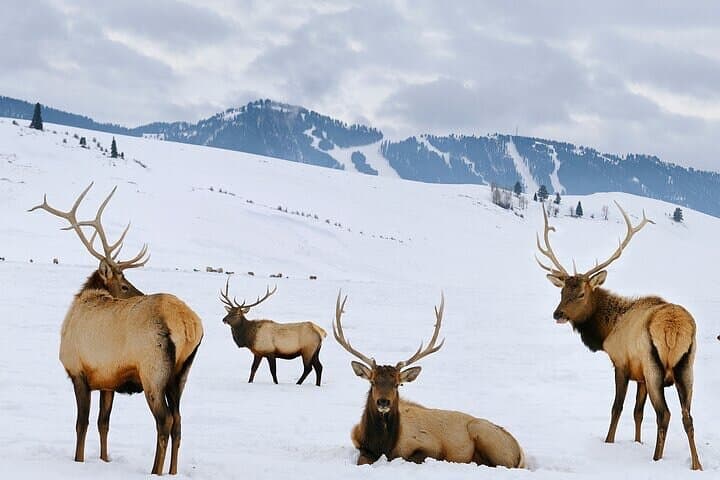
A cold breath of air cuts across the valley as the van pulls up to the Welcome Center parking lot and a guide points toward a dark line of silhouettes — elk moving like punctuation across the snow. In the pale hour before noon, the Tetons loom to the west, jagged and patient, while the sage and willow flats below seem to hold their own kind of hush. This is not a rushed photo stop; it’s a guided search, a slow-motion patrol of snow-packed roads and quiet pullouts where binoculars and spotting scopes sharpen the landscape into living detail.
Verified experiences and guided adventures in the surrounding area.
Operated by Mountain Resort Chauffeured Transportation · Jackson, Wyoming
A cold breath of air cuts across the valley as the van pulls up to the Welcome Center parking lot and a guide points toward a dark line of silhouettes — elk moving like punctuation across the snow. In the pale hour before noon, the Tetons loom to the west, jagged and patient, while the sage and willow flats below seem to hold their own kind of hush. This is not a rushed photo stop; it’s a guided search, a slow-motion patrol of snow-packed roads and quiet pullouts where binoculars and spotting scopes sharpen the landscape into living detail.
The route threads from Jackson through Grand Teton National Park, following corridors animals have used for generations. Geologically, these peaks are young — a dramatic uplift along the Teton fault — and the valley floor beneath them holds glacial silt and braided rivers that feed willow thickets, the moose’s winter pantry. Human history here moves from Shoshone stewardship to ranching and early 20th-century conservation efforts that carved the park out of contested land and private homesteads; tonight’s private ranch dinner continues that living ranch culture, where cattle and wild ungulates share the same horizon.
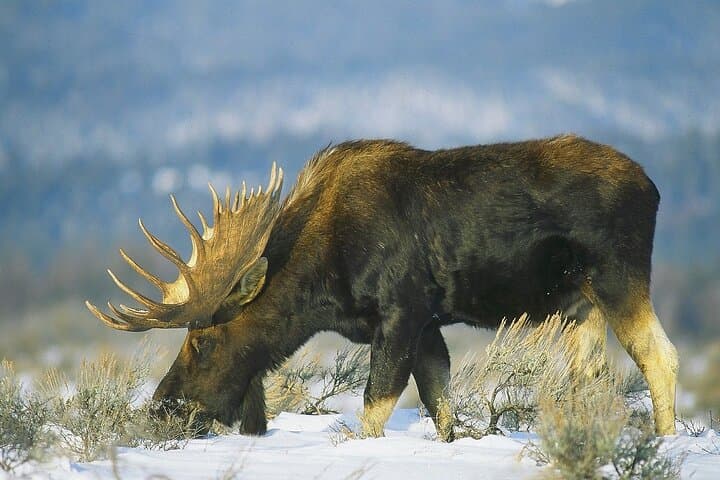
Guides narrate as they scan: identifying tracks, explaining rut timing, and pointing out bald eagles quartering over cut banks. The safari component is focused and patient — frequent sightings in winter include moose, elk, bison, mule deer, and raptors; wolves are occasional, prized glimpses. Binoculars and a spotting scope are provided, so guests can read antler tines and watch breath fog the air without disturbing the animals.
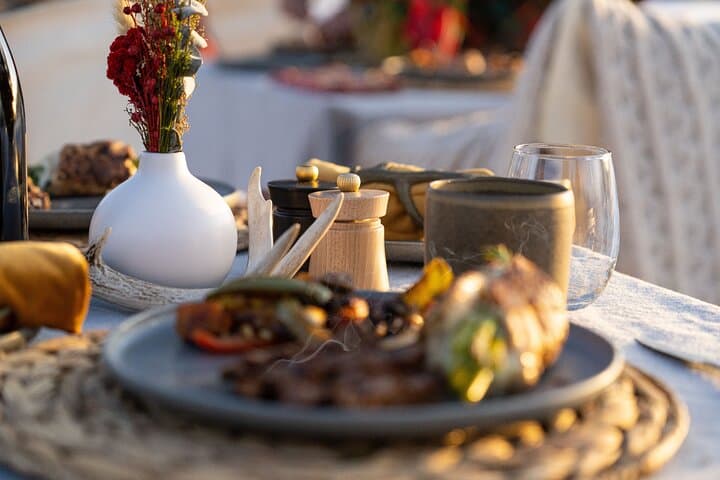
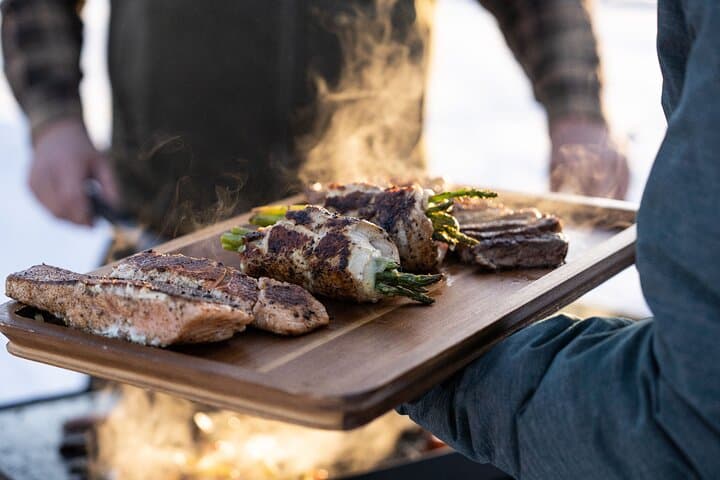
After two to three hours on the road, the group snowshoes at its own pace to a private winter camp on a working ranch. The snowshoe segment crosses gentle, rolling terrain — expect about 1–2 miles round trip with modest elevation change (the valley sits around 6,200–6,500 feet). Guides offer instruction for first-timers, and the camp dinner centers on Wyoming-raised steak (chicken or salmon options available) grilled over open coals, served with hearty sides in a heated tent or barn annex.
Practicalities: dress for altitude and changeable weather — layers, waterproof boots, and gaiters make the day more comfortable. Tours run 5–6 hours total; vehicles and gear are provided, and pickup can be arranged from Jackson-area hotels. Wildlife sightings can’t be guaranteed, so treat each sighting as a privilege: keep distance, follow the guide’s lead, and be prepared to wait and watch. For photographers, bring a telephoto lens and be ready for low, directional light. This is an experience built around quiet observation and good food — a winter evening where the land, at its slowest, invites you to pay attention.
moderate.
5–6 hours.
Moderately fit: able to walk 1–2 miles on snow with occasional standing and brief hikes; altitude acclimation helps.
The guide meets guests in the parking lot next to the Welcome Center entrance near Jackson; pickup from Jackson-area hotels is available with advance notice.
No — instruction and snowshoe equipment are provided and the route is suitable for beginners at a steady, unhurried pace.
Guides know where to look and sightings of moose, elk, bison, and raptors are common, but specific species (especially wolves) cannot be guaranteed.
Yes — the operator requests dietary needs at booking and offers chicken or salmon as alternatives to steak.
Stay hydrated, avoid heavy exertion before the tour, and inform guides of any health concerns; the valley sits around 6,200–6,500 feet.
Full refund available if you cancel at least 24 hours before departure; see booking confirmation for details.
This valley is within ancestral Shoshone territory and later became a ranching and conservation focal point—private ranches and public parklands have long coexisted here.
Respect seasonal closures and no-approach distances for wildlife; guided outings minimize disturbance and support local stewardship when operators follow park rules.
Mountain Resort Chauffeured Transportation operates guided outdoor trips and adventures with an emphasis on safety, stewardship, and memorable experiences.
A cold breath of air cuts across the valley as the van pulls up to the Welcome Center parking lot and a guide points toward a dark line of silhouettes — elk moving like punctuation across the snow. In the pale hour before noon, the Tetons loom to the west, jagged and patient, while the sage and willow flats below seem to hold their own kind of hush. This is not a rushed photo stop; it’s a guided search, a slow-motion patrol of snow-packed roads and quiet pullouts where binoculars and spotting scopes sharpen the landscape into living detail.
A cold breath of air cuts across the valley as the van pulls up to the Welcome Center parking lot and a guide points toward a dark line of silhouettes — elk moving like punctuation across the snow. In the pale hour before noon, the Tetons loom to the west, jagged and patient, while the sage and willow flats below seem to hold their own kind of hush. This is not a rushed photo stop; it’s a guided search, a slow-motion patrol of snow-packed roads and quiet pullouts where binoculars and spotting scopes sharpen the landscape into living detail.
The route threads from Jackson through Grand Teton National Park, following corridors animals have used for generations. Geologically, these peaks are young — a dramatic uplift along the Teton fault — and the valley floor beneath them holds glacial silt and braided rivers that feed willow thickets, the moose’s winter pantry. Human history here moves from Shoshone stewardship to ranching and early 20th-century conservation efforts that carved the park out of contested land and private homesteads; tonight’s private ranch dinner continues that living ranch culture, where cattle and wild ungulates share the same horizon.
Guides narrate as they scan: identifying tracks, explaining rut timing, and pointing out bald eagles quartering over cut banks. The safari component is focused and patient — frequent sightings in winter include moose, elk, bison, mule deer, and raptors; wolves are occasional, prized glimpses. Binoculars and a spotting scope are provided, so guests can read antler tines and watch breath fog the air without disturbing the animals.
After two to three hours on the road, the group snowshoes at its own pace to a private winter camp on a working ranch. The snowshoe segment crosses gentle, rolling terrain — expect about 1–2 miles round trip with modest elevation change (the valley sits around 6,200–6,500 feet). Guides offer instruction for first-timers, and the camp dinner centers on Wyoming-raised steak (chicken or salmon options available) grilled over open coals, served with hearty sides in a heated tent or barn annex.
Practicalities: dress for altitude and changeable weather — layers, waterproof boots, and gaiters make the day more comfortable. Tours run 5–6 hours total; vehicles and gear are provided, and pickup can be arranged from Jackson-area hotels. Wildlife sightings can’t be guaranteed, so treat each sighting as a privilege: keep distance, follow the guide’s lead, and be prepared to wait and watch. For photographers, bring a telephoto lens and be ready for low, directional light. This is an experience built around quiet observation and good food — a winter evening where the land, at its slowest, invites you to pay attention.