THE ADVENTURE COLLECTIVE® · Independent discovery and booking for outdoor travel

A compact, 7–8 hour small-group drive through Iceland’s Golden Circle—walk between tectonic plates at Þingvellir, watch Strokkur erupt, and feel the power of Gullfoss. This tour balances storytelling with practical access for travelers who want maximum experience without the coach crowds.
A compact, 7–8 hour small-group drive through Iceland’s Golden Circle—walk between tectonic plates at Þingvellir, watch Strokkur erupt, and feel the power of Gullfoss. This tour balances storytelling with practical access for travelers who want maximum experience without the coach crowds.
You step out of Reykjavik’s compact streets and the air changes—clean, cold, a little metallic where steam steams off distant pools. The minivan threads along a road that opens into low volcanic plains; lava fields roll like grey sea and distant mountains cut the horizon. By the time the guide points toward Þingvellir, you’re close enough to smell the wet earth and hear the park—rivers bright with glacial melt, a gull calling, the subtle creak of tectonic plates at work.
Verified experiences and guided adventures in the surrounding area.
Operated by CarBuddy.is · Reykjavik, Capital Region
You step out of Reykjavik’s compact streets and the air changes—clean, cold, a little metallic where steam steams off distant pools. The minivan threads along a road that opens into low volcanic plains; lava fields roll like grey sea and distant mountains cut the horizon. By the time the guide points toward Þingvellir, you’re close enough to smell the wet earth and hear the park—rivers bright with glacial melt, a gull calling, the subtle creak of tectonic plates at work.
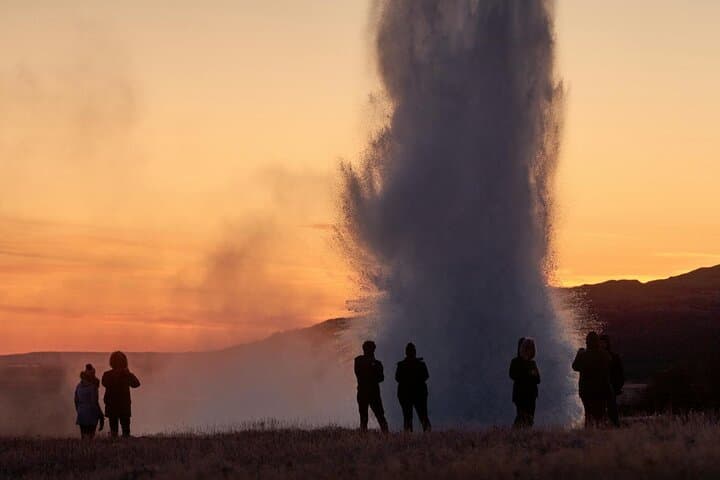
Þingvellir is the first chapter: a rift valley where the North American and Eurasian plates pull apart a few centimeters each year. Walk the paths and you’re literally moving between continents, on soil that hosted the Alþingi in 930 AD—one of the world’s earliest parliamentary assemblies. From there the group moves into the geothermal theater of the Geysir area. Strokkur puffs, then launches a boiling column into the sky every few minutes, timing and force you can almost set your watch to. Sulfur colors the ground in rusty yellows; steam rises in slow, insistent curtains.
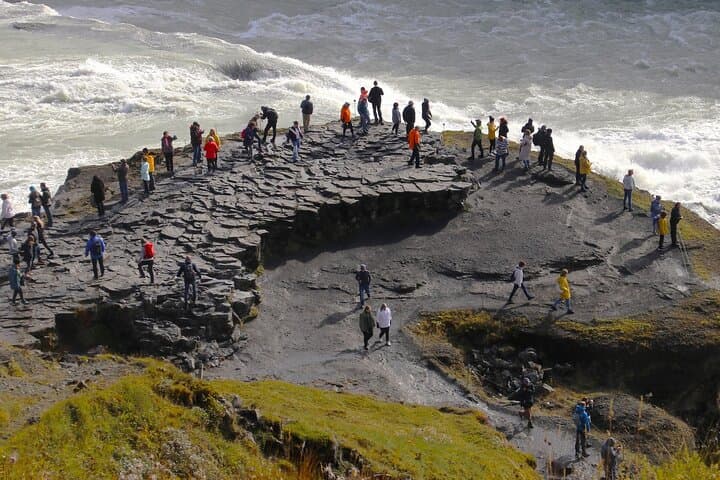
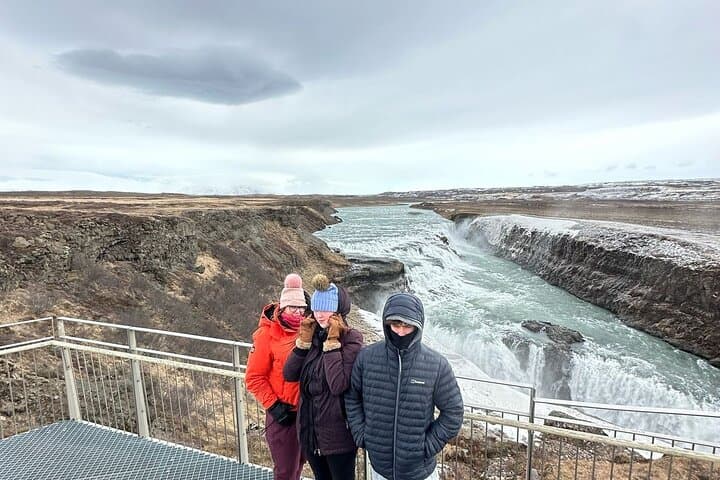
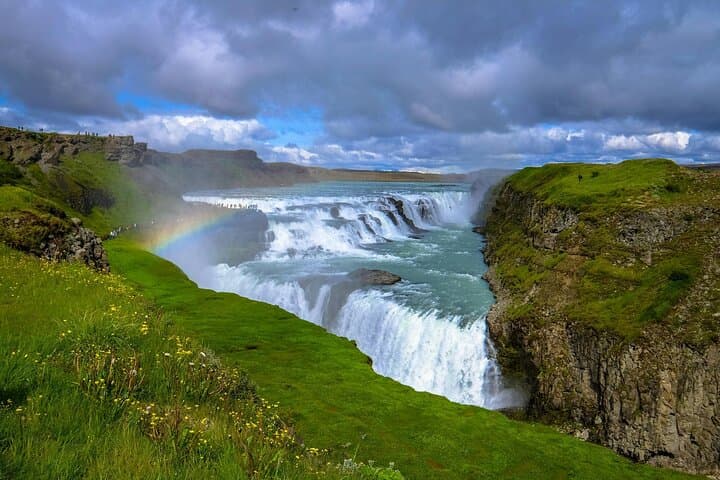
Gullfoss brings a different voice. The river, fed by Langjökull glacier, charges a two-tiered drop and throws mist that, on sunny days, paints rainbows across the canyon. The viewpoint walk is short but uneven; wind is a constant presence, sometimes playful, sometimes pushing hard against jackets and hats.
This small-group tour (max 19) trades the bustle of big coaches for a clearer line of sight and more time at each stop. Guides often provide local context—how 19th-century farmers tried to harness Gullfoss, why geothermal pools concentrate near fault lines, and how the Icelandic horse shaped rural life. Practicalities matter here: weather shifts fast and trails can be slick; staying on marked boardwalks protects fragile moss and geothermal features.
Plan for a 7–8 hour day: arrive layered (windproof outer, mid-layer for warmth), bring waterproof shoes, and keep pockets free for camera gear. Expect short walks—15–45 minutes at viewpoints—and a fair amount of standing as geysers and falls perform. If you want softer photos, ask to pause 10–15 minutes at quieter spots like the lesser-known Vatnsleysufoss. For winter travelers, shorter daylight changes the mood—frozen edges, steam more dramatic against low sun—but roads and access vary.
This route is an efficient primer to Iceland’s geological story: tectonics and ice, steam and river. It’s accessible to most travelers, but it rewards those who bring curiosity and a practical kit—layers, traction, and a willingness to step out into wind and watch the landscape keep working, patient and relentless.
easy.
7–8 hours.
Light: short walks and standing; no advanced fitness required but be prepared for uneven terrain and wind.
Expect about 7–8 hours including travel time from Reykjavik and short guided stops at Þingvellir, Geysir, and Gullfoss.
Yes—walks are short and routes are family-friendly, though some viewpoints have stairs or uneven ground.
Basic entrance fees and parking are included according to the tour listing; check your booking confirmation for details.
Tours operate in most conditions but the operator may alter the itinerary for safety; cancel up to 24 hours before for a full refund per policy.
Strokkur erupts roughly every 5–10 minutes, so you’ll likely see multiple eruptions during the visit.
Yes—insulated, waterproof boots with good traction are highly recommended in winter; microspikes can help if icy.
Þingvellir hosted the Alþingi from 930 AD, where chieftains met on the rock to make laws—an early form of national assembly tied to Icelandic identity.
Geothermal features and fragile mosses are easily damaged; visitors are encouraged to stick to boardwalks and carry out all waste to protect the landscape.
CarBuddy.is operates guided outdoor trips and adventures with an emphasis on safety, stewardship, and memorable experiences.
You step out of Reykjavik’s compact streets and the air changes—clean, cold, a little metallic where steam steams off distant pools. The minivan threads along a road that opens into low volcanic plains; lava fields roll like grey sea and distant mountains cut the horizon. By the time the guide points toward Þingvellir, you’re close enough to smell the wet earth and hear the park—rivers bright with glacial melt, a gull calling, the subtle creak of tectonic plates at work.
You step out of Reykjavik’s compact streets and the air changes—clean, cold, a little metallic where steam steams off distant pools. The minivan threads along a road that opens into low volcanic plains; lava fields roll like grey sea and distant mountains cut the horizon. By the time the guide points toward Þingvellir, you’re close enough to smell the wet earth and hear the park—rivers bright with glacial melt, a gull calling, the subtle creak of tectonic plates at work.
Þingvellir is the first chapter: a rift valley where the North American and Eurasian plates pull apart a few centimeters each year. Walk the paths and you’re literally moving between continents, on soil that hosted the Alþingi in 930 AD—one of the world’s earliest parliamentary assemblies. From there the group moves into the geothermal theater of the Geysir area. Strokkur puffs, then launches a boiling column into the sky every few minutes, timing and force you can almost set your watch to. Sulfur colors the ground in rusty yellows; steam rises in slow, insistent curtains.
Gullfoss brings a different voice. The river, fed by Langjökull glacier, charges a two-tiered drop and throws mist that, on sunny days, paints rainbows across the canyon. The viewpoint walk is short but uneven; wind is a constant presence, sometimes playful, sometimes pushing hard against jackets and hats.
This small-group tour (max 19) trades the bustle of big coaches for a clearer line of sight and more time at each stop. Guides often provide local context—how 19th-century farmers tried to harness Gullfoss, why geothermal pools concentrate near fault lines, and how the Icelandic horse shaped rural life. Practicalities matter here: weather shifts fast and trails can be slick; staying on marked boardwalks protects fragile moss and geothermal features.
Plan for a 7–8 hour day: arrive layered (windproof outer, mid-layer for warmth), bring waterproof shoes, and keep pockets free for camera gear. Expect short walks—15–45 minutes at viewpoints—and a fair amount of standing as geysers and falls perform. If you want softer photos, ask to pause 10–15 minutes at quieter spots like the lesser-known Vatnsleysufoss. For winter travelers, shorter daylight changes the mood—frozen edges, steam more dramatic against low sun—but roads and access vary.
This route is an efficient primer to Iceland’s geological story: tectonics and ice, steam and river. It’s accessible to most travelers, but it rewards those who bring curiosity and a practical kit—layers, traction, and a willingness to step out into wind and watch the landscape keep working, patient and relentless.