THE ADVENTURE COLLECTIVE® · Independent discovery and booking for outdoor travel

In a single, well-paced day from Reykjavík you can stand between tectonic plates, watch Strokkur erupt, feel the spray of Gullfoss and taste greenhouse tomatoes warmed by geothermal heat. This small-group Golden Circle tour pairs geology and culture with practical stops at farms and a volcanic crater.
In a single, well-paced day from Reykjavík you can stand between tectonic plates, watch Strokkur erupt, feel the spray of Gullfoss and taste greenhouse tomatoes warmed by geothermal heat. This small-group Golden Circle tour pairs geology and culture with practical stops at farms and a volcanic crater.
You step off the minibus and the air feels different — colder, mineral-rich, as if the landscape itself has a voice. A gravel path leads toward a shallow rift where two continents meet; wind combs the grass and carries the faint hiss of steam from distant hot springs. This is the Golden Circle, Iceland’s compact route of tectonic drama and cultivated warmth, run as a nine-hour small-group loop from Reykjavík that stitches Thingvellir, Geysir, Gullfoss, Friðheimar tomato greenhouses, a dairy farm and the Kerið crater into a single, tightly paced day.
Verified experiences and guided adventures in the surrounding area.
Operated by EastWest · Reykjavík, Capital Region
You step off the minibus and the air feels different — colder, mineral-rich, as if the landscape itself has a voice. A gravel path leads toward a shallow rift where two continents meet; wind combs the grass and carries the faint hiss of steam from distant hot springs. This is the Golden Circle, Iceland’s compact route of tectonic drama and cultivated warmth, run as a nine-hour small-group loop from Reykjavík that stitches Thingvellir, Geysir, Gullfoss, Friðheimar tomato greenhouses, a dairy farm and the Kerið crater into a single, tightly paced day.
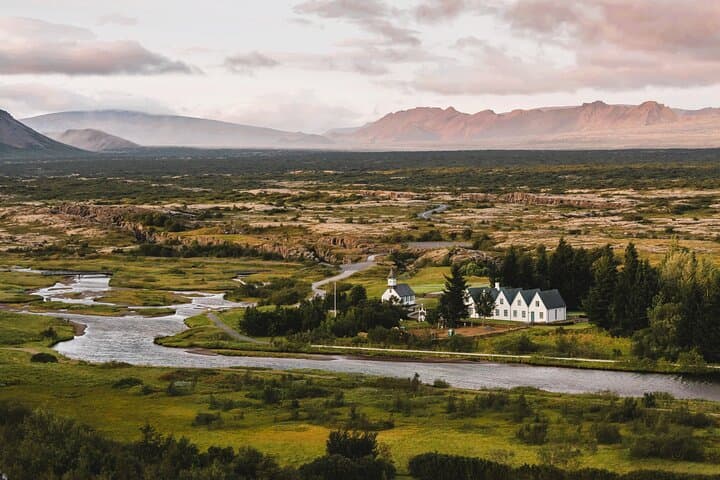
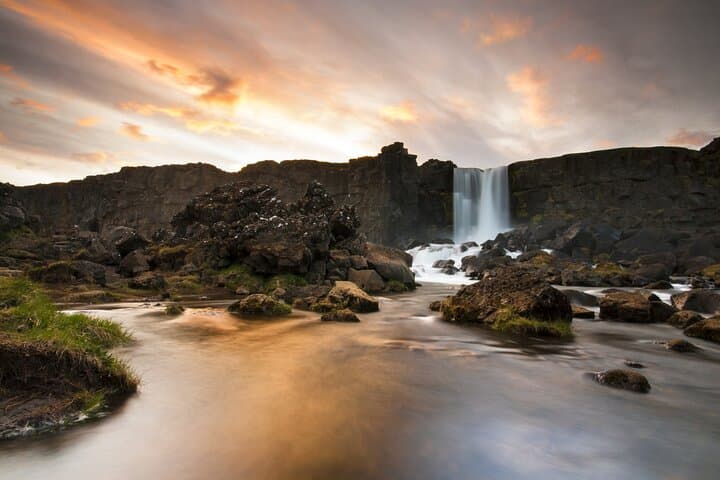
Thingvellir opens the story. Walk the rift valley and you can feel the slow tug of the North American and Eurasian plates — cracks, cliffs and clear, cold streams that once hosted the Alþingi, Iceland’s medieval parliament founded in 930 A.D. The landscape reads like a geological ledger: lava flows, glacial deposits and the imprint of ice ages layered beneath grass and moss.
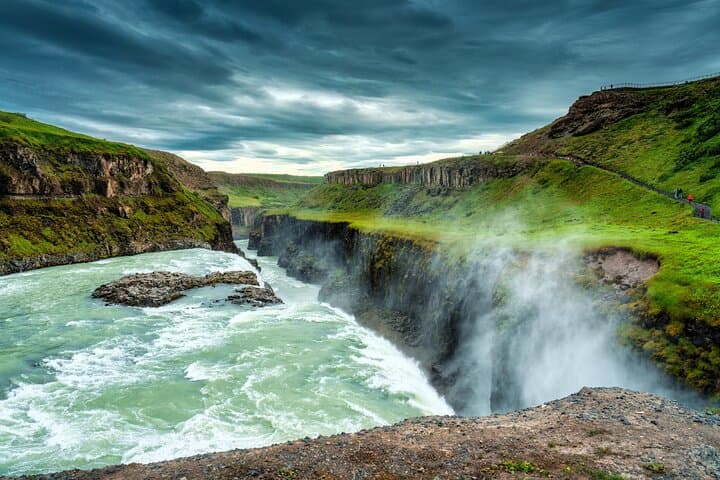
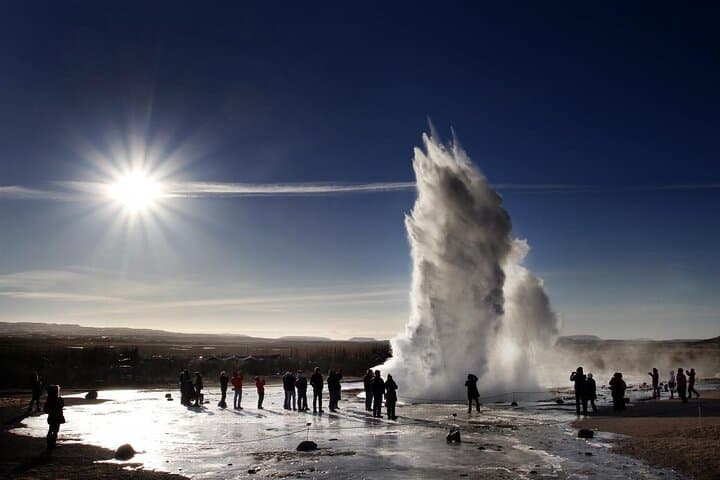
From there the tour moves into geothermal country. Geysir’s field of fumaroles and boiling mud pots is steam and anticipation; Strokkur reliably stages its five-minute spout, a water column that dares you to count the seconds. A short drive delivers Gullfoss, a two-tiered waterfall that doesn’t ask for attention — it takes it, roaring through a deep canyon with spray that catches light and fragments into rainbows on clear days.
Contrast follows comfort at Friðheimar, the tomato greenhouse that makes warmth a craft. Under polycarbonate roofs rows of tomato vines produce intensely flavored fruit thanks to geothermal heat and expert horticulture; the on-site restaurant centers tomato-forward lunches and a practical talk on sustainable greenhouse farming. Nearby, Icelandic horses, compact and sure-footed, patiently accept pats and photos.
The day finishes at Kerið, a volcanic crater with a vivid aquamarine lake at its bottom and sharply colored red and black volcanic rock on its rim. It’s a concise lesson in the Western Volcanic Zone: land that rose, fell and filled with water as a result of subterranean heat.
Practicalities: the tour runs about nine hours with multiple short stops (expect 15–70 minute windows per site), hotel pickup in Reykjavík and small-group dynamics up to 19 travelers. Dress in layers — windproof shell, hat and sturdy shoes — and bring a waterproof layer for spray at Gullfoss. Lunch at Friðheimar is usually not included; booking time for the greenhouse meal or carrying snacks is wise. Photography is best early and late when light softens the steam and brings out crater color. The itinerary is runnable in winter but snow and daylight affect timing, so check seasonal schedules.
For travelers who want a concentrated primer on Icelandic geology, history and modern ingenuity — and a chance to eat a tomato grown on volcanic heat — this Golden Circle loop delivers both spectacle and context in a single, highly accessible day.
easy.
9 hours.
Suitable for travelers of average fitness; requires short walks, some stairs and standing at viewpoints.
The tour lasts about nine hours, with multiple stops ranging from 15 to 70 minutes each.
Lunch is generally not included; the stop at Friðheimar offers a greenhouse restaurant where you can purchase a tomato-forward meal.
Children can join but must be accompanied by an adult; the operator recommends that infants (0–3) do not attend due to the duration and schedule.
Yes — pickup and drop-off in Reykjavík hotels and designated bus stops are included; be ready 30 minutes before scheduled departure.
The tour operates year-round but winter weather and limited daylight can affect timing and some stops; check for seasonal adjustments.
Admissions to Kerið are included on this itinerary; other stops do not require paid admission for typical viewpoints.
Thingvellir hosted Iceland’s Alþingi from 930 A.D., linking national governance to the island’s dramatic geology.
Many sites are managed to limit erosion and habitat disturbance; stick to marked paths and avoid trampling fragile moss and vegetation.
EastWest operates guided outdoor trips and adventures with an emphasis on safety, stewardship, and memorable experiences.
You step off the minibus and the air feels different — colder, mineral-rich, as if the landscape itself has a voice. A gravel path leads toward a shallow rift where two continents meet; wind combs the grass and carries the faint hiss of steam from distant hot springs. This is the Golden Circle, Iceland’s compact route of tectonic drama and cultivated warmth, run as a nine-hour small-group loop from Reykjavík that stitches Thingvellir, Geysir, Gullfoss, Friðheimar tomato greenhouses, a dairy farm and the Kerið crater into a single, tightly paced day.
You step off the minibus and the air feels different — colder, mineral-rich, as if the landscape itself has a voice. A gravel path leads toward a shallow rift where two continents meet; wind combs the grass and carries the faint hiss of steam from distant hot springs. This is the Golden Circle, Iceland’s compact route of tectonic drama and cultivated warmth, run as a nine-hour small-group loop from Reykjavík that stitches Thingvellir, Geysir, Gullfoss, Friðheimar tomato greenhouses, a dairy farm and the Kerið crater into a single, tightly paced day.
Thingvellir opens the story. Walk the rift valley and you can feel the slow tug of the North American and Eurasian plates — cracks, cliffs and clear, cold streams that once hosted the Alþingi, Iceland’s medieval parliament founded in 930 A.D. The landscape reads like a geological ledger: lava flows, glacial deposits and the imprint of ice ages layered beneath grass and moss.
From there the tour moves into geothermal country. Geysir’s field of fumaroles and boiling mud pots is steam and anticipation; Strokkur reliably stages its five-minute spout, a water column that dares you to count the seconds. A short drive delivers Gullfoss, a two-tiered waterfall that doesn’t ask for attention — it takes it, roaring through a deep canyon with spray that catches light and fragments into rainbows on clear days.
Contrast follows comfort at Friðheimar, the tomato greenhouse that makes warmth a craft. Under polycarbonate roofs rows of tomato vines produce intensely flavored fruit thanks to geothermal heat and expert horticulture; the on-site restaurant centers tomato-forward lunches and a practical talk on sustainable greenhouse farming. Nearby, Icelandic horses, compact and sure-footed, patiently accept pats and photos.
The day finishes at Kerið, a volcanic crater with a vivid aquamarine lake at its bottom and sharply colored red and black volcanic rock on its rim. It’s a concise lesson in the Western Volcanic Zone: land that rose, fell and filled with water as a result of subterranean heat.
Practicalities: the tour runs about nine hours with multiple short stops (expect 15–70 minute windows per site), hotel pickup in Reykjavík and small-group dynamics up to 19 travelers. Dress in layers — windproof shell, hat and sturdy shoes — and bring a waterproof layer for spray at Gullfoss. Lunch at Friðheimar is usually not included; booking time for the greenhouse meal or carrying snacks is wise. Photography is best early and late when light softens the steam and brings out crater color. The itinerary is runnable in winter but snow and daylight affect timing, so check seasonal schedules.
For travelers who want a concentrated primer on Icelandic geology, history and modern ingenuity — and a chance to eat a tomato grown on volcanic heat — this Golden Circle loop delivers both spectacle and context in a single, highly accessible day.