THE ADVENTURE COLLECTIVE® · Independent discovery and booking for outdoor travel

Walk the French Quarter after dusk with a guide who pairs archival research and local lore. In 90 minutes you’ll pass haunted hotels, the LaLaurie Mansion, and the edges of Jackson Square as stories from New Orleans’ layered past come to life.
Walk the French Quarter after dusk with a guide who pairs archival research and local lore. In 90 minutes you’ll pass haunted hotels, the LaLaurie Mansion, and the edges of Jackson Square as stories from New Orleans’ layered past come to life.
The lantern light from the storefront at 809 Royal Street slices through the humid evening, painting the cobblestones with an uneasy gold. Voices from nearby bars and the low hum of a passing streetcar pull in one direction; a guide in a crisp jacket draws the group the other way—toward a line of narrow doorways, iron balconies, and a history that refuses to stay quiet.
Verified experiences and guided adventures in the surrounding area.
Operated by Ghost City Tours in New Orleans · New Orleans, Louisiana
The lantern light from the storefront at 809 Royal Street slices through the humid evening, painting the cobblestones with an uneasy gold. Voices from nearby bars and the low hum of a passing streetcar pull in one direction; a guide in a crisp jacket draws the group the other way—toward a line of narrow doorways, iron balconies, and a history that refuses to stay quiet.
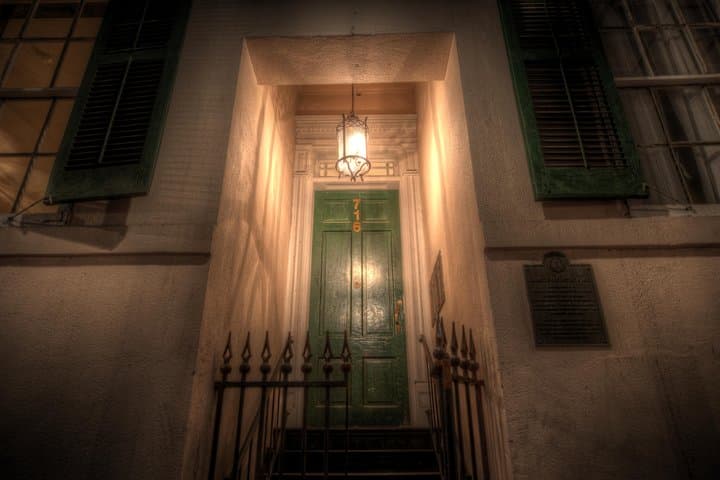
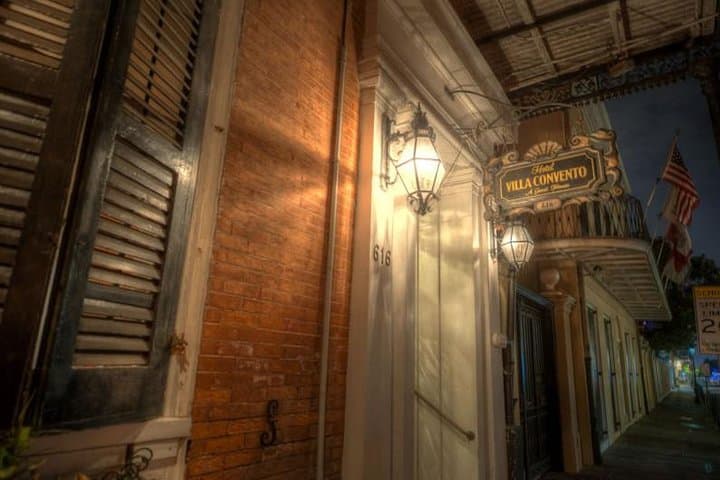
On this 90-minute walking tour through the French Quarter, the city’s past shows up in fragments: a torn letter tucked into a window, a ledger of a 19th-century boarding house, the shuttered front of a hotel with a ghost story lodged in its walls. The stories focus on places like the LaLaurie Mansion, a Creole townhouse whose name is threaded into New Orleans’ darkest folklore, and the edges of Jackson Square, where crowds still gather and old rumors ripple through the crowd like river current.
New Orleans’ geology and climate play a role in its hauntings. Built on low, swampy ground reclaimed from the Mississippi, the city carries layers of human history close to the surface—burials, migrations, and the creak of buildings that have soaked up three centuries of weather. Culturally, this is a place shaped by French, Spanish, African, and Caribbean traditions. That mix colors the tour: voodoo references sit next to Creole domestic tragedies, and tales of jazz greats mingle with accounts of unexplained footsteps in the night.
The tour’s strength is its balance of atmosphere and fact. Guides ground spectral stories with dates, newspaper clippings, and municipal records, so you leave with more than a thrill—you leave with context. Walking is easy: flat streets, occasional cobblestones, roughly 1–1.5 miles covered at a deliberate pace, perfect for storytelling stops.
Practical notes: meet at the Ghost City Tours storefront on Royal Street—look for the sign in the window—and wear sturdy shoes; the Quarter’s paving is charming and uneven. Even in summer humidity, bring a refillable water bottle and a light layer for breezy evenings. Photography is allowed, but flash can be jarring during quiet moments; use it sparingly.
Timing matters. Early evening captures the Quarter’s glow and gives the guide room to move through darker tales before late-night crowds thicken. The tour is family-friendly, but some stories are graphic in their historical detail—consider age and sensitivity.
If you want the uncanny with a side of history, this is an efficient, well-researched way to experience New Orleans after dark. The city’s streets keep talking; this tour hands you a flashlight and the stories to listen with.
easy.
1.5 hours.
Accessible to most fitness levels; involves 1–1.5 miles of mostly flat walking with pauses for stories
Meet at the Ghost City Tours storefront at 809 Royal Street; the guide will have a visible Ghost City Tours sign in the window.
Yes—this tour is listed as wheelchair accessible, but let the operator know in advance so they can accommodate any specific needs.
Expect about 1 to 1.5 miles total over 90 minutes, with frequent stops for stories and photos.
Children are welcome but must be accompanied by an adult; some stories include graphic historical detail and may not be suitable for very young children.
Tours run in most weather; check cancellation policies and consider rescheduling if heavy rain or severe conditions are forecast.
Yes—guides rely on gratuities; 15–20% of the ticket price or a flat amount per person is customary if you enjoyed the tour.
The French Quarter is one of the oldest parts of New Orleans, with architecture and street patterns dating to the 18th century and a complex mix of French, Spanish, African, and Caribbean influences.
Respect historic buildings and private property; stick to sidewalks and designated areas to reduce wear on fragile masonry and gardens.
Ghost City Tours in New Orleans operates guided outdoor trips and adventures with an emphasis on safety, stewardship, and memorable experiences.
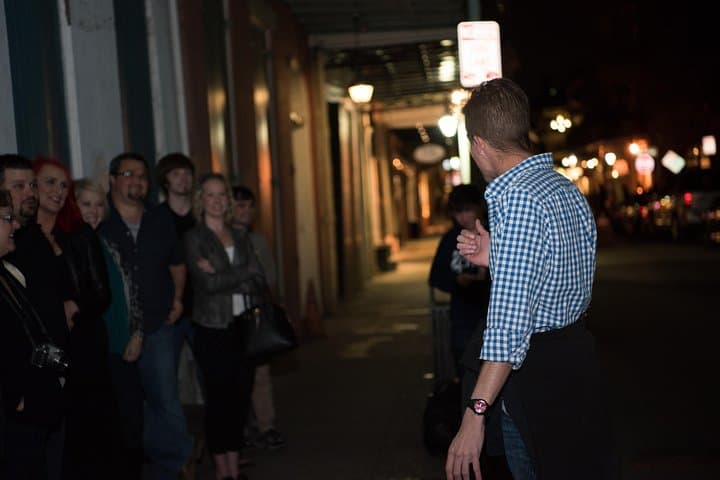
The lantern light from the storefront at 809 Royal Street slices through the humid evening, painting the cobblestones with an uneasy gold. Voices from nearby bars and the low hum of a passing streetcar pull in one direction; a guide in a crisp jacket draws the group the other way—toward a line of narrow doorways, iron balconies, and a history that refuses to stay quiet.
The lantern light from the storefront at 809 Royal Street slices through the humid evening, painting the cobblestones with an uneasy gold. Voices from nearby bars and the low hum of a passing streetcar pull in one direction; a guide in a crisp jacket draws the group the other way—toward a line of narrow doorways, iron balconies, and a history that refuses to stay quiet.
On this 90-minute walking tour through the French Quarter, the city’s past shows up in fragments: a torn letter tucked into a window, a ledger of a 19th-century boarding house, the shuttered front of a hotel with a ghost story lodged in its walls. The stories focus on places like the LaLaurie Mansion, a Creole townhouse whose name is threaded into New Orleans’ darkest folklore, and the edges of Jackson Square, where crowds still gather and old rumors ripple through the crowd like river current.
New Orleans’ geology and climate play a role in its hauntings. Built on low, swampy ground reclaimed from the Mississippi, the city carries layers of human history close to the surface—burials, migrations, and the creak of buildings that have soaked up three centuries of weather. Culturally, this is a place shaped by French, Spanish, African, and Caribbean traditions. That mix colors the tour: voodoo references sit next to Creole domestic tragedies, and tales of jazz greats mingle with accounts of unexplained footsteps in the night.
The tour’s strength is its balance of atmosphere and fact. Guides ground spectral stories with dates, newspaper clippings, and municipal records, so you leave with more than a thrill—you leave with context. Walking is easy: flat streets, occasional cobblestones, roughly 1–1.5 miles covered at a deliberate pace, perfect for storytelling stops.
Practical notes: meet at the Ghost City Tours storefront on Royal Street—look for the sign in the window—and wear sturdy shoes; the Quarter’s paving is charming and uneven. Even in summer humidity, bring a refillable water bottle and a light layer for breezy evenings. Photography is allowed, but flash can be jarring during quiet moments; use it sparingly.
Timing matters. Early evening captures the Quarter’s glow and gives the guide room to move through darker tales before late-night crowds thicken. The tour is family-friendly, but some stories are graphic in their historical detail—consider age and sensitivity.
If you want the uncanny with a side of history, this is an efficient, well-researched way to experience New Orleans after dark. The city’s streets keep talking; this tour hands you a flashlight and the stories to listen with.