THE ADVENTURE COLLECTIVE® · Independent discovery and booking for outdoor travel

Ride a two-hour, National Park–guided bus tour across Gettysburg’s fields and ridges. Visit Little Round Top, Devil’s Den, and the site of Pickett’s Charge while a licensed guide traces the decisions and human stories that shaped this turning point in the Civil War.
Ride a two-hour, National Park–guided bus tour across Gettysburg’s fields and ridges. Visit Little Round Top, Devil’s Den, and the site of Pickett’s Charge while a licensed guide traces the decisions and human stories that shaped this turning point in the Civil War.
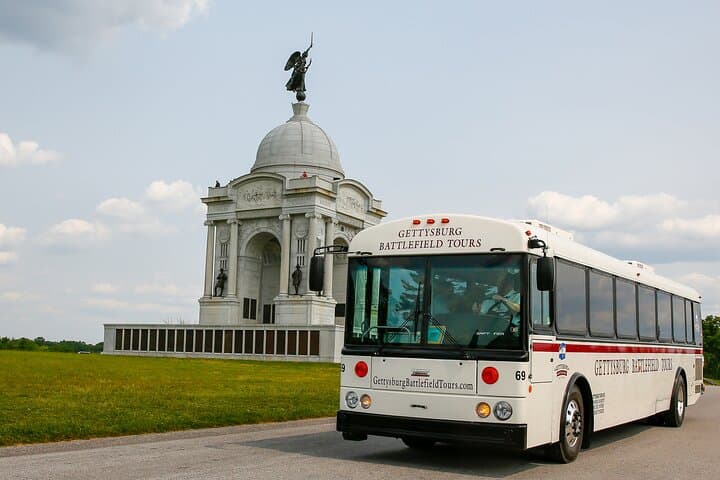
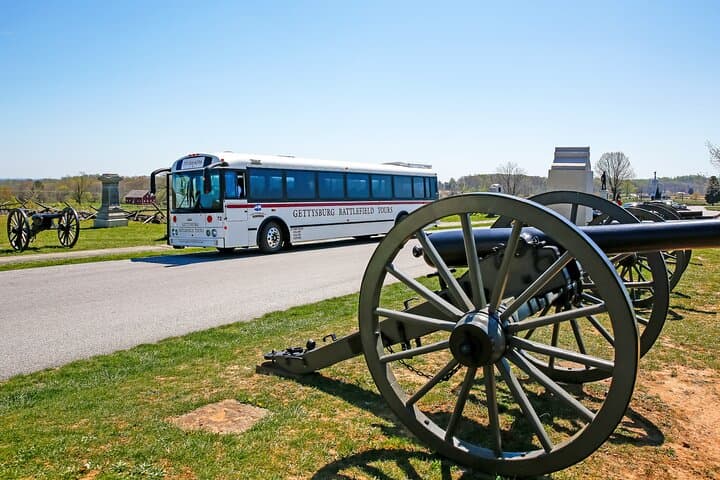
The bus eases out of downtown Gettysburg with the click of a seatbelt and the low hum of an engine that knows several million footsteps have passed this ground. Through the window the battlefield unfolds in ordered fields, low stone walls and abrupt rocky knolls—McPherson Ridge first, where musket smoke once pooled, then the sweep of Cemetery Ridge and the serrated profiles of Little Round Top and Devil’s Den. Inside, a licensed National Park guide strings these places into a human story: a three-day clash that reshaped the nation.
Verified experiences and guided adventures in the surrounding area.
Operated by Gettysburg Battlefield Tours · Gettysburg, Pennsylvania
The bus eases out of downtown Gettysburg with the click of a seatbelt and the low hum of an engine that knows several million footsteps have passed this ground. Through the window the battlefield unfolds in ordered fields, low stone walls and abrupt rocky knolls—McPherson Ridge first, where musket smoke once pooled, then the sweep of Cemetery Ridge and the serrated profiles of Little Round Top and Devil’s Den. Inside, a licensed National Park guide strings these places into a human story: a three-day clash that reshaped the nation.
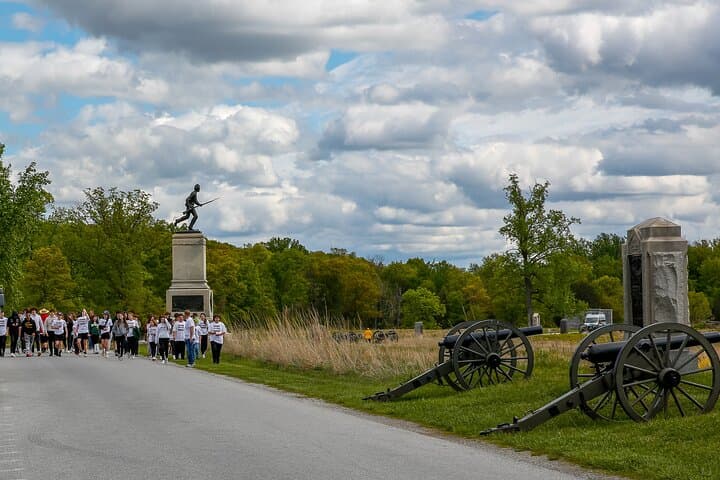
The ride is a compressed survey of a vast landscape of memory. Monuments punctuate green pastures—bronze cavalry figures, granite columns—each placed where regiments stood, charged, or broke. The guide parses troop movements, command decisions and the moments that made Pickett’s Charge both a tactical gamble and a moral fulcrum. Between sharps, the geology shows itself in low ridges and boulder-strewn slopes that shaped how men moved and where they sought cover; those same rocks, now weathered and quiet, channel voices from 1863.
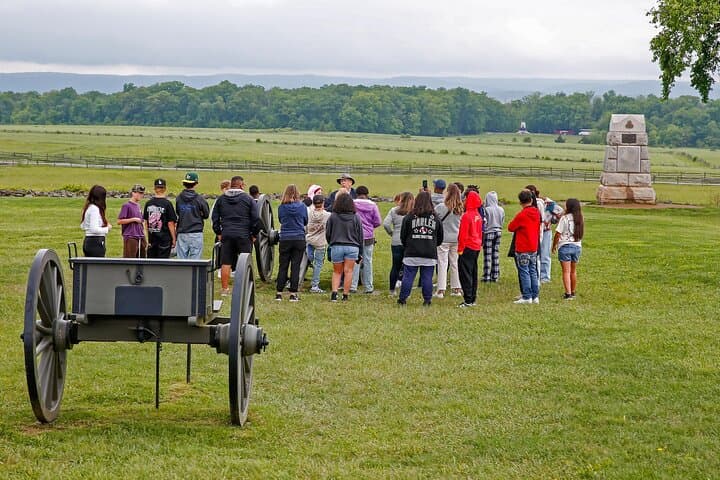
Gettysburg’s small town life frames the tour. The soldier-counted cemeteries and Lincoln’s short speech remain civic touchstones—visited by school groups, Civil War buffs and travelers drawn by the gravity of the place. The battlefield is managed as a National Military Park; its preservation is ongoing work, balancing visitor access with protecting fragile monuments and archaeological resources.
Practicality sets the pace here. The two-hour, air-conditioned coach loop is ideal for travelers who want authoritative context without hours of walking. Stops are brief and may include viewpoint pulls at Little Round Top and the high ground overlooking Pickett’s Charge; visitors should expect modest walks from parking areas to overlooks, and to follow ranger and guide instructions closely around monuments and fragile site features.
Plan to arrive early and check in at the Gettysburg Tour Center on Baltimore Street; parking is available but can fill on busy summer days. Dress in layers and wear sturdy shoes—the bus is comfortable, but listening stops often require negotiating uneven ground and short climbs. Bring water and a camera with a zoom; monuments read best from multiple distances and morning or late-afternoon light sharpens relief on the ridges.
This tour is both an orientation and an emotional primer: concise, fact-heavy, and human in equal measure. It gives travelers the landmarks and narratives they need to explore deeper—whether that means returning for a walking tour, visiting the museum, or simply standing where history pivoted and letting the place do the rest.
easy.
2 hours.
Minimal fitness required; be able to step on/off a coach and walk short, uneven distances at stops
Meet at the Gettysburg Tour Center on Baltimore Street (777/778 Baltimore St.). Plan to arrive 20–30 minutes before departure for check-in and parking.
Yes. The two-hour bus tour is rated easy and is appropriate for most ages, though some stops require short walks over uneven ground.
Guides may allow brief exploration at designated stops, but the tour follows a timed itinerary. If you want extended time, consider a separate walking tour or self-guided visit afterward.
The coach has a restroom and park facilities are available at major stops, but accessibility can vary—ask the guide if you have specific needs.
Yes—photography is permitted. Drones are restricted within the National Military Park without authorization.
For a full refund cancel at least 24 hours before the scheduled departure; weather-related cancellations may also apply.
Gettysburg was the bloodiest battle of the Civil War and the site of Lincoln’s Gettysburg Address; the park preserves battlefield terrain and hundreds of monuments.
Park staff and local organizations manage preservation and visitor impact—stay on designated paths and avoid touching monuments to help protect fragile sites.
Gettysburg Battlefield Tours operates guided outdoor trips and adventures with an emphasis on safety, stewardship, and memorable experiences.
The bus eases out of downtown Gettysburg with the click of a seatbelt and the low hum of an engine that knows several million footsteps have passed this ground. Through the window the battlefield unfolds in ordered fields, low stone walls and abrupt rocky knolls—McPherson Ridge first, where musket smoke once pooled, then the sweep of Cemetery Ridge and the serrated profiles of Little Round Top and Devil’s Den. Inside, a licensed National Park guide strings these places into a human story: a three-day clash that reshaped the nation.
The bus eases out of downtown Gettysburg with the click of a seatbelt and the low hum of an engine that knows several million footsteps have passed this ground. Through the window the battlefield unfolds in ordered fields, low stone walls and abrupt rocky knolls—McPherson Ridge first, where musket smoke once pooled, then the sweep of Cemetery Ridge and the serrated profiles of Little Round Top and Devil’s Den. Inside, a licensed National Park guide strings these places into a human story: a three-day clash that reshaped the nation.
The ride is a compressed survey of a vast landscape of memory. Monuments punctuate green pastures—bronze cavalry figures, granite columns—each placed where regiments stood, charged, or broke. The guide parses troop movements, command decisions and the moments that made Pickett’s Charge both a tactical gamble and a moral fulcrum. Between sharps, the geology shows itself in low ridges and boulder-strewn slopes that shaped how men moved and where they sought cover; those same rocks, now weathered and quiet, channel voices from 1863.
Gettysburg’s small town life frames the tour. The soldier-counted cemeteries and Lincoln’s short speech remain civic touchstones—visited by school groups, Civil War buffs and travelers drawn by the gravity of the place. The battlefield is managed as a National Military Park; its preservation is ongoing work, balancing visitor access with protecting fragile monuments and archaeological resources.
Practicality sets the pace here. The two-hour, air-conditioned coach loop is ideal for travelers who want authoritative context without hours of walking. Stops are brief and may include viewpoint pulls at Little Round Top and the high ground overlooking Pickett’s Charge; visitors should expect modest walks from parking areas to overlooks, and to follow ranger and guide instructions closely around monuments and fragile site features.
Plan to arrive early and check in at the Gettysburg Tour Center on Baltimore Street; parking is available but can fill on busy summer days. Dress in layers and wear sturdy shoes—the bus is comfortable, but listening stops often require negotiating uneven ground and short climbs. Bring water and a camera with a zoom; monuments read best from multiple distances and morning or late-afternoon light sharpens relief on the ridges.
This tour is both an orientation and an emotional primer: concise, fact-heavy, and human in equal measure. It gives travelers the landmarks and narratives they need to explore deeper—whether that means returning for a walking tour, visiting the museum, or simply standing where history pivoted and letting the place do the rest.