THE ADVENTURE COLLECTIVE® · Independent discovery and booking for outdoor travel

Drive up to Gellért Hill and the Citadella with a licensed private guide and private transport. Three hours of panoramic views, wartime history, and hidden viewpoints that reveal Budapest’s layered past.
Drive up to Gellért Hill and the Citadella with a licensed private guide and private transport. Three hours of panoramic views, wartime history, and hidden viewpoints that reveal Budapest’s layered past.
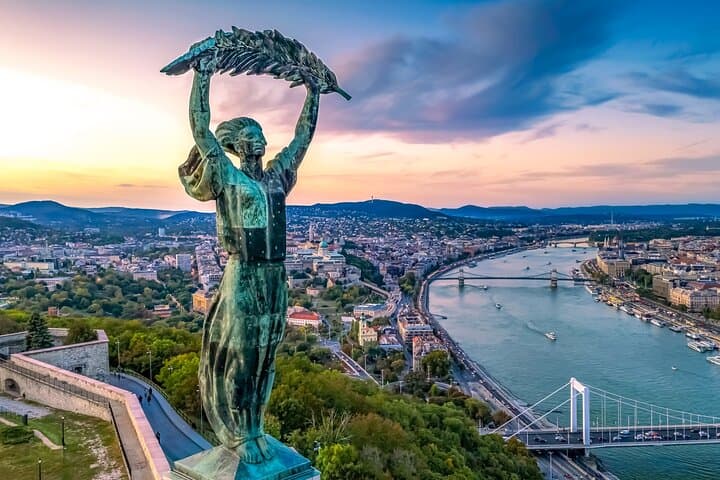
You pull away from a quiet hotel street and the city opens like a map beneath glass: the Danube threading bronze light through bridges, roofs to the east catching late-afternoon sun, and above it all, the green bulk of Gellért Hill rising like a watchful neighbor.
Verified experiences and guided adventures in the surrounding area.
Operated by Rosotravel Hungary · Budapest, Budapest
You pull away from a quiet hotel street and the city opens like a map beneath glass: the Danube threading bronze light through bridges, roofs to the east catching late-afternoon sun, and above it all, the green bulk of Gellért Hill rising like a watchful neighbor.
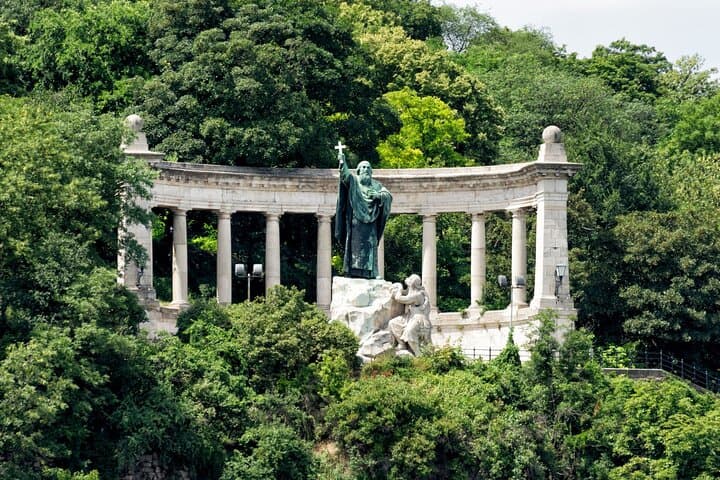
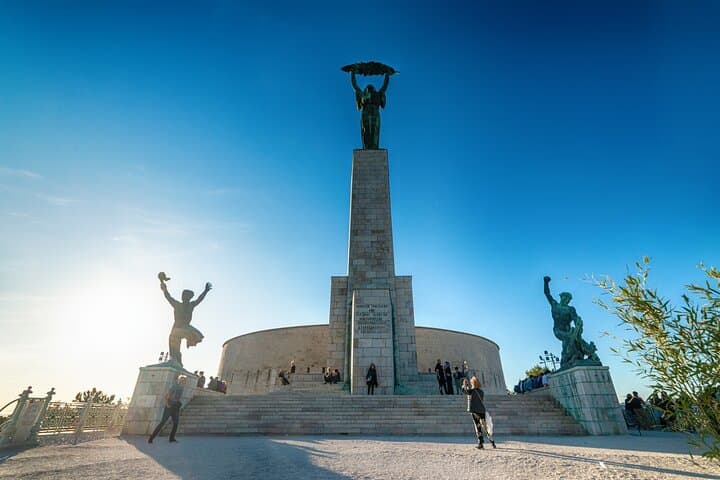
The private car slopes up through tight switchbacks while a licensed guide folds local history into the view — the martyrdom of St. Gerard, said to have been hurled from the hill’s cliffs; the Citadella, the Habsburg-built fortress that stamped the skyline after 1848; and the Liberty Statue, a later landmark whose meaning shifted as fast as Budapest’s politics.
Gellért Hill is geological as well as historical: an outcrop of Miocene limestone and thermal springs that shaped both human settlement and the Baths below. The hill’s flanks harbor chestnut trees, patches of scrub and trails that reveal the city in layers — Ottoman walls, Austro-Hungarian palaces and Communist-era relics — so the panorama feels like a biography of Budapest in one sweep.
Your guide’s voice is pragmatic and pointed: pointing out vantage points that frame the Parliament across the river, describing the Citadella’s scars from the 1848 uprising and the two World Wars, and naming the narrow streets where artisans and contemporary cafés trade space. Short stops are part of the rhythm — thirty to forty-five minutes to breathe the air, take photos, and listen. The experience is intimate because it is private: the car and guide adapt to what interests you, whether that’s architecture, wartime stories or local legends.
Practicalities matter. The drive lasts about three hours; most of the walking is gentle and accessible, but some viewpoints have uneven paving and steep approaches. The tour is wheelchair accessible with advance notice, and pickups from hotels in central Budapest make logistics simple. If you want entry into the Citadella or a longer hike on the hill’s south side, ask the guide — extras can be arranged but are not included by default.
Timing makes the scene: sunrise and early evening offer the most dramatic light on the Danube and bridges, while midday is better for clearer city details. Bring a light jacket for hilltop winds and comfortable shoes for cobbled viewpoints. The guide will give a local reading list and directions to lesser-known stops on the descent, so you can keep exploring once the car drops you back at your hotel.
This is a short, focused portrait of Budapest — part geology, part revolt, and part urban theater — guided by someone who knows which story fits which window in the city.
easy.
3 hours.
Suitable for all fitness levels; expect short walks and some steps at viewpoints
Yes; the operator provides wheelchair-accessible transport and routes—notify them in advance so they can arrange appropriate vehicle and pickup.
The tour is approximately 3 hours long, including multiple short stops for photos and commentary.
Standard tours include exterior stops and guided commentary; entry inside the Citadella is not included but can be arranged on request.
Guides are available in English and Hungarian, with German, Spanish, French and Italian options often offered—confirm language when booking.
Yes, pickup and drop-off at central Budapest hotels are included; be ready at your accommodation five minutes before the scheduled time.
Group sizes are typically 1–25 per guide; for larger parties additional guides and vehicles will be arranged.
The Citadella was built by the Habsburgs after the 1848 revolution to control Budapest; the Liberty Statue was later erected in 1947 and has undergone reinterpretation since the fall of communism.
Gellért Hill is managed to limit erosion and protect green spaces—stick to paths, avoid littering, and respect restricted areas to help preserve the site.
Rosotravel Hungary operates guided outdoor trips and adventures with an emphasis on safety, stewardship, and memorable experiences.

You pull away from a quiet hotel street and the city opens like a map beneath glass: the Danube threading bronze light through bridges, roofs to the east catching late-afternoon sun, and above it all, the green bulk of Gellért Hill rising like a watchful neighbor.
You pull away from a quiet hotel street and the city opens like a map beneath glass: the Danube threading bronze light through bridges, roofs to the east catching late-afternoon sun, and above it all, the green bulk of Gellért Hill rising like a watchful neighbor.
The private car slopes up through tight switchbacks while a licensed guide folds local history into the view — the martyrdom of St. Gerard, said to have been hurled from the hill’s cliffs; the Citadella, the Habsburg-built fortress that stamped the skyline after 1848; and the Liberty Statue, a later landmark whose meaning shifted as fast as Budapest’s politics.
Gellért Hill is geological as well as historical: an outcrop of Miocene limestone and thermal springs that shaped both human settlement and the Baths below. The hill’s flanks harbor chestnut trees, patches of scrub and trails that reveal the city in layers — Ottoman walls, Austro-Hungarian palaces and Communist-era relics — so the panorama feels like a biography of Budapest in one sweep.
Your guide’s voice is pragmatic and pointed: pointing out vantage points that frame the Parliament across the river, describing the Citadella’s scars from the 1848 uprising and the two World Wars, and naming the narrow streets where artisans and contemporary cafés trade space. Short stops are part of the rhythm — thirty to forty-five minutes to breathe the air, take photos, and listen. The experience is intimate because it is private: the car and guide adapt to what interests you, whether that’s architecture, wartime stories or local legends.
Practicalities matter. The drive lasts about three hours; most of the walking is gentle and accessible, but some viewpoints have uneven paving and steep approaches. The tour is wheelchair accessible with advance notice, and pickups from hotels in central Budapest make logistics simple. If you want entry into the Citadella or a longer hike on the hill’s south side, ask the guide — extras can be arranged but are not included by default.
Timing makes the scene: sunrise and early evening offer the most dramatic light on the Danube and bridges, while midday is better for clearer city details. Bring a light jacket for hilltop winds and comfortable shoes for cobbled viewpoints. The guide will give a local reading list and directions to lesser-known stops on the descent, so you can keep exploring once the car drops you back at your hotel.
This is a short, focused portrait of Budapest — part geology, part revolt, and part urban theater — guided by someone who knows which story fits which window in the city.