THE ADVENTURE COLLECTIVE® · Independent discovery and booking for outdoor travel

Board a twelve-passenger inflatable at Pointe Rouge and spend a 6–8 hour day exploring the Calanques: an hour of snorkeling, a guided discovery or certified dive, and lunch on deck amid limestone cliffs and turquoise water. Practical briefings, provided equipment, and national park rules keep the focus on the sea.
Board a twelve-passenger inflatable at Pointe Rouge and spend a 6–8 hour day exploring the Calanques: an hour of snorkeling, a guided discovery or certified dive, and lunch on deck amid limestone cliffs and turquoise water. Practical briefings, provided equipment, and national park rules keep the focus on the sea.
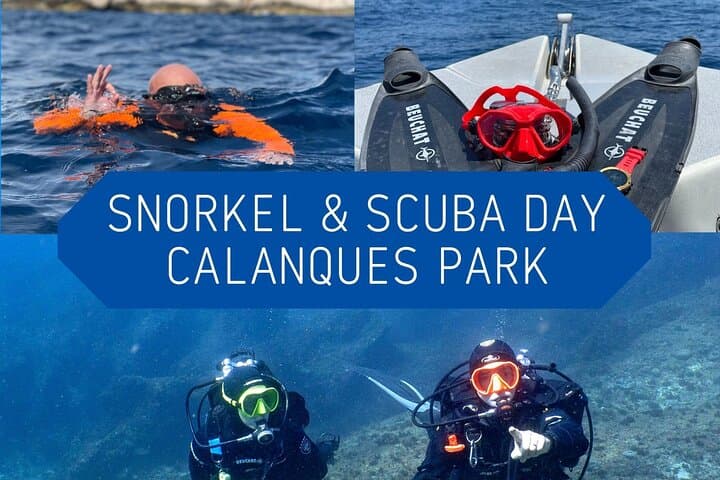
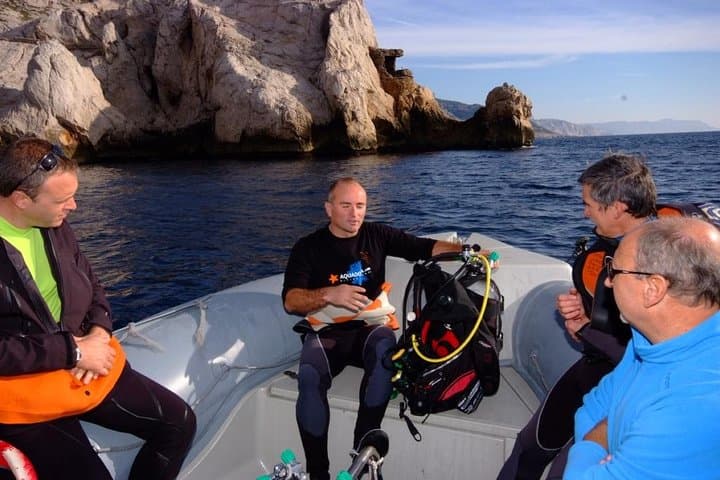
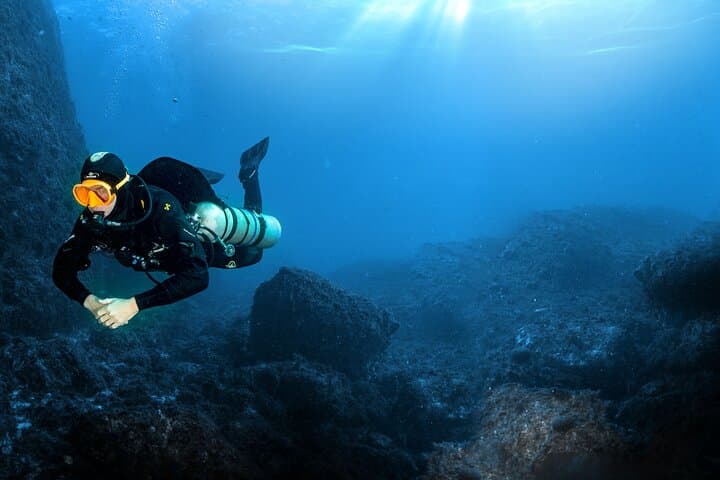
The motor coughs, the harbor light slides away and Marseille’s industrial fringe gives way to a coastline of knife-edge limestone and hidden coves. Onboard a twelve-passenger inflatable, the sea takes over your rhythm: an hour of snorkeling in water so clear the seabed seems three-dimensional, a sunlit lunch on deck, then a guided scuba descent through seagrass gardens and walls pocked with ancient holes. The day moves in manageable beats—briefing, surface time, breath-held silence under the surface—and the Calanques answer in turquoise pockets and sheer chalk cliffs that drop straight into the Mediterranean.
Verified experiences and guided adventures in the surrounding area.
Operated by Aquadomia.com · Marseille, Provence-Alpes-Côte d'Azur
The motor coughs, the harbor light slides away and Marseille’s industrial fringe gives way to a coastline of knife-edge limestone and hidden coves. Onboard a twelve-passenger inflatable, the sea takes over your rhythm: an hour of snorkeling in water so clear the seabed seems three-dimensional, a sunlit lunch on deck, then a guided scuba descent through seagrass gardens and walls pocked with ancient holes. The day moves in manageable beats—briefing, surface time, breath-held silence under the surface—and the Calanques answer in turquoise pockets and sheer chalk cliffs that drop straight into the Mediterranean.
The Calanques National Park, created in 2012, is a geological archive of folded limestone and karst weathering. These narrow inlets—calanques—were carved by ancient rivers and uplifted by tectonic motion; today they frame a living coastline where Posidonia seagrass holds sand in place and provides nursery habitat for fish. The area has long been a working coastline: small-scale fishing villages and Marseille’s port culture blend with climbing routes and day-boat traffic. Conservation rules limit anchoring and access in parts of the park, which keeps many coves unusually intact for a Mediterranean shoreline.
Culturally, a day here pairs with Marseille’s gritty salt-of-the-earth attitude: bring sensible gear, expect efficient local guides, and respect local rules. The operators launch from Pointe Rouge—an outer neighborhood that feels more seaside suburb than city center—and aim for calanques that can include En-Vau, Sugiton or small, quieter bays depending on conditions.
Practical guidance: plan for a 6–8 hour outing. The operator provides snorkeling and dive equipment and conducts a discovery dive option for beginners; certified divers must present certification. Wear a thermal layer or thin wetsuit—wind and upwelling can make the water feel much colder than midday air. Bring a packed lunch, refillable water bottle (plastic-free requested), a sun layer, and clothing for post-dive chill. Divers should be mindful of the 48-hour no-fly guideline and complete the pre-dive medical questionnaire honestly.
Logistics are straightforward: meet at the Dune Diving shop at Port Pointe Rouge, where guides run through safety and the route. Expect roughly 30 minutes transit to the first site, an hour of snorkeling, lunch and surface time, then a 30–60 minute dive depending on air and comfort. Photography is best from the boat and at the surface—underwater shots require housings and extra planning. Weather dictates sites and timing; operators will adjust for swell and visibility.
This is a day designed for curiosity—easy to enter, rich in marine life, and framed by geology that rewards both beginner snorkelers and certified divers looking for bright Mediterranean walls.
moderate.
6–8 hours.
Moderate fitness required: basic swimming ability and comfort in open water; divers need the stamina for a 30–60 minute dive.
No—there is an introductory discovery dive option for first-time divers; certified divers must show proof of certification at check-in.
Minimum age is 10 years; children must be accompanied by an adult and meet the operator’s health requirements.
Yes—snorkel and diving equipment are provided and included in the price.
Diving is not recommended within 48 hours of flying; you’ll also complete a health questionnaire before diving.
Lunch is not provided—bring your own packed lunch and refillable water; operators ask you avoid disposable plastic.
Trips may be canceled for safety if conditions are poor; the operator will inform you and follow their cancellation policy.
The Calanques were shaped by tectonic uplift and river incision; historically the coastline supported small fishing communities and now falls partly under national park protection.
Strict anchoring and access rules protect Posidonia seagrass and spawning grounds—obey guide instructions and avoid touching or collecting marine life.
Aquadomia.com operates guided outdoor trips and adventures with an emphasis on safety, stewardship, and memorable experiences.
The motor coughs, the harbor light slides away and Marseille’s industrial fringe gives way to a coastline of knife-edge limestone and hidden coves. Onboard a twelve-passenger inflatable, the sea takes over your rhythm: an hour of snorkeling in water so clear the seabed seems three-dimensional, a sunlit lunch on deck, then a guided scuba descent through seagrass gardens and walls pocked with ancient holes. The day moves in manageable beats—briefing, surface time, breath-held silence under the surface—and the Calanques answer in turquoise pockets and sheer chalk cliffs that drop straight into the Mediterranean.
The motor coughs, the harbor light slides away and Marseille’s industrial fringe gives way to a coastline of knife-edge limestone and hidden coves. Onboard a twelve-passenger inflatable, the sea takes over your rhythm: an hour of snorkeling in water so clear the seabed seems three-dimensional, a sunlit lunch on deck, then a guided scuba descent through seagrass gardens and walls pocked with ancient holes. The day moves in manageable beats—briefing, surface time, breath-held silence under the surface—and the Calanques answer in turquoise pockets and sheer chalk cliffs that drop straight into the Mediterranean.
The Calanques National Park, created in 2012, is a geological archive of folded limestone and karst weathering. These narrow inlets—calanques—were carved by ancient rivers and uplifted by tectonic motion; today they frame a living coastline where Posidonia seagrass holds sand in place and provides nursery habitat for fish. The area has long been a working coastline: small-scale fishing villages and Marseille’s port culture blend with climbing routes and day-boat traffic. Conservation rules limit anchoring and access in parts of the park, which keeps many coves unusually intact for a Mediterranean shoreline.
Culturally, a day here pairs with Marseille’s gritty salt-of-the-earth attitude: bring sensible gear, expect efficient local guides, and respect local rules. The operators launch from Pointe Rouge—an outer neighborhood that feels more seaside suburb than city center—and aim for calanques that can include En-Vau, Sugiton or small, quieter bays depending on conditions.
Practical guidance: plan for a 6–8 hour outing. The operator provides snorkeling and dive equipment and conducts a discovery dive option for beginners; certified divers must present certification. Wear a thermal layer or thin wetsuit—wind and upwelling can make the water feel much colder than midday air. Bring a packed lunch, refillable water bottle (plastic-free requested), a sun layer, and clothing for post-dive chill. Divers should be mindful of the 48-hour no-fly guideline and complete the pre-dive medical questionnaire honestly.
Logistics are straightforward: meet at the Dune Diving shop at Port Pointe Rouge, where guides run through safety and the route. Expect roughly 30 minutes transit to the first site, an hour of snorkeling, lunch and surface time, then a 30–60 minute dive depending on air and comfort. Photography is best from the boat and at the surface—underwater shots require housings and extra planning. Weather dictates sites and timing; operators will adjust for swell and visibility.
This is a day designed for curiosity—easy to enter, rich in marine life, and framed by geology that rewards both beginner snorkelers and certified divers looking for bright Mediterranean walls.