THE ADVENTURE COLLECTIVE® · Independent discovery and booking for outdoor travel

Explore Mauritius’s southern spine in a private SUV: a dormant volcano, a sacred crater lake, native forest vistas and the otherworldly 7‑coloured earth. This full‑day chauffeur tour balances easy travel with striking photo stops and local insights.
Explore Mauritius’s southern spine in a private SUV: a dormant volcano, a sacred crater lake, native forest vistas and the otherworldly 7‑coloured earth. This full‑day chauffeur tour balances easy travel with striking photo stops and local insights.
You step into the SUV and the island exhales — warm air scented with eucalyptus and sea spray pushes through the open window as the driver eases onto the coastal road. Over the next 6–8 hours the south of Mauritius unfolds like a series of postcard frames: a volcanic crater staring back from the plains, a sacred lake ringed with temple towers, jagged ridges cloaked in native forest, and the unreal stripes of the 7‑coloured earth.
Verified experiences and guided adventures in the surrounding area.
Operated by Island Cove Mauritius · Chamarel, Black River District
You step into the SUV and the island exhales — warm air scented with eucalyptus and sea spray pushes through the open window as the driver eases onto the coastal road. Over the next 6–8 hours the south of Mauritius unfolds like a series of postcard frames: a volcanic crater staring back from the plains, a sacred lake ringed with temple towers, jagged ridges cloaked in native forest, and the unreal stripes of the 7‑coloured earth.
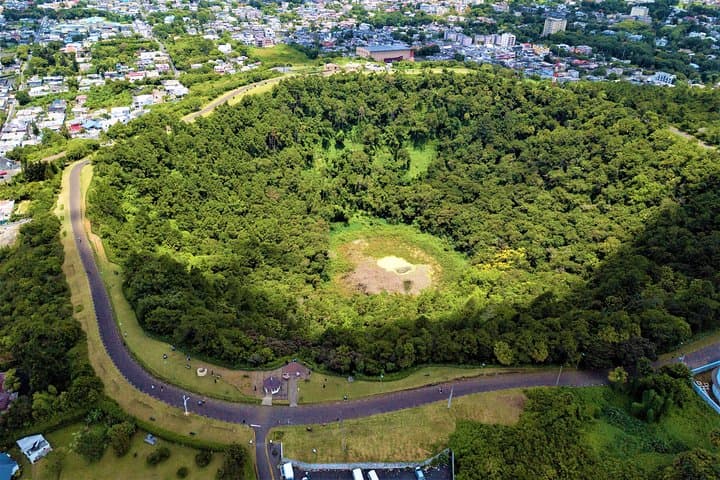
Start at Trou aux Cerfs, a dormant crater whose rim sits roughly 600 metres above sea level. The gaze converts into context: volcanic upheaval sculpted this island, and the crater is a compact reminder — a green bowl that once bubbled with lava and now hosts avocado trees and an open-air horizon. From there the route slips into the island’s spiritual geography at Grand-Bassin (Ganga Talao), a highland lake considered the most sacred Hindu site in Mauritius. Statues of gods and pilgrims’ offerings give the place an immediacy that contrasts with the quiet of the crater.
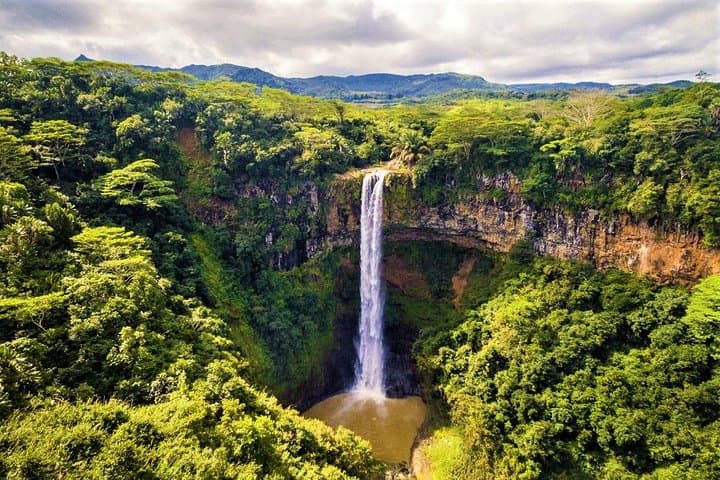
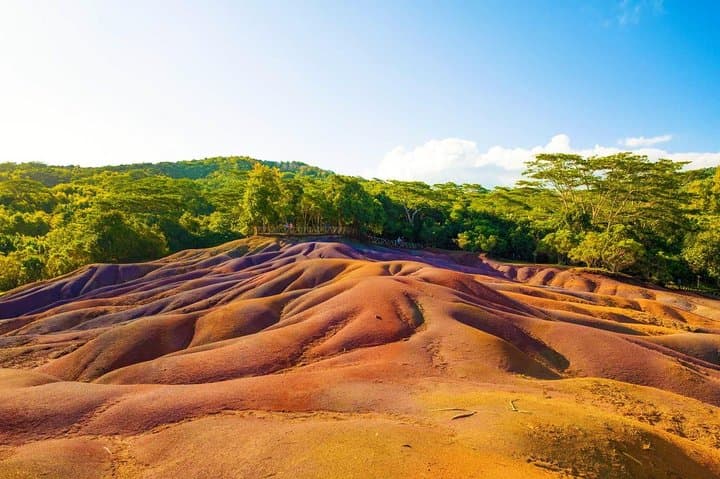
The middle hours are for wild spaces. Black River Gorges National Park is where endemic plants push back at development and where you can feel the island’s older geology: basalt ridgelines, steep valleys and waterfalls that still dare you to chase them. Nearby Chamarel offers the tour’s signature visual surprise — dunes of iron-rich earth that have separated into banded hues by weathering — and a waterfall that drops through volcanic layers into a narrow pool.
Culturally, the south is a patchwork: Creole villages, Hindu temples, and small coffee growers who cultivate volcanic soil. Expect local markets, casual stalls selling coffee and spiced snacks, and artisans with small collections of woven goods.
Practical edge: this is a private, chauffeur-driven SUV with air conditioning and unlimited mileage for 8 hours. The itinerary typically includes short stops (10–20 minutes) at Trou aux Cerfs and Grand‑Bassin, and longer 20‑minute visits at Chamarel and the main viewpoints. Bring water, sun protection, and modest footwear for short walks at viewpoints and a short climb at the waterfall overlook. Carry local cash for temple donations and roadside souvenirs; many small vendors are cash-only. If you want photos at sunrise light, request an earlier pickup — traffic and timing determine which viewpoints catch gold tones. The route is low-effort physically but rich in sensory change; you’ll return with panoramic photos and a clearer understanding of why Mauritius’s south feels more geologic than touristic.
Tips for booking: confirm pick-up location, ask about infant seats if needed, and verify whether entrance fees are included for sites that require it. For calmer weather and clearer mountain views, schedule between May and October when rainfall is lower.
easy.
6–8 hours.
Minimal fitness required—good for travelers who can manage short walks on uneven terrain and brief stair climbs.
Yes — the tour is chauffeur-driven and private for your booking, with pickup and drop-off at your accommodation anywhere in Mauritius.
Some stops include admission; confirm with the operator which specific sites are covered and whether extra local fees apply for certain viewpoints.
Private tours often allow flexibility; request changes when booking but expect the driver to advise on timing to fit an 8‑hour day.
Yes—infant seats can be provided on request. The tour involves short walks that are generally child-friendly.
Drivers typically speak English and French; some may speak basic Creole. Confirm language needs when booking.
The operator may cancel in heavy rain for safety; check the cancellation policy (full refund if canceled 24 hours before departure).
The south preserves Mauritius’s volcanic past and multicultural heritage—Hindu pilgrimage sites like Grand‑Bassin grew from 19th‑century indentured laborer communities, while the landscape reflects millennia of volcanic formation.
Black River Gorges is a conservation priority with reforestation projects and endemic-species protection; visitors are encouraged to stick to marked paths and avoid feeding wildlife.
Island Cove Mauritius operates guided outdoor trips and adventures with an emphasis on safety, stewardship, and memorable experiences.
You step into the SUV and the island exhales — warm air scented with eucalyptus and sea spray pushes through the open window as the driver eases onto the coastal road. Over the next 6–8 hours the south of Mauritius unfolds like a series of postcard frames: a volcanic crater staring back from the plains, a sacred lake ringed with temple towers, jagged ridges cloaked in native forest, and the unreal stripes of the 7‑coloured earth.
You step into the SUV and the island exhales — warm air scented with eucalyptus and sea spray pushes through the open window as the driver eases onto the coastal road. Over the next 6–8 hours the south of Mauritius unfolds like a series of postcard frames: a volcanic crater staring back from the plains, a sacred lake ringed with temple towers, jagged ridges cloaked in native forest, and the unreal stripes of the 7‑coloured earth.
Start at Trou aux Cerfs, a dormant crater whose rim sits roughly 600 metres above sea level. The gaze converts into context: volcanic upheaval sculpted this island, and the crater is a compact reminder — a green bowl that once bubbled with lava and now hosts avocado trees and an open-air horizon. From there the route slips into the island’s spiritual geography at Grand-Bassin (Ganga Talao), a highland lake considered the most sacred Hindu site in Mauritius. Statues of gods and pilgrims’ offerings give the place an immediacy that contrasts with the quiet of the crater.
The middle hours are for wild spaces. Black River Gorges National Park is where endemic plants push back at development and where you can feel the island’s older geology: basalt ridgelines, steep valleys and waterfalls that still dare you to chase them. Nearby Chamarel offers the tour’s signature visual surprise — dunes of iron-rich earth that have separated into banded hues by weathering — and a waterfall that drops through volcanic layers into a narrow pool.
Culturally, the south is a patchwork: Creole villages, Hindu temples, and small coffee growers who cultivate volcanic soil. Expect local markets, casual stalls selling coffee and spiced snacks, and artisans with small collections of woven goods.
Practical edge: this is a private, chauffeur-driven SUV with air conditioning and unlimited mileage for 8 hours. The itinerary typically includes short stops (10–20 minutes) at Trou aux Cerfs and Grand‑Bassin, and longer 20‑minute visits at Chamarel and the main viewpoints. Bring water, sun protection, and modest footwear for short walks at viewpoints and a short climb at the waterfall overlook. Carry local cash for temple donations and roadside souvenirs; many small vendors are cash-only. If you want photos at sunrise light, request an earlier pickup — traffic and timing determine which viewpoints catch gold tones. The route is low-effort physically but rich in sensory change; you’ll return with panoramic photos and a clearer understanding of why Mauritius’s south feels more geologic than touristic.
Tips for booking: confirm pick-up location, ask about infant seats if needed, and verify whether entrance fees are included for sites that require it. For calmer weather and clearer mountain views, schedule between May and October when rainfall is lower.