THE ADVENTURE COLLECTIVE® · Independent discovery and booking for outdoor travel

Spend a full day traveling north from Delhi to visit Rishikesh’s ashrams and Haridwar’s famous ghats. This private tour combines cultural ritual, riverside views and easy walking among temples and yoga centers.
Spend a full day traveling north from Delhi to visit Rishikesh’s ashrams and Haridwar’s famous ghats. This private tour combines cultural ritual, riverside views and easy walking among temples and yoga centers.
Morning light on the Ganges slices through mist as a private car winds north from Delhi toward the Himalayan foothills, delivering travelers into two of India's most charged river towns in a single long day. The tour drops you at Ram Jhula where iron cables creak above pilgrims and yoga students, then threads quieter alleys toward ashrams that still publish handwritten schedules for chanting and seva. By late afternoon the group reaches Haridwar’s Har Ki Pauri, where priests arrange lamps and the river answers with reflected flames.
Verified experiences and guided adventures in the surrounding area.
Operated by Saksham Holidays · Rishikesh, Uttarakhand
Morning light on the Ganges slices through mist as a private car winds north from Delhi toward the Himalayan foothills, delivering travelers into two of India's most charged river towns in a single long day. The tour drops you at Ram Jhula where iron cables creak above pilgrims and yoga students, then threads quieter alleys toward ashrams that still publish handwritten schedules for chanting and seva. By late afternoon the group reaches Haridwar’s Har Ki Pauri, where priests arrange lamps and the river answers with reflected flames.
Rishikesh grew as a spiritual hub in the 20th century—Sivananda and Parmarth Niketan attracted seekers from across India and abroad—while Haridwar’s Ghats host millennia of ritual and the periodic Kumbh Mela, a gathering with deep historical roots in Hindu cosmology.
Geologically the region marks the transition from Indo-Gangetic plains to Siwalik foothills; the Ganges here carries the long erosion story of the Himalaya. Culturally, expect Sanskritic ritual alongside modern yoga schools and souvenir stalls selling rudraksha beads.
Practically, this is a long, low-impact day: expect 5–6 hours driving total, multiple short stops for ashrams and ghats, and minimal technical difficulty. Carry modest clothing for temple visits, a reusable water bottle, sun protection, and cash for small donations. Timing matters—arrive at Har Ki Pauri before sunset if you want the full aarti spectacle. Respect silence zones at meditation centers and avoid flash photography during rituals. The tour is sensory and steady: incense, river sounds, and the human flow of devotion guide the pace.
easy.
16 hours (full day).
Suitable for travelers in average fitness—long day of sitting with short, easy walks at sites
Pickup is usually arranged from a Delhi hotel in the morning; the tour returns to Delhi the same evening.
No — walking at each stop is short and low-effort, but the overall day is long due to driving time.
Typical inclusions are bottled water and private transport; meals and any optional donations or special admissions are usually not included unless specified.
Conservative clothing covering shoulders and knees is recommended; remove shoes where required and follow site-specific rules.
Haridwar has been a major pilgrimage gateway for centuries and hosts the Kumbh gatherings; Rishikesh rose in prominence in the 20th century as a global yoga center.
The Ganges faces pollution and flow-management challenges; support local eco-initiatives and avoid single-use plastics to reduce impact.
Saksham Holidays operates guided outdoor trips and adventures with an emphasis on safety, stewardship, and memorable experiences.
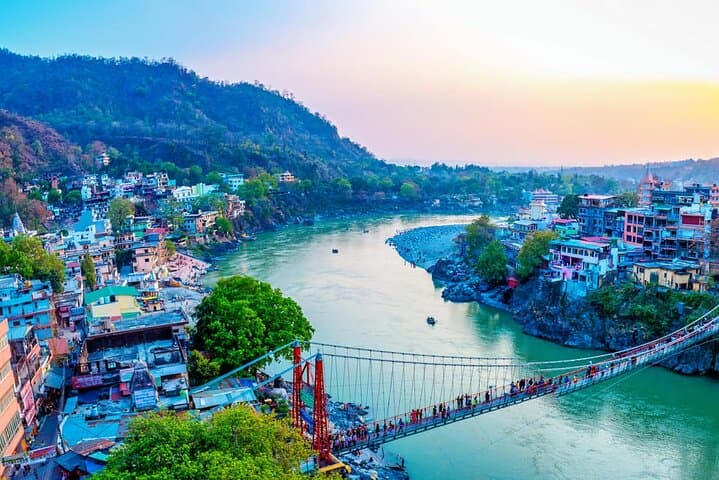
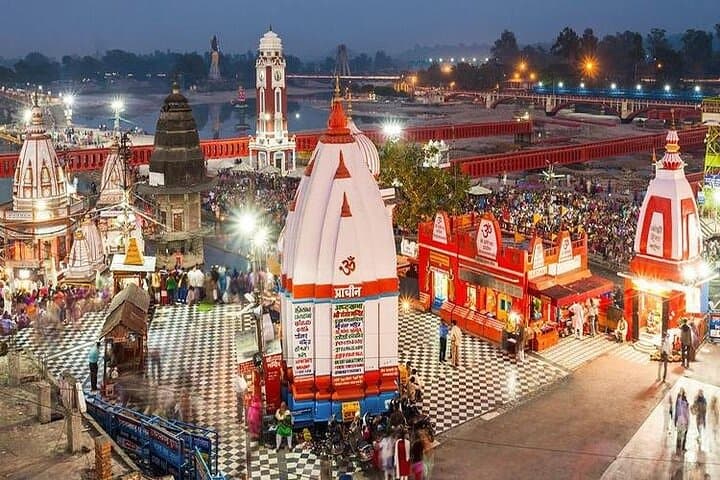
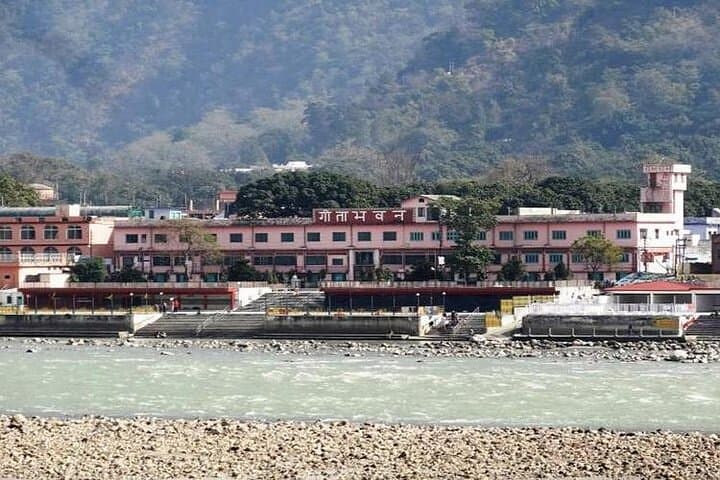
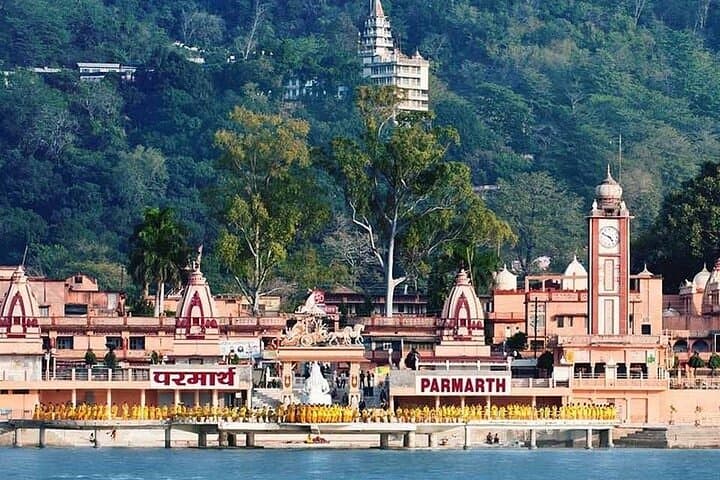
Morning light on the Ganges slices through mist as a private car winds north from Delhi toward the Himalayan foothills, delivering travelers into two of India's most charged river towns in a single long day. The tour drops you at Ram Jhula where iron cables creak above pilgrims and yoga students, then threads quieter alleys toward ashrams that still publish handwritten schedules for chanting and seva. By late afternoon the group reaches Haridwar’s Har Ki Pauri, where priests arrange lamps and the river answers with reflected flames.
Morning light on the Ganges slices through mist as a private car winds north from Delhi toward the Himalayan foothills, delivering travelers into two of India's most charged river towns in a single long day. The tour drops you at Ram Jhula where iron cables creak above pilgrims and yoga students, then threads quieter alleys toward ashrams that still publish handwritten schedules for chanting and seva. By late afternoon the group reaches Haridwar’s Har Ki Pauri, where priests arrange lamps and the river answers with reflected flames.
Rishikesh grew as a spiritual hub in the 20th century—Sivananda and Parmarth Niketan attracted seekers from across India and abroad—while Haridwar’s Ghats host millennia of ritual and the periodic Kumbh Mela, a gathering with deep historical roots in Hindu cosmology.
Geologically the region marks the transition from Indo-Gangetic plains to Siwalik foothills; the Ganges here carries the long erosion story of the Himalaya. Culturally, expect Sanskritic ritual alongside modern yoga schools and souvenir stalls selling rudraksha beads.
Practically, this is a long, low-impact day: expect 5–6 hours driving total, multiple short stops for ashrams and ghats, and minimal technical difficulty. Carry modest clothing for temple visits, a reusable water bottle, sun protection, and cash for small donations. Timing matters—arrive at Har Ki Pauri before sunset if you want the full aarti spectacle. Respect silence zones at meditation centers and avoid flash photography during rituals. The tour is sensory and steady: incense, river sounds, and the human flow of devotion guide the pace.