THE ADVENTURE COLLECTIVE® · Independent discovery and booking for outdoor travel

An eight-hour private loop through Cappadocia’s signature sights—Göreme panoramas, Uçhisar’s high castle, Kaymaklı’s underground passages and Avanos pottery—this tour pairs geology, history and hands-on culture with private transport and a local guide.
An eight-hour private loop through Cappadocia’s signature sights—Göreme panoramas, Uçhisar’s high castle, Kaymaklı’s underground passages and Avanos pottery—this tour pairs geology, history and hands-on culture with private transport and a local guide.
You step into a landscape that feels engineered by imagination: mushroom-capped rock towers rise from a pale plain and low stone villages cling to soft cliffs. The van door shuts, the air-conditioned comfort a small luxury against the high plateau wind, and your guide points ahead—today’s route threads between Göreme’s panoramas, an underground city, and the pottery-smoke of Avanos.
Verified experiences and guided adventures in the surrounding area.
Operated by Tabi Cappadocia Tours & Travel · Göreme, Nevşehir Province
You step into a landscape that feels engineered by imagination: mushroom-capped rock towers rise from a pale plain and low stone villages cling to soft cliffs. The van door shuts, the air-conditioned comfort a small luxury against the high plateau wind, and your guide points ahead—today’s route threads between Göreme’s panoramas, an underground city, and the pottery-smoke of Avanos.
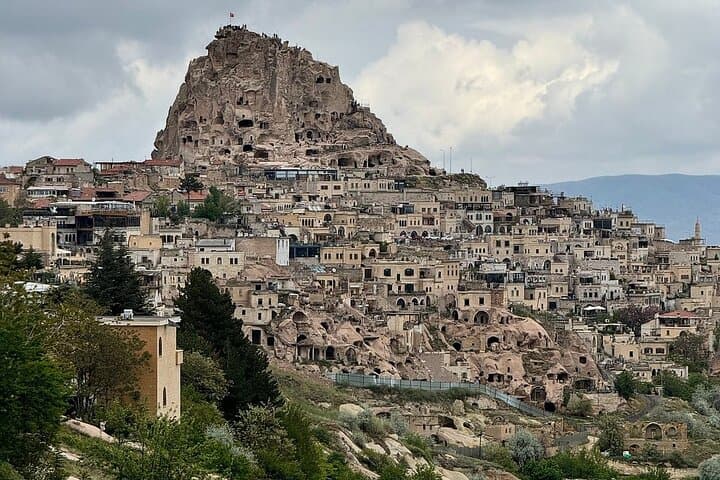
Cappadocia’s look is geological shorthand for volcanic history. Layers of tuff—compressed ash from eruptions millions of years ago—were carved by wind and water into chimneys, cones and valleys. Humans arrived and pushed that sculpture further, hollowing rooms and sanctuaries into soft rock. By mid-morning you’ll climb Uçhisar Castle, gaining roughly 40–80 meters of elevation on stone steps to a view that reads the whole region: pigeon-spotted cliffs, banded valleys, and the lattice of trails below.
History is tactile here. The Göreme Open-Air Museum holds churches with frescoes that survived centuries of weather and conflict; Kaymaklı Underground City pulls the curtain on subterranean life—narrow shafts, storage rooms and ventilation built for defense centuries ago by communities avoiding raids.
Culture lands in Avanos. The town sits on the Kızılırmak (Red River), and its potters still use the river clay and hand-thrown techniques passed through generations. You’ll have time to try the wheel or watch a master work a fresh amphora; expect to leave with both a keepsake and a story.
Practical guide: the private tour runs roughly 8 hours with hotel pickup, an AC minivan and a licensed local guide. On-foot distances at sites are short—typically 0.5–2 km per stop—but surfaces are uneven: packed tuff, loose gravel, carved stairs and narrow tunnels. Total driving for a typical loop is about 60–90 km; elevation across the day ranges from ~1,000 to 1,300 meters above sea level.
Bring sturdy shoes with good traction, a sun hat and layered clothing—the plateau can be chilly at dawn and hot by midday. Carry small bills for admission fees (some sites require separate tickets), tips and pottery purchases. Start early to avoid tour-bus crowds at the Göreme Museum and Paşabağı. If claustrophobia is a concern, notify your guide before Kaymaklı; some passageways are steep and tight.
This itinerary balances big-picture vistas and up-close encounters—rock-cut life, village rhythm, and artisans shaping clay. Walk deliberately, keep water close, and let the landscape’s rough personality keep nudging you forward.
moderate.
8 hours.
Suitable for travelers in average physical condition; requires short walks and some stair climbing.
Some stops (like Kaymaklı and the Göreme Open-Air Museum) may require separate admission—bring cash or confirm with the operator at booking.
This itinerary involves uneven terrain, stairs and tight underground passages; it is not fully wheelchair accessible—contact the operator to discuss options.
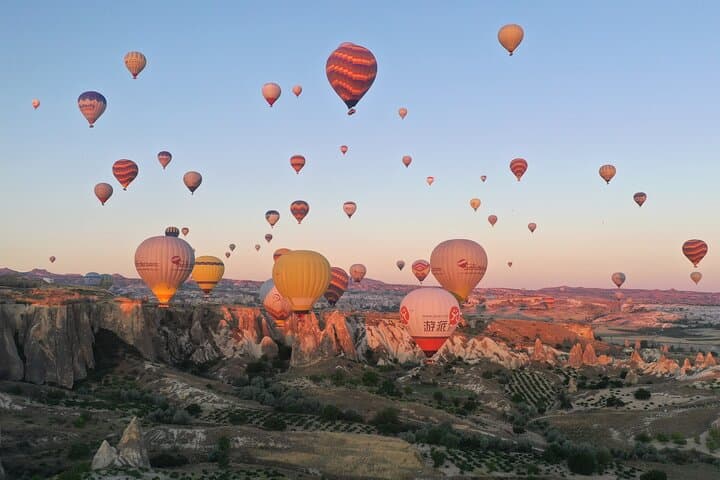
You may spot balloons from viewpoints in the morning, but the full-day tour is not a balloon flight—book sunrise ballooning separately if you want to fly.
Yes—infant seats are available and the tour is family-friendly, but supervising children in underground tunnels and near cliff edges is essential.
Walking at each site ranges from short strolls to climbs up 40–80 meters; plan for 4–6 km total on foot spread across the day.
Lunch is typically arranged or you can buy food in Avanos—carry snacks if you have dietary restrictions and want continuous energy between stops.
Cappadocia’s cave dwellings and underground cities were shaped by volcanic tuff and human need; many rock churches date to early Christian communities seeking refuge and a place to practice safely.
Visitor pressure can erode fragile tuff and frescoes—stay on marked paths, avoid touching frescoes and support local preserves and licensed guides who fund conservation.
Tabi Cappadocia Tours & Travel operates guided outdoor trips and adventures with an emphasis on safety, stewardship, and memorable experiences.
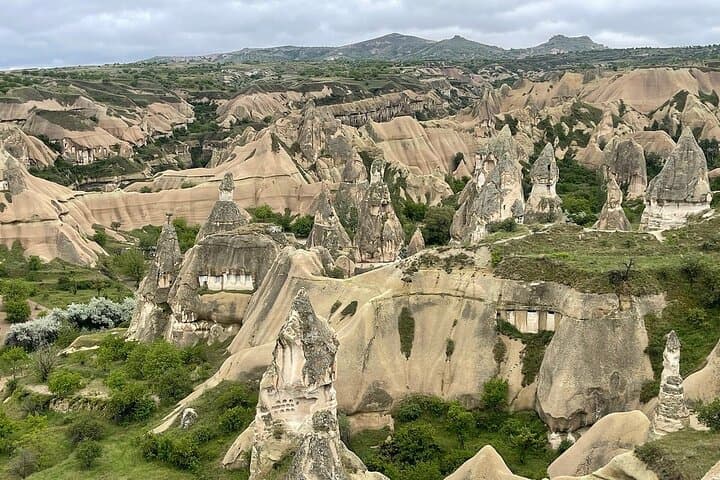
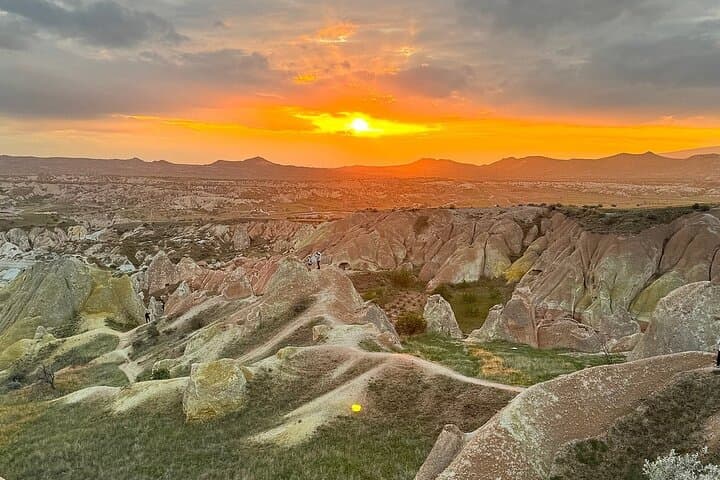
You step into a landscape that feels engineered by imagination: mushroom-capped rock towers rise from a pale plain and low stone villages cling to soft cliffs. The van door shuts, the air-conditioned comfort a small luxury against the high plateau wind, and your guide points ahead—today’s route threads between Göreme’s panoramas, an underground city, and the pottery-smoke of Avanos.
You step into a landscape that feels engineered by imagination: mushroom-capped rock towers rise from a pale plain and low stone villages cling to soft cliffs. The van door shuts, the air-conditioned comfort a small luxury against the high plateau wind, and your guide points ahead—today’s route threads between Göreme’s panoramas, an underground city, and the pottery-smoke of Avanos.
Cappadocia’s look is geological shorthand for volcanic history. Layers of tuff—compressed ash from eruptions millions of years ago—were carved by wind and water into chimneys, cones and valleys. Humans arrived and pushed that sculpture further, hollowing rooms and sanctuaries into soft rock. By mid-morning you’ll climb Uçhisar Castle, gaining roughly 40–80 meters of elevation on stone steps to a view that reads the whole region: pigeon-spotted cliffs, banded valleys, and the lattice of trails below.
History is tactile here. The Göreme Open-Air Museum holds churches with frescoes that survived centuries of weather and conflict; Kaymaklı Underground City pulls the curtain on subterranean life—narrow shafts, storage rooms and ventilation built for defense centuries ago by communities avoiding raids.
Culture lands in Avanos. The town sits on the Kızılırmak (Red River), and its potters still use the river clay and hand-thrown techniques passed through generations. You’ll have time to try the wheel or watch a master work a fresh amphora; expect to leave with both a keepsake and a story.
Practical guide: the private tour runs roughly 8 hours with hotel pickup, an AC minivan and a licensed local guide. On-foot distances at sites are short—typically 0.5–2 km per stop—but surfaces are uneven: packed tuff, loose gravel, carved stairs and narrow tunnels. Total driving for a typical loop is about 60–90 km; elevation across the day ranges from ~1,000 to 1,300 meters above sea level.
Bring sturdy shoes with good traction, a sun hat and layered clothing—the plateau can be chilly at dawn and hot by midday. Carry small bills for admission fees (some sites require separate tickets), tips and pottery purchases. Start early to avoid tour-bus crowds at the Göreme Museum and Paşabağı. If claustrophobia is a concern, notify your guide before Kaymaklı; some passageways are steep and tight.
This itinerary balances big-picture vistas and up-close encounters—rock-cut life, village rhythm, and artisans shaping clay. Walk deliberately, keep water close, and let the landscape’s rough personality keep nudging you forward.