THE ADVENTURE COLLECTIVE® · Independent discovery and booking for outdoor travel

Spend a day walking wooden boardwalks above turquoise basins and cascading falls on a private guided visit to Plitvice Lakes, with one-way transfer from Pula to Zagreb. This full-day option pairs natural history, easy hiking, and seamless logistics for travelers crossing Croatia.
Spend a day walking wooden boardwalks above turquoise basins and cascading falls on a private guided visit to Plitvice Lakes, with one-way transfer from Pula to Zagreb. This full-day option pairs natural history, easy hiking, and seamless logistics for travelers crossing Croatia.
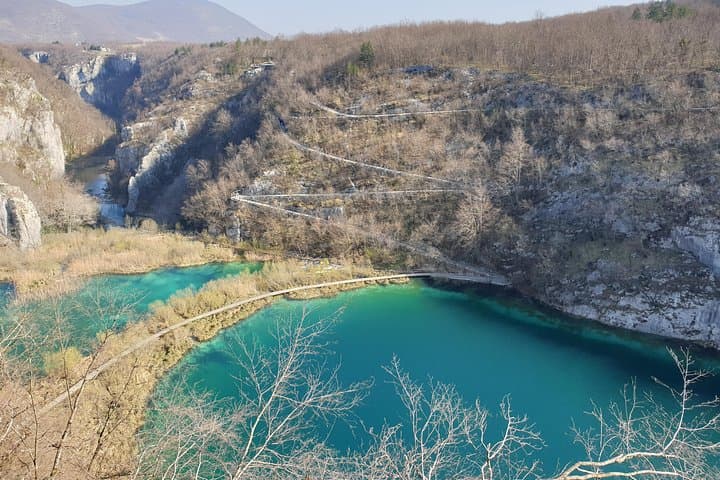
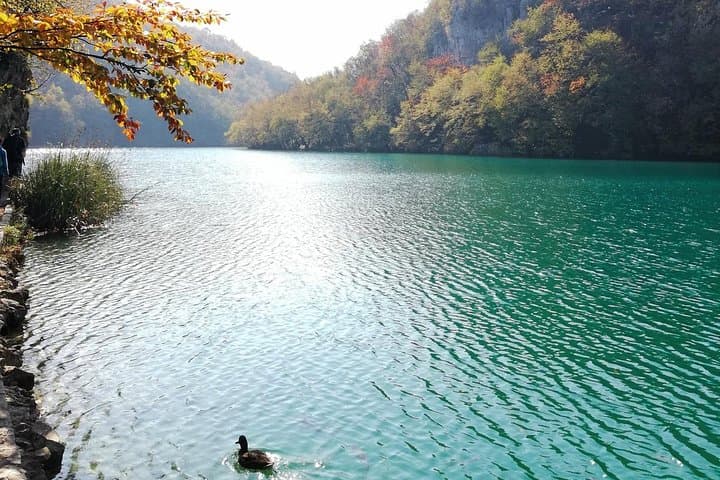
A gray minivan hums along a ribbon of highway as the coast drops behind you, and the air begins to change — salt gives way to a green, loamy scent that announces karst country. By the time the parking lot at Plitvička Jezera comes into view, the forest feels alive: beech and fir crowd the trailheads, and the first emerald basins of water flash like glass between trunks. Your guide folds a paper map into their palm, points toward a wooden walkway that snakes directly over the water, and the day at Croatia’s most visited national park begins.
Verified experiences and guided adventures in the surrounding area.
Operated by Budget Transfer Croatia · Plitvička Jezera, Lika-Senj County
A gray minivan hums along a ribbon of highway as the coast drops behind you, and the air begins to change — salt gives way to a green, loamy scent that announces karst country. By the time the parking lot at Plitvička Jezera comes into view, the forest feels alive: beech and fir crowd the trailheads, and the first emerald basins of water flash like glass between trunks. Your guide folds a paper map into their palm, points toward a wooden walkway that snakes directly over the water, and the day at Croatia’s most visited national park begins.
Plitvice is older than most national parks in Southeast Europe; its complex of 16 cascading lakes is carved by subterranean karst rivers that deposit travertine and force continual change. Wooden footbridges—about 18 kilometers in total—thread the park, carrying visitors over channels that pulse with currents daring you to step closer. The geology is active: calcium-carbonate deposits grow and alter the falls year to year, so the landscape you see is never identical to what your camera captured last season.
Culturally, the park sits in Lika, a sparsely populated region with a history of shepherding and forest crafts. Small villages like Plitvička Jezera and nearby Rakovica provide the human frame for the wild center; expect simple inns, local cheese, and stories about wolf packs and bear sightings told with the same fondness as weather reports.
Practically, the private guided tour from Pula that finishes in Zagreb is a logistics solve: it pairs a focused walk through the park with one-way transfer across the country. Inside the park you’ll typically walk 3–8 km depending on the selected route, with boardwalk sections that are flat and stair sections that add short bursts of elevation—plan for up to a few hundred meters of cumulative gain over the route. Guides time visits to avoid the busiest entry points and orient you to geology, endemic plants (look for orchids), and birdlife.
Bring layered waterproof gear; weather is changeable, and mist from the falls can chill you. Footwear with grip matters—the boardwalks can be slippery after rain. Hydrate before and during the walk; although there are cafés near main entrances, much of the trail is wild and services are sparse. If you’re traveling between Pula and Zagreb in a day, factor in seat time: this is a long transfer so book rest stops or overnight in Plitvička Jezera if you prefer a slower pace.
For photographers, compose low on the boardwalk to emphasize reflections, and use a polarizer to tame glare on the lakes. Respect the park’s pathways and wildlife rules: these lakes are fragile and the park relies on visitors to protect travertine formation and rare plant communities.
In short: this tour hands you easy access to one of Europe’s most dynamic freshwater landscapes, with the convenience of door-to-door transport — an efficient, sensory-rich way to experience Plitvice without the logistics juggle.
moderate.
10–10 hours.
Should have moderate fitness for several hours of walking with short stair sections; comfortable standing and walking 3–8 km.
Inside the park expect 3–8 km on mostly flat boardwalks with some stair sections; total outing including transfers is a full day (~10 hours).
This tour description indicates a local guide in the park but admission is listed as 'NO' for included; confirm and bring cash or card for entry fees.
Yes — the tour provides one-way private transfer with hotel pickup in Pula and drop-off in Zagreb as stated in the inclusions.
Bears and wolves inhabit the region, but sightings are rare; birdwatching and small mammals are more commonly observed.
Infant seats are available, but travelers should have at least moderate fitness for the walking portions; check with the operator for child-specific arrangements.
Layered clothing and a waterproof outer layer are advisable year-round; summer needs lighter layers and sun protection, while spring/fall often require warmer mid-layers.
Plitvice Lakes became Croatia’s first national park in 1949 and was designated a UNESCO World Heritage Site for its unique karst travertine formations and biodiverse forests.
Trampling and stray litter disrupt travertine formation; the park enforces boardwalk-only traffic and limits visitor impact through well-defined paths and seasonal management.
Budget Transfer Croatia operates guided outdoor trips and adventures with an emphasis on safety, stewardship, and memorable experiences.
A gray minivan hums along a ribbon of highway as the coast drops behind you, and the air begins to change — salt gives way to a green, loamy scent that announces karst country. By the time the parking lot at Plitvička Jezera comes into view, the forest feels alive: beech and fir crowd the trailheads, and the first emerald basins of water flash like glass between trunks. Your guide folds a paper map into their palm, points toward a wooden walkway that snakes directly over the water, and the day at Croatia’s most visited national park begins.
A gray minivan hums along a ribbon of highway as the coast drops behind you, and the air begins to change — salt gives way to a green, loamy scent that announces karst country. By the time the parking lot at Plitvička Jezera comes into view, the forest feels alive: beech and fir crowd the trailheads, and the first emerald basins of water flash like glass between trunks. Your guide folds a paper map into their palm, points toward a wooden walkway that snakes directly over the water, and the day at Croatia’s most visited national park begins.
Plitvice is older than most national parks in Southeast Europe; its complex of 16 cascading lakes is carved by subterranean karst rivers that deposit travertine and force continual change. Wooden footbridges—about 18 kilometers in total—thread the park, carrying visitors over channels that pulse with currents daring you to step closer. The geology is active: calcium-carbonate deposits grow and alter the falls year to year, so the landscape you see is never identical to what your camera captured last season.
Culturally, the park sits in Lika, a sparsely populated region with a history of shepherding and forest crafts. Small villages like Plitvička Jezera and nearby Rakovica provide the human frame for the wild center; expect simple inns, local cheese, and stories about wolf packs and bear sightings told with the same fondness as weather reports.
Practically, the private guided tour from Pula that finishes in Zagreb is a logistics solve: it pairs a focused walk through the park with one-way transfer across the country. Inside the park you’ll typically walk 3–8 km depending on the selected route, with boardwalk sections that are flat and stair sections that add short bursts of elevation—plan for up to a few hundred meters of cumulative gain over the route. Guides time visits to avoid the busiest entry points and orient you to geology, endemic plants (look for orchids), and birdlife.
Bring layered waterproof gear; weather is changeable, and mist from the falls can chill you. Footwear with grip matters—the boardwalks can be slippery after rain. Hydrate before and during the walk; although there are cafés near main entrances, much of the trail is wild and services are sparse. If you’re traveling between Pula and Zagreb in a day, factor in seat time: this is a long transfer so book rest stops or overnight in Plitvička Jezera if you prefer a slower pace.
For photographers, compose low on the boardwalk to emphasize reflections, and use a polarizer to tame glare on the lakes. Respect the park’s pathways and wildlife rules: these lakes are fragile and the park relies on visitors to protect travertine formation and rare plant communities.
In short: this tour hands you easy access to one of Europe’s most dynamic freshwater landscapes, with the convenience of door-to-door transport — an efficient, sensory-rich way to experience Plitvice without the logistics juggle.