THE ADVENTURE COLLECTIVE® · Independent discovery and booking for outdoor travel

Drive out of Marrakech for a full day at Ouzoud Waterfalls: dramatic drops, walking trails through olive country, a riverside lunch and an optional traditional boat that lets you feel the spray. This guide explains what to expect, how to prepare, and local tips to make the most of the day.
Drive out of Marrakech for a full day at Ouzoud Waterfalls: dramatic drops, walking trails through olive country, a riverside lunch and an optional traditional boat that lets you feel the spray. This guide explains what to expect, how to prepare, and local tips to make the most of the day.
A low hum of tires on tarmac, then the Moroccan countryside opens — terraced olive groves, ochre hills and a sky that seems larger than in the city. By midmorning the road drops toward a ribbon of water: Ouzoud. The falls announce themselves before you can see them, a misted curtain and the distant roar of water that dares you closer.
Verified experiences and guided adventures in the surrounding area.
Operated by Morocco Meeting tours · Ouzoud, Béni Mellal-Khénifra
A low hum of tires on tarmac, then the Moroccan countryside opens — terraced olive groves, ochre hills and a sky that seems larger than in the city. By midmorning the road drops toward a ribbon of water: Ouzoud. The falls announce themselves before you can see them, a misted curtain and the distant roar of water that dares you closer.
At roughly 110 metres in total drop, Ouzoud is among Morocco's tallest cascades. Geologically it sits where limestone and marl strata have been worn into steep cliffs; the river finds weaknesses and spills in tiered steps that catch light and spray differently as the sun moves. The surrounding landscape has long been shaped by Berber villages who irrigate olive terraces below and by seasonal flows that govern livestock pasture.
Visitors typically follow maintained trails that loop the rim and descend toward the basin. Those paths pass through small cafés selling freshly squeezed orange juice and local breads, and past viewpoints where Barbary macaques pause, considering intruders with the same curiosity they bring to their own youngsters. Local guides often narrate practical lore—how the falls change between spring melt and late-summer low water—and point out a village mill or two wedged into the cliffside.
The program here is straightforward: an early pickup from Marrakech, a drive of about 2.5–3 hours each way, 2–4 km of walking on uneven terrain with short stair sections and an elevation change of around 100–150 metres depending on your route, a riverside lunch, and the option to take a short traditional boat out in the Ouzoud basin for a close-up soaking of spray.
For planning: aim for an early start to avoid midday crowds and the hottest hours in summer. Good footwear matters—paths can be damp and slick—and a lightweight rain layer or windbreaker handles both spray and sudden mountain gusts. Bring cash for small purchases and tips; local restaurants serve tagine and salads, and orange-juice stands are a reliable pick-me-up. If you opt for the boat, protect electronics in waterproof cases or zip-top bags.
Culturally, the falls are an everyday landscape for nearby villages rather than a remote wilderness; respect private plots and the rhythms of the local economy. Conservationally, the biggest impacts are litter and unmanaged foot traffic—stick to trails, use onsite bins where provided, and keep plastic out of the water.
By late afternoon the drive back to Marrakech gives you a last look at the falls shrinking into the distance, still humming, still insisting you have been somewhere different for the day.
moderate.
8–11 hours.
Suitable for most fitness levels; expect several short stair sections and up to a few kilometers of walking on uneven ground.
The short traditional boat in the Ouzoud basin is usually optional and not included in base pricing; there is a small fee paid locally.
Expect about 2.5–3 hours each way depending on traffic and stops along the route.
This tour includes a lunch stop at a local restaurant overlooking the falls; beverages or special items may be extra.
Trails are maintained but include steps and uneven ground; children and older travelers can participate with care—check mobility needs before booking.
Swimming is generally not recommended due to currents and cold water; staying on designated areas and following local guidance is safer.
Guides commonly speak Arabic and French; many operators also provide English-speaking guides—confirm when booking.
Local Berber communities have farmed terraces and used the river for mills for centuries; the falls have long been a regional gathering place.
High visitor numbers and litter are the main pressures—stick to trails, pack out plastics when bins aren't available, and support local businesses that practice sustainable waste management.
Morocco Meeting tours operates guided outdoor trips and adventures with an emphasis on safety, stewardship, and memorable experiences.
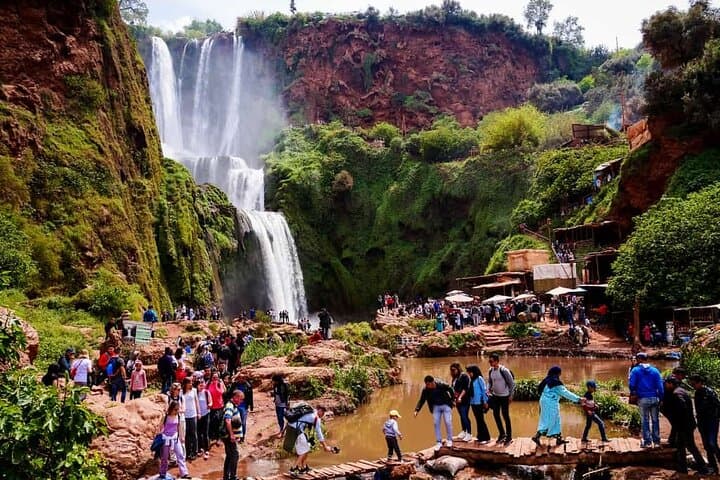
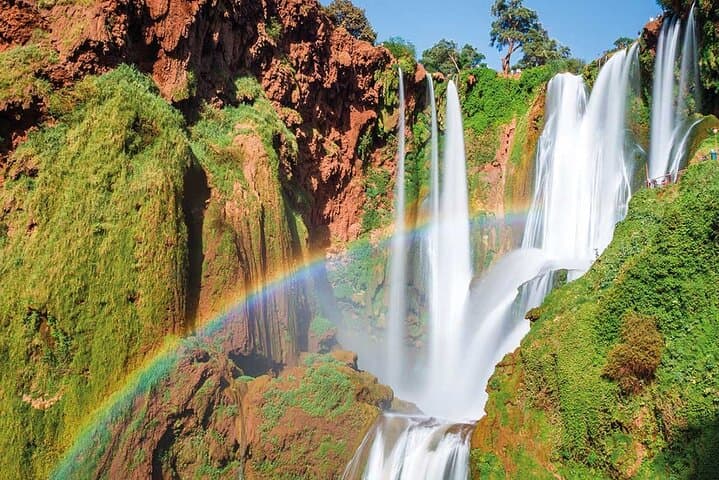
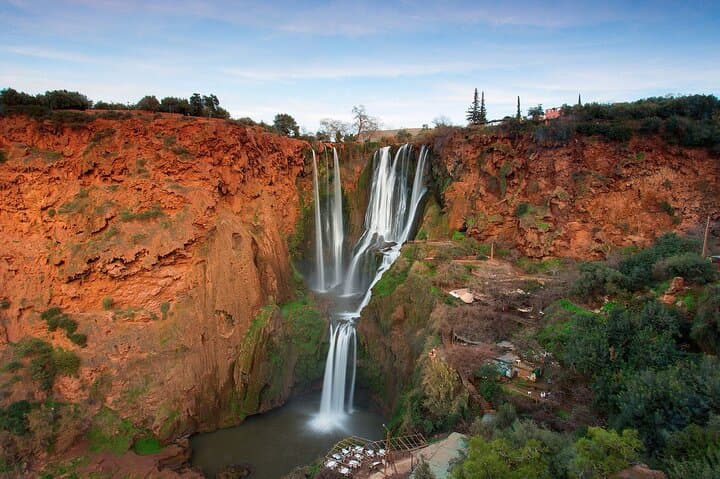
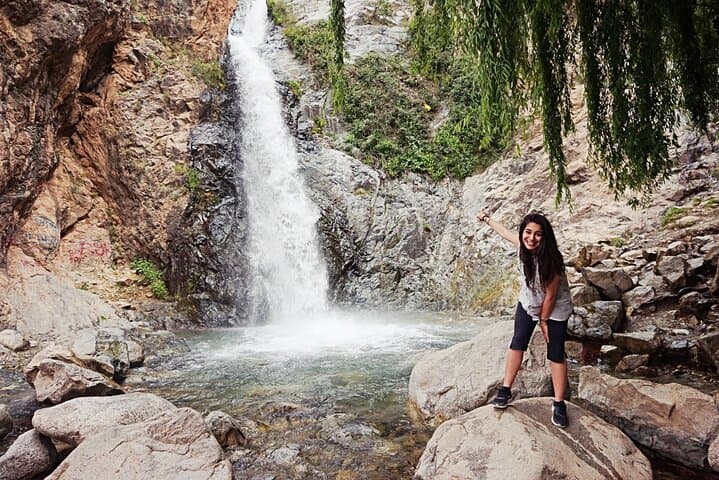
A low hum of tires on tarmac, then the Moroccan countryside opens — terraced olive groves, ochre hills and a sky that seems larger than in the city. By midmorning the road drops toward a ribbon of water: Ouzoud. The falls announce themselves before you can see them, a misted curtain and the distant roar of water that dares you closer.
A low hum of tires on tarmac, then the Moroccan countryside opens — terraced olive groves, ochre hills and a sky that seems larger than in the city. By midmorning the road drops toward a ribbon of water: Ouzoud. The falls announce themselves before you can see them, a misted curtain and the distant roar of water that dares you closer.
At roughly 110 metres in total drop, Ouzoud is among Morocco's tallest cascades. Geologically it sits where limestone and marl strata have been worn into steep cliffs; the river finds weaknesses and spills in tiered steps that catch light and spray differently as the sun moves. The surrounding landscape has long been shaped by Berber villages who irrigate olive terraces below and by seasonal flows that govern livestock pasture.
Visitors typically follow maintained trails that loop the rim and descend toward the basin. Those paths pass through small cafés selling freshly squeezed orange juice and local breads, and past viewpoints where Barbary macaques pause, considering intruders with the same curiosity they bring to their own youngsters. Local guides often narrate practical lore—how the falls change between spring melt and late-summer low water—and point out a village mill or two wedged into the cliffside.
The program here is straightforward: an early pickup from Marrakech, a drive of about 2.5–3 hours each way, 2–4 km of walking on uneven terrain with short stair sections and an elevation change of around 100–150 metres depending on your route, a riverside lunch, and the option to take a short traditional boat out in the Ouzoud basin for a close-up soaking of spray.
For planning: aim for an early start to avoid midday crowds and the hottest hours in summer. Good footwear matters—paths can be damp and slick—and a lightweight rain layer or windbreaker handles both spray and sudden mountain gusts. Bring cash for small purchases and tips; local restaurants serve tagine and salads, and orange-juice stands are a reliable pick-me-up. If you opt for the boat, protect electronics in waterproof cases or zip-top bags.
Culturally, the falls are an everyday landscape for nearby villages rather than a remote wilderness; respect private plots and the rhythms of the local economy. Conservationally, the biggest impacts are litter and unmanaged foot traffic—stick to trails, use onsite bins where provided, and keep plastic out of the water.
By late afternoon the drive back to Marrakech gives you a last look at the falls shrinking into the distance, still humming, still insisting you have been somewhere different for the day.