THE ADVENTURE COLLECTIVE® · Independent discovery and booking for outdoor travel

Escape Marrakech for a vigorous day in the Atlas foothills to see Ouzoud’s 110m tiers, swim in river pools, take an optional boat ride and meet the resident macaques. This full-day tour provides transport and a guide—bring cash for lunch and extras.
Escape Marrakech for a vigorous day in the Atlas foothills to see Ouzoud’s 110m tiers, swim in river pools, take an optional boat ride and meet the resident macaques. This full-day tour provides transport and a guide—bring cash for lunch and extras.
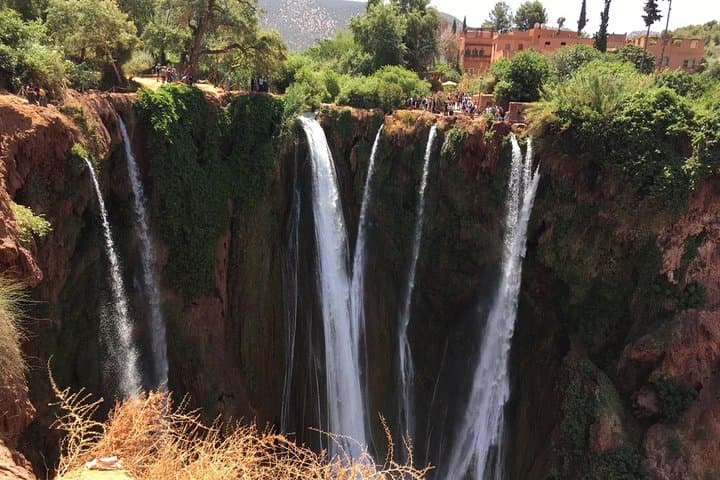
The minibus peels away from Marrakech before the city has fully woken, desert light sliding over ochre walls and minarets as the Atlas foothills rise like a promise. Hours later the road narrows and green appears: terraces of olive trees, orchards, and then the valley yawns and the sound arrives first — the steady, distant roar of water. At Ouzoud, the river throws itself off a three-tiered cliff and the falls announce themselves across the gorge, spray catching sun into quick, sharp rainbows.
Verified experiences and guided adventures in the surrounding area.
Operated by lifetour · Ouzoud, Béni Mellal-Khénifra
The minibus peels away from Marrakech before the city has fully woken, desert light sliding over ochre walls and minarets as the Atlas foothills rise like a promise. Hours later the road narrows and green appears: terraces of olive trees, orchards, and then the valley yawns and the sound arrives first — the steady, distant roar of water. At Ouzoud, the river throws itself off a three-tiered cliff and the falls announce themselves across the gorge, spray catching sun into quick, sharp rainbows.
Geology here reads like a slow-motion edit: water carving through sedimentary beds at roughly 1,060 meters elevation, forming plunge pools and scalloped ledges. Local Amazigh (Berber) villages hug the slopes; their stone houses and olive presses are reminders this is working landscape as much as scenic one. The name Ouzoud is tied to the valley’s olives — the grove-lined ridges you pass on the approach.
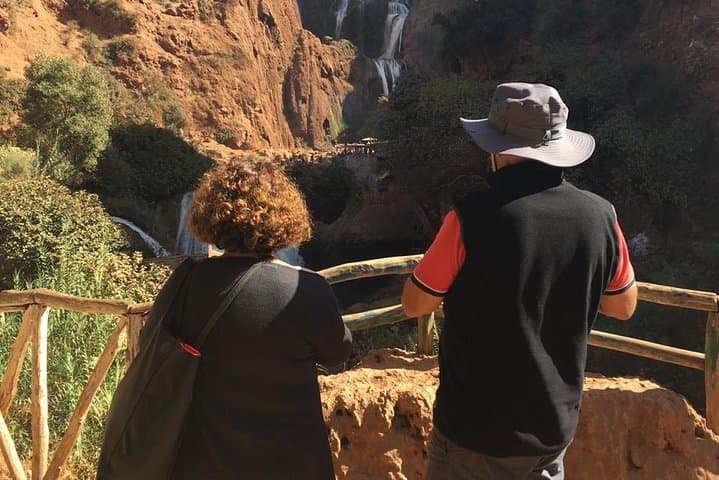
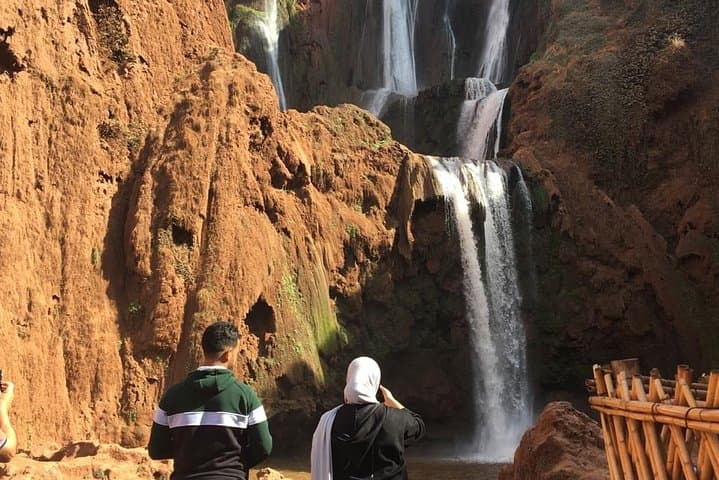
The falls are animate. Currents push into quiet basins, gullies funnel spumes into churning eddies, and macaques patrol shady crags with casual curiosity. Expect a corridor of vendors near viewpoints, and groups of day-trippers clustering at the main lookout that frames the 110-meter cascade. Boat operators ply the lower pools when the flow is moderate; swimming below the rim is common when conditions allow, but the river is powerful and uneven underfoot.
This tour is practical: roundtrip transport and a guide are included, leaving Marrakech early and returning by evening. That means long, comfortable driving punctuated by 2–3 hours exploring the falls, short hikes along stepped trails, and time to climb down to riverside terraces. Lunch and the optional boat ride are paid locally — bring cash.
For planning: wear grippy shoes for wet stone and stairs, pack a swimsuit and quick-dry towel if you want to dip, and take sun and mosquito protection. Carry enough water—shops exist but can be busy—and keep a small stash of dirhams for local crafts and tips. Don’t feed the monkeys; they look friendly but can be grabby. If you want photos, aim for early morning or late afternoon light to avoid harsh contrasts and to catch rainbows in the mist.
The route is suitable for most travelers but includes uneven terrain and stair descents. If you have heart problems or limited mobility, check with the operator: the day includes long drives and active walking. The payoff is straightforward: dramatic wet cliffs, river pools that dare you to cool off, and an intimate view of rural Atlas life that feels a world away from Marrakech’s medina.
moderate.
9–10 hours.
Comfortable with several stair descents, uneven trails and a multi-hour round trip by vehicle; basic stamina required.
The transfer is about 2.5–3 hours each way depending on traffic, covering roughly 150 km through foothills and olive terraces.
No—transport and guide are included, but the optional boat ride and lunch are paid locally in dirhams.
Swimming is possible in calmer plunge pools but conditions change; follow your guide’s advice and avoid strong currents or high flow days.
Yes—basic cafés and public toilets serve the main viewing areas and riverbank, but queues can form at peak times.
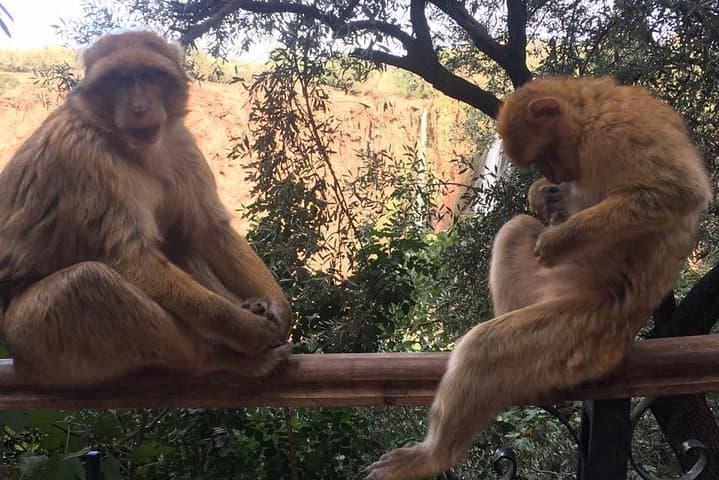
Barbary macaques frequent the area and often approach visitors; don’t feed them and secure loose items to avoid snatching.
The walk to lower viewpoints involves steep, uneven stairs; travelers with limited mobility should alert the operator in advance.
The falls lie in a valley long used by Amazigh communities; olive cultivation has shaped the landscape and local economy for generations.
Stick to marked paths, don’t feed wildlife, and dispose of waste locally—visitors impact fragile riverbanks and picnic areas.
lifetour operates guided outdoor trips and adventures with an emphasis on safety, stewardship, and memorable experiences.
The minibus peels away from Marrakech before the city has fully woken, desert light sliding over ochre walls and minarets as the Atlas foothills rise like a promise. Hours later the road narrows and green appears: terraces of olive trees, orchards, and then the valley yawns and the sound arrives first — the steady, distant roar of water. At Ouzoud, the river throws itself off a three-tiered cliff and the falls announce themselves across the gorge, spray catching sun into quick, sharp rainbows.
The minibus peels away from Marrakech before the city has fully woken, desert light sliding over ochre walls and minarets as the Atlas foothills rise like a promise. Hours later the road narrows and green appears: terraces of olive trees, orchards, and then the valley yawns and the sound arrives first — the steady, distant roar of water. At Ouzoud, the river throws itself off a three-tiered cliff and the falls announce themselves across the gorge, spray catching sun into quick, sharp rainbows.
Geology here reads like a slow-motion edit: water carving through sedimentary beds at roughly 1,060 meters elevation, forming plunge pools and scalloped ledges. Local Amazigh (Berber) villages hug the slopes; their stone houses and olive presses are reminders this is working landscape as much as scenic one. The name Ouzoud is tied to the valley’s olives — the grove-lined ridges you pass on the approach.
The falls are animate. Currents push into quiet basins, gullies funnel spumes into churning eddies, and macaques patrol shady crags with casual curiosity. Expect a corridor of vendors near viewpoints, and groups of day-trippers clustering at the main lookout that frames the 110-meter cascade. Boat operators ply the lower pools when the flow is moderate; swimming below the rim is common when conditions allow, but the river is powerful and uneven underfoot.
This tour is practical: roundtrip transport and a guide are included, leaving Marrakech early and returning by evening. That means long, comfortable driving punctuated by 2–3 hours exploring the falls, short hikes along stepped trails, and time to climb down to riverside terraces. Lunch and the optional boat ride are paid locally — bring cash.
For planning: wear grippy shoes for wet stone and stairs, pack a swimsuit and quick-dry towel if you want to dip, and take sun and mosquito protection. Carry enough water—shops exist but can be busy—and keep a small stash of dirhams for local crafts and tips. Don’t feed the monkeys; they look friendly but can be grabby. If you want photos, aim for early morning or late afternoon light to avoid harsh contrasts and to catch rainbows in the mist.
The route is suitable for most travelers but includes uneven terrain and stair descents. If you have heart problems or limited mobility, check with the operator: the day includes long drives and active walking. The payoff is straightforward: dramatic wet cliffs, river pools that dare you to cool off, and an intimate view of rural Atlas life that feels a world away from Marrakech’s medina.