THE ADVENTURE COLLECTIVE® · Independent discovery and booking for outdoor travel

Escape Tokyo for a private day that stitches together Hakone’s volcanic drama, Fujisan vistas and Oshino Hakkai’s spring-fed ponds. This full-day, guide-driver tour is built for travelers who want maximum scenery, local insight and minimal logistics.
Escape Tokyo for a private day that stitches together Hakone’s volcanic drama, Fujisan vistas and Oshino Hakkai’s spring-fed ponds. This full-day, guide-driver tour is built for travelers who want maximum scenery, local insight and minimal logistics.
The day begins before most of the city has stirred: a compact van slides away from a Tokyo hotel and trades neon and concrete for folding foothills and cedars. By the time the first pale light strikes the western horizon, the bulk of Mount Fuji rises through a bank of low cloud — a slow reveal that frames the rest of the day.
Verified experiences and guided adventures in the surrounding area.
Operated by GLOBAL GUIDE&TRANSPORT SERVICE Co.,LTD · Hakone, Kanagawa
The day begins before most of the city has stirred: a compact van slides away from a Tokyo hotel and trades neon and concrete for folding foothills and cedars. By the time the first pale light strikes the western horizon, the bulk of Mount Fuji rises through a bank of low cloud — a slow reveal that frames the rest of the day.
This private, driver-guide tour threads together three of the region’s essentials: the volcanic theatre of Hakone, the mirror-still pockets of Oshino Hakkai, and viewpoints that put the wide, perfect cone of Fuji in scale. Hakone’s Lake Ashinoko sits in a 3,000-year-old caldera; its surface was formed by long-ago eruptions that left a bowl of water, forest and hot springs. Owakudani — with its sulfur-laced steam and “black eggs” boiled in volcanic vents — is a raw reminder that the landscape is breathing. Oshino Hakkai’s springs, fed by Mt. Fuji’s filtered melt, speak to human settlement patterns shaped by water and pilgrimage; the village was once a shallow lake before repeated eruptions changed the lay of the land.
Geology reads plainly here: basalt and andesite from Fuji’s eruptions, pumice-strewn slopes around Hakone, and hot-spring chemistry in Owakudani that darkens eggshells and etches the air with sulfur. Culturally, the route is part shrine, part Edo-era trade road — ancient webbing that invited travelers, artists and pilgrims to approach Fuji’s lower slopes with reverence.
Practicalities are the tour’s backbone. Expect a full day (about 10–11 hours) with roughly 2–2.5 hours each way by vehicle from central Tokyo depending on traffic; the operator stages short 0.5–2 km walks at viewpoints, with modest elevation gains (typically under 300–400 m per stop). The itinerary includes a Lake Ashi waterfront stop and a pirate-boat crossing (≈30 min), the Hakone Ropeway up to Owakudani, panoramic pulls for Fuji viewpoints, and a village visit at Oshino Hakkai. Bring a windproof layer: mountain air shifts quickly and Owakudani's steam can be chilly.
Timing is everything for photography — clear mornings or late afternoons often yield the best Fuji silhouettes. The tour is flexible and private, so adjust the tempo: linger at a shrine, skip a cruise if fog has closed the view, or ask the guide for local soba and onsen recommendations after the day’s route.
For travelers who want a high-return day from Tokyo — a blend of geology, accessible hiking and cultural touchpoints — this guided loop delivers a hands-on primer on why Fuji and Hakone remain essential Japanese landscapes.
moderate.
10–11 hours.
Suitable for travelers comfortable with multiple short walks and standing for viewpoints; no prolonged hiking required.
The tour runs about 11 hours (660 minutes). Pickup is arranged from Tokyo, Yokohama or designated hotels; confirm your pickup time when booking — early departures are recommended for best views.
Yes — the tour is private and can be adjusted on the day within the overall schedule; tell your guide-driver which stops you prefer to extend or shorten.
Transportation and the guide-driver are included; some local tickets (e.g., ropeway, pirate boat) and site admissions are typically paid on-site unless specified otherwise — bring cash or card.
The operator indicates wheelchair-accessible transportation and most lakeside viewpoints are reachable, but some ropeway stations and volcanic terraces at Owakudani require stairs or uneven ground; discuss mobility needs when booking.
Visibility depends on weather and season: winter mornings are the clearest. Cloud cover often increases midday, so early starts improve the chance of seeing Fuji clearly.
Tipping in Japan is not customary; the private guide-driver will typically speak English and Japanese — confirm language needs when booking so the operator can assign a suitable guide.
Hakone sits on the old Tokaido route linking Edo (Tokyo) and Kyoto; Mount Fuji was registered as a World Cultural Heritage asset in 2013 and has long been a site of pilgrimage and artistic inspiration.
The region’s alpine forests and spring-fed ponds are sensitive; stay on designated paths, avoid feeding wildlife, and reduce single-use plastics to limit local impact.
GLOBAL GUIDE&TRANSPORT SERVICE Co.,LTD operates guided outdoor trips and adventures with an emphasis on safety, stewardship, and memorable experiences.
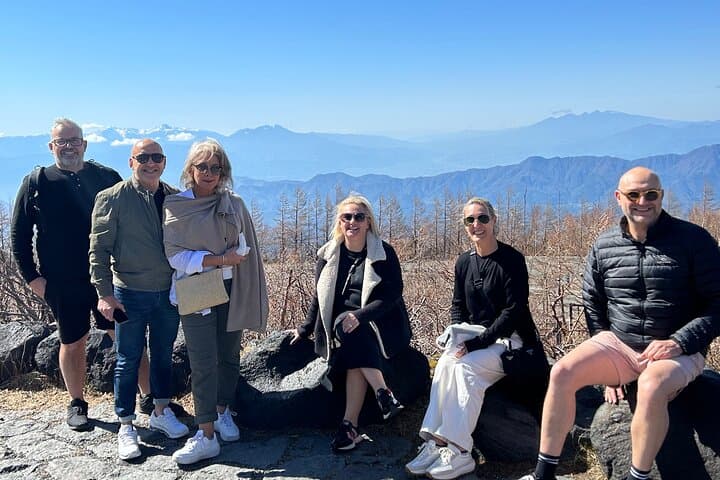
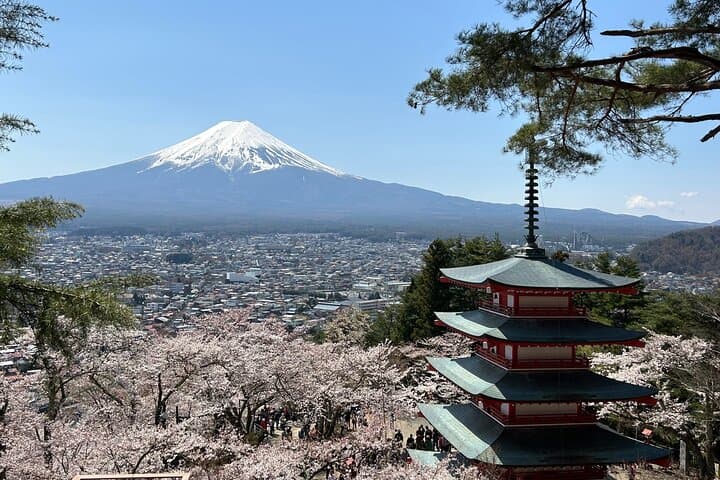


The day begins before most of the city has stirred: a compact van slides away from a Tokyo hotel and trades neon and concrete for folding foothills and cedars. By the time the first pale light strikes the western horizon, the bulk of Mount Fuji rises through a bank of low cloud — a slow reveal that frames the rest of the day.
The day begins before most of the city has stirred: a compact van slides away from a Tokyo hotel and trades neon and concrete for folding foothills and cedars. By the time the first pale light strikes the western horizon, the bulk of Mount Fuji rises through a bank of low cloud — a slow reveal that frames the rest of the day.
This private, driver-guide tour threads together three of the region’s essentials: the volcanic theatre of Hakone, the mirror-still pockets of Oshino Hakkai, and viewpoints that put the wide, perfect cone of Fuji in scale. Hakone’s Lake Ashinoko sits in a 3,000-year-old caldera; its surface was formed by long-ago eruptions that left a bowl of water, forest and hot springs. Owakudani — with its sulfur-laced steam and “black eggs” boiled in volcanic vents — is a raw reminder that the landscape is breathing. Oshino Hakkai’s springs, fed by Mt. Fuji’s filtered melt, speak to human settlement patterns shaped by water and pilgrimage; the village was once a shallow lake before repeated eruptions changed the lay of the land.
Geology reads plainly here: basalt and andesite from Fuji’s eruptions, pumice-strewn slopes around Hakone, and hot-spring chemistry in Owakudani that darkens eggshells and etches the air with sulfur. Culturally, the route is part shrine, part Edo-era trade road — ancient webbing that invited travelers, artists and pilgrims to approach Fuji’s lower slopes with reverence.
Practicalities are the tour’s backbone. Expect a full day (about 10–11 hours) with roughly 2–2.5 hours each way by vehicle from central Tokyo depending on traffic; the operator stages short 0.5–2 km walks at viewpoints, with modest elevation gains (typically under 300–400 m per stop). The itinerary includes a Lake Ashi waterfront stop and a pirate-boat crossing (≈30 min), the Hakone Ropeway up to Owakudani, panoramic pulls for Fuji viewpoints, and a village visit at Oshino Hakkai. Bring a windproof layer: mountain air shifts quickly and Owakudani's steam can be chilly.
Timing is everything for photography — clear mornings or late afternoons often yield the best Fuji silhouettes. The tour is flexible and private, so adjust the tempo: linger at a shrine, skip a cruise if fog has closed the view, or ask the guide for local soba and onsen recommendations after the day’s route.
For travelers who want a high-return day from Tokyo — a blend of geology, accessible hiking and cultural touchpoints — this guided loop delivers a hands-on primer on why Fuji and Hakone remain essential Japanese landscapes.