THE ADVENTURE COLLECTIVE® · Independent discovery and booking for outdoor travel

Drive the scenic Cape Peninsula, walk with African penguins at Boulders Beach and taste centuries-old Constantia wines — all in one full-day loop from Cape Town. This guided tour pairs dramatic coastal vistas with short, accessible walks and a relaxed vineyard tasting.
Drive the scenic Cape Peninsula, walk with African penguins at Boulders Beach and taste centuries-old Constantia wines — all in one full-day loop from Cape Town. This guided tour pairs dramatic coastal vistas with short, accessible walks and a relaxed vineyard tasting.
You start the day on a coastal road that seems to challenge the sea itself — Chapman’s Peak Carve holding the cliff while the Atlantic pounds below, spray carrying the salt-and-smoke scent of the ocean inland. The van rolls past fynbos-covered slopes and sudden outlooks where False Bay opens like a raw page. On a clear morning the light finds every ripple and reef; later, low cloud can drape the mountains and turn the same scene intimate.
Verified experiences and guided adventures in the surrounding area.
You start the day on a coastal road that seems to challenge the sea itself — Chapman’s Peak Carve holding the cliff while the Atlantic pounds below, spray carrying the salt-and-smoke scent of the ocean inland. The van rolls past fynbos-covered slopes and sudden outlooks where False Bay opens like a raw page. On a clear morning the light finds every ripple and reef; later, low cloud can drape the mountains and turn the same scene intimate.
This is a tour of edges: geographic, cultural and historical. Geologically, the Cape Peninsula is where Table Mountain’s hard sandstone meets older granites, folded and scoured by ice-age seas and wind. Historically, these rocks are the landmarks of early navigation — the Cape of Good Hope became a turning point on global trade routes, and nearby Constantia is one of the oldest wine-producing regions in the Southern Hemisphere, established in the 17th century by Dutch settlers and still shaping local culture today.
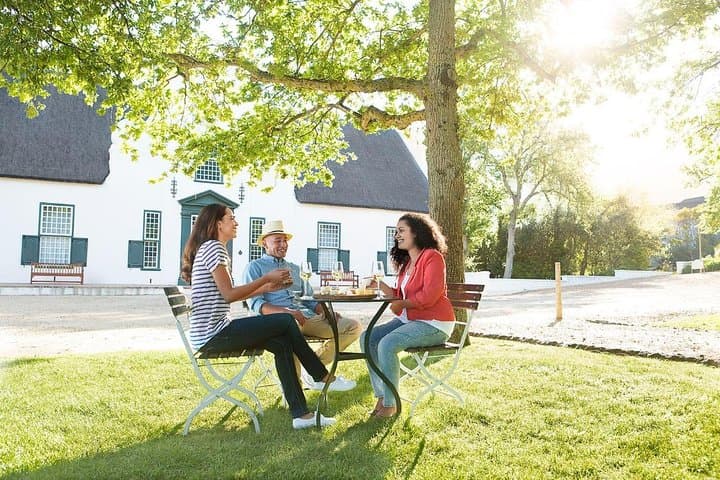
The day unfolds in clear chapters. First comes a drive around the peninsula with stops at viewpoints — a brief stretch on Chapman’s Peak, a walk at Cape Point with its steep paths and gulls that seem to escort you, then a quieter interlude at Boulders Beach where African penguins lounge on white sand and bob like small, stubborn buoys in the shallows. A midday pause at a Constantia wine estate provides a contrast: a shaded tasting room, vineyard rows, and a simple guided tasting that pairs local varietals with the region’s cool-climate profile. The return to the city usually includes a panorama of Table Mountain and a final sweep through Company’s Garden or the colorful houses of Bo-Kaap.
Practicalities matter: expect roughly 8–9 hours including driving — the full coastal loop from central Cape Town runs about 120–160 km depending on stops. Walks at Cape Point and the penguin colony are short (1–2 km) but include stairs and uneven boardwalks with modest elevation gain (near 100–200 m on the Cape Point walks). Wear sturdy shoes, layers for wind and sun, and bring water; weather can change quickly when ocean currents collide.
Local insight: booking early-morning departures reduces crowds at Cape Point and Boulders Beach, and choosing a wine tasting with a seated option makes lunch smoother. Respect wildlife by keeping distances at penguin viewing platforms; the birds are surprisingly tolerant but easily stressed by sudden approaches. This full-day loop delivers scenic variety, a brush with heritage, and the rare pleasure of seeing ocean, mountain and vineyard in a single day — a compact Cape experience with practical, walkable moments that invite exploration rather than endurance.
moderate.
8–9 hours.
Light to moderate fitness for short walks and stairs; comfortable for most travelers who can handle 1–2 km walks and standing at viewpoints.
Typical departures are early morning with a full-day return to Cape Town in the late afternoon or early evening; exact times are provided at booking.
Check the tour inclusions — some operators include park entry and penguin boardwalk fees while others require separate payment on arrival.
Yes—many families take this tour; supervise children closely at viewpoints and the penguin colony where boardwalks can be busy.
Yes—strong winds or rough seas can alter seaside stops or timing; guides typically reroute to maximize safety and views.
Lunch policies vary; some tours include a set lunch while others stop at cafés where you can purchase food—confirm when booking.
Accessibility varies by stop; many viewpoints have parking and short paved sections, but boardwalks and lighthouse paths can include steps—ask the operator for specifics.
The Constantia vineyards were established in the 1680s and became prized by European elites; the Cape’s headlands were major navigation markers on 17th–19th century trading routes.
The penguin colony and Cape Point reserve are managed to balance tourism with habitat protection—stay on marked paths and follow guide instructions to minimize impact.
You start the day on a coastal road that seems to challenge the sea itself — Chapman’s Peak Carve holding the cliff while the Atlantic pounds below, spray carrying the salt-and-smoke scent of the ocean inland. The van rolls past fynbos-covered slopes and sudden outlooks where False Bay opens like a raw page. On a clear morning the light finds every ripple and reef; later, low cloud can drape the mountains and turn the same scene intimate.
You start the day on a coastal road that seems to challenge the sea itself — Chapman’s Peak Carve holding the cliff while the Atlantic pounds below, spray carrying the salt-and-smoke scent of the ocean inland. The van rolls past fynbos-covered slopes and sudden outlooks where False Bay opens like a raw page. On a clear morning the light finds every ripple and reef; later, low cloud can drape the mountains and turn the same scene intimate.
This is a tour of edges: geographic, cultural and historical. Geologically, the Cape Peninsula is where Table Mountain’s hard sandstone meets older granites, folded and scoured by ice-age seas and wind. Historically, these rocks are the landmarks of early navigation — the Cape of Good Hope became a turning point on global trade routes, and nearby Constantia is one of the oldest wine-producing regions in the Southern Hemisphere, established in the 17th century by Dutch settlers and still shaping local culture today.
The day unfolds in clear chapters. First comes a drive around the peninsula with stops at viewpoints — a brief stretch on Chapman’s Peak, a walk at Cape Point with its steep paths and gulls that seem to escort you, then a quieter interlude at Boulders Beach where African penguins lounge on white sand and bob like small, stubborn buoys in the shallows. A midday pause at a Constantia wine estate provides a contrast: a shaded tasting room, vineyard rows, and a simple guided tasting that pairs local varietals with the region’s cool-climate profile. The return to the city usually includes a panorama of Table Mountain and a final sweep through Company’s Garden or the colorful houses of Bo-Kaap.
Practicalities matter: expect roughly 8–9 hours including driving — the full coastal loop from central Cape Town runs about 120–160 km depending on stops. Walks at Cape Point and the penguin colony are short (1–2 km) but include stairs and uneven boardwalks with modest elevation gain (near 100–200 m on the Cape Point walks). Wear sturdy shoes, layers for wind and sun, and bring water; weather can change quickly when ocean currents collide.
Local insight: booking early-morning departures reduces crowds at Cape Point and Boulders Beach, and choosing a wine tasting with a seated option makes lunch smoother. Respect wildlife by keeping distances at penguin viewing platforms; the birds are surprisingly tolerant but easily stressed by sudden approaches. This full-day loop delivers scenic variety, a brush with heritage, and the rare pleasure of seeing ocean, mountain and vineyard in a single day — a compact Cape experience with practical, walkable moments that invite exploration rather than endurance.