THE ADVENTURE COLLECTIVE® · Independent discovery and booking for outdoor travel

A short drive above Quetzaltenango delivers Fuentes Georginas: mineral-rich hot springs on the Zunil Volcano whose steam and warmth invite a restorative pause. This half-day excursion blends volcanic geology, local bathing culture, and highland forest scenery.
A short drive above Quetzaltenango delivers Fuentes Georginas: mineral-rich hot springs on the Zunil Volcano whose steam and warmth invite a restorative pause. This half-day excursion blends volcanic geology, local bathing culture, and highland forest scenery.
You arrive before sunrise, and the road from Quetzaltenango carves uphill through pine and coffee farms, the valley below still half-asleep. Steam hovers above the forest like a living thing, and as the bus drops you at the small ridge the scent of sulfur and wet earth hits first—an honest, grounding smell that says you’re close to something older than the town you left.
Verified experiences and guided adventures in the surrounding area.
Operated by Marvelus Travel · Quetzaltenango, Quetzaltenango Department
You arrive before sunrise, and the road from Quetzaltenango carves uphill through pine and coffee farms, the valley below still half-asleep. Steam hovers above the forest like a living thing, and as the bus drops you at the small ridge the scent of sulfur and wet earth hits first—an honest, grounding smell that says you’re close to something older than the town you left.
Fuentes Georginas sits on the flanks of the Zunil Volcano, a cluster of springs discovered by local laborers in 1902. What began as communal pools for nearby villagers evolved into a modest bathing complex fed continuously by geothermal water. Geologically, the springs are the visible edge of the Sierra Madre’s restless heart—groundwater heated by shallow magmatic activity courses through volcanic tuff and emerges between 35–45°C depending on the source.
The site’s history folds into local life: families from Zunil and surrounding hamlets have used these pools for generations, blending Mayan traditions of thermal bathing with Catholic-era social habits. Language here is layered—the distinctive K’iche’ rhythms at the market, the Spanish of Quetzaltenango, and the sign of tourism in simple English phrases by attendants.
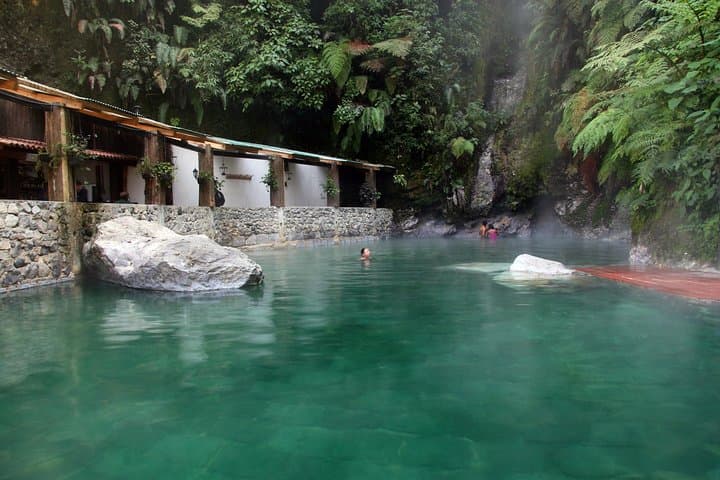
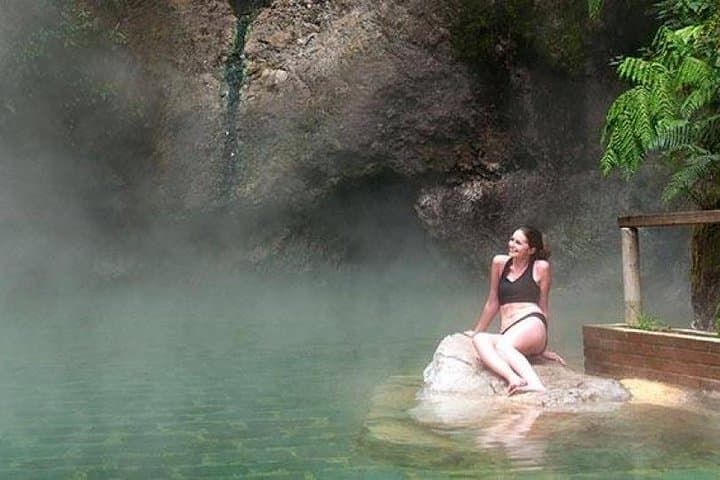
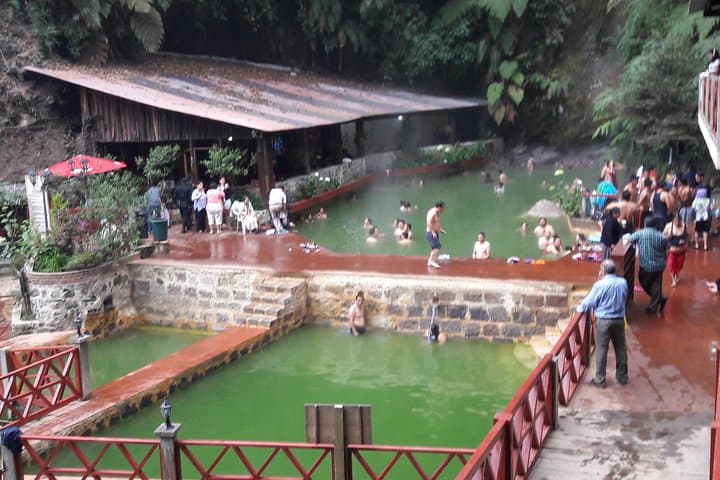
On arrival you’ll find tiered pools, changing rooms, and a small café. The water is opaque, mineral-rich, and insists you slow down. The forest around the baths is not ornamental; pines, agave, and coffee bushes harbor hummingbirds and occasional quetzal sightings if you’re quiet at dawn. The springs don’t boast manicured luxury; they offer something more elemental: warmth that loosens muscles and a highland light that sharpens the cliffs and valleys below.
Practicalities are straightforward. Tours from Quetzaltenango run as half-day excursions, typically including shared transport and hotel pickup. Bring cash for lunch at a nearby comedor—the tour price often excludes food—and leave jewelry in your bag: the minerals like to cling to metal. The path from the parking area is short but steep in places; closed-toe shoes with good grip are sensible. Because the pools sit above 2,000 meters, mornings are cool and evenings can be cold—pack layers.
Health warnings matter: hot springs are not recommended for pregnant visitors or those with heart conditions. Respect local customs around modesty—many pools are mixed but towel use is expected in changing areas. If you have time, extend your visit to Zunil market on the way back; it’s where the region’s colors and flavors gather.
Fuentes Georginas is not about luxury pampering; it’s a volcanic hot bath that asks you to slow down, listen to the steam, and remember there’s more to Guatemalan highlands than the cities on the map. For travelers wanting a restorative half-day with a touch of culture and geology, it remains a clear, warm promise.
easy.
4–6 hours (tour departs and returns same day).
Moderate; short uphill walks and standing in changing areas require basic mobility
Drive time is about 45–75 minutes each way depending on traffic and road conditions; tours typically last around 5 hours including transit and soaking time.
Admission is often not included—confirm at booking and bring cash for entrance and food if needed.
Many pools are mixed but private changing rooms are available; modest swimwear is expected.
No—hot springs at these temperatures are not recommended for pregnant visitors; follow tour restrictions and medical advice.
Yes, but infant lap seating rules apply and guardians should monitor kids near hot water; check age guidelines when booking.
Cell coverage can be spotty and there are no ATMs at the springs; withdraw cash in Quetzaltenango before you go.
The springs were discovered by local laborers in 1902 and long served as communal baths for nearby villages; they remain an important local gathering place.
The site is small and sensitive—stick to trails, avoid soaps in pools, and support local vendors to keep tourism benefits in the community.
Marvelus Travel operates guided outdoor trips and adventures with an emphasis on safety, stewardship, and memorable experiences.
You arrive before sunrise, and the road from Quetzaltenango carves uphill through pine and coffee farms, the valley below still half-asleep. Steam hovers above the forest like a living thing, and as the bus drops you at the small ridge the scent of sulfur and wet earth hits first—an honest, grounding smell that says you’re close to something older than the town you left.
You arrive before sunrise, and the road from Quetzaltenango carves uphill through pine and coffee farms, the valley below still half-asleep. Steam hovers above the forest like a living thing, and as the bus drops you at the small ridge the scent of sulfur and wet earth hits first—an honest, grounding smell that says you’re close to something older than the town you left.
Fuentes Georginas sits on the flanks of the Zunil Volcano, a cluster of springs discovered by local laborers in 1902. What began as communal pools for nearby villagers evolved into a modest bathing complex fed continuously by geothermal water. Geologically, the springs are the visible edge of the Sierra Madre’s restless heart—groundwater heated by shallow magmatic activity courses through volcanic tuff and emerges between 35–45°C depending on the source.
The site’s history folds into local life: families from Zunil and surrounding hamlets have used these pools for generations, blending Mayan traditions of thermal bathing with Catholic-era social habits. Language here is layered—the distinctive K’iche’ rhythms at the market, the Spanish of Quetzaltenango, and the sign of tourism in simple English phrases by attendants.
On arrival you’ll find tiered pools, changing rooms, and a small café. The water is opaque, mineral-rich, and insists you slow down. The forest around the baths is not ornamental; pines, agave, and coffee bushes harbor hummingbirds and occasional quetzal sightings if you’re quiet at dawn. The springs don’t boast manicured luxury; they offer something more elemental: warmth that loosens muscles and a highland light that sharpens the cliffs and valleys below.
Practicalities are straightforward. Tours from Quetzaltenango run as half-day excursions, typically including shared transport and hotel pickup. Bring cash for lunch at a nearby comedor—the tour price often excludes food—and leave jewelry in your bag: the minerals like to cling to metal. The path from the parking area is short but steep in places; closed-toe shoes with good grip are sensible. Because the pools sit above 2,000 meters, mornings are cool and evenings can be cold—pack layers.
Health warnings matter: hot springs are not recommended for pregnant visitors or those with heart conditions. Respect local customs around modesty—many pools are mixed but towel use is expected in changing areas. If you have time, extend your visit to Zunil market on the way back; it’s where the region’s colors and flavors gather.
Fuentes Georginas is not about luxury pampering; it’s a volcanic hot bath that asks you to slow down, listen to the steam, and remember there’s more to Guatemalan highlands than the cities on the map. For travelers wanting a restorative half-day with a touch of culture and geology, it remains a clear, warm promise.