THE ADVENTURE COLLECTIVE® · Independent discovery and booking for outdoor travel

Walk through a winter forest to a 15m blue-ice waterfall in Hida-Osaka. This guided snowshoe trek (4 km, ~4–4.5 hours) requires traction and strong cold-weather fitness.
Walk through a winter forest to a 15m blue-ice waterfall in Hida-Osaka. This guided snowshoe trek (4 km, ~4–4.5 hours) requires traction and strong cold-weather fitness.
A cold hush settles over the conifer canopy as you begin the climb: boots compact snow, breath puffs, and the forest narrows into a corridor of ribbed trunks. After an hour the trees part and a sheet of blue ice appears—towering, absurd, and absolute. The frozen waterfall in Hida-Osaka reaches roughly 15 meters high and 5 meters wide when fully formed, its faceted face catching low winter light and sending it back as cold, hard color.
Verified experiences and guided adventures in the surrounding area.
Operated by 216WORKS guide service office · Hida-Osaka, Gifu Prefecture
A cold hush settles over the conifer canopy as you begin the climb: boots compact snow, breath puffs, and the forest narrows into a corridor of ribbed trunks. After an hour the trees part and a sheet of blue ice appears—towering, absurd, and absolute. The frozen waterfall in Hida-Osaka reaches roughly 15 meters high and 5 meters wide when fully formed, its faceted face catching low winter light and sending it back as cold, hard color.
The route threads volcanic-and-metamorphic ridges of the Hida Mountains, an area shaped by uplift and heavy winter precipitation. Local villagers historically used these valleys for winter timber and mountain passes; today the site is quiet, a seasonal spectacle that lasts from early November through April. Guides combine regional know-how with simple cultural touches: a hot outdoor lunch, stories of past winters, and guidance on how to move safely on snow and ice.
Practically, expect a 4 km (2.5 mi) round trip taking about 4–4.5 hours, starting near 1,800 m where temperatures can fall to -20 °C and drifted snow piles to 2 m. It’s a pure snow trail—snowshoes and traction are required, and the hiking rhythm is steady: short, deliberate steps, frequent breaks, and an eye on changing conditions.
For planning, layer for severe cold, test your crampons before the route, and allow travel time from Takayama or Gero. Book at least three days ahead and be prepared for weather cancellations; the guide’s experience and proper gear make the difference between an exposed scramble and a safe, unforgettable encounter with one of Japan’s winter landscapes.
challenging.
4–5 hours.
Requires high aerobic fitness and ability to tolerate prolonged cold and snowy terrain; good balance and endurance recommended.
The route is about 4 km round trip and most groups take 4–4.5 hours including stops and time at the waterfall.
Participants should be in good physical condition and able to walk in snow for several hours; the operator requires heights between 140–190 cm and weight under 90 kg due to provided gear sizing.
Tours are canceled for unsafe conditions such as heavy snowstorms or unstable ice; the operator advises checking forecasts and allows cancellations with refund if made 24 hours prior.
Hida-Osaka is roughly 40–50 minutes by car or local bus from either Takayama or Gero; public transport options exist but plan transfers in advance.
The Hida region has long been a mountain forestry and rural community; seasonal ice and snow shaped local winter work and travel routes.
Winter alpine zones are fragile—stick to the guided route, pack out all waste, and avoid damaging ice formations or nearby vegetation.
216WORKS guide service office operates guided outdoor trips and adventures with an emphasis on safety, stewardship, and memorable experiences.
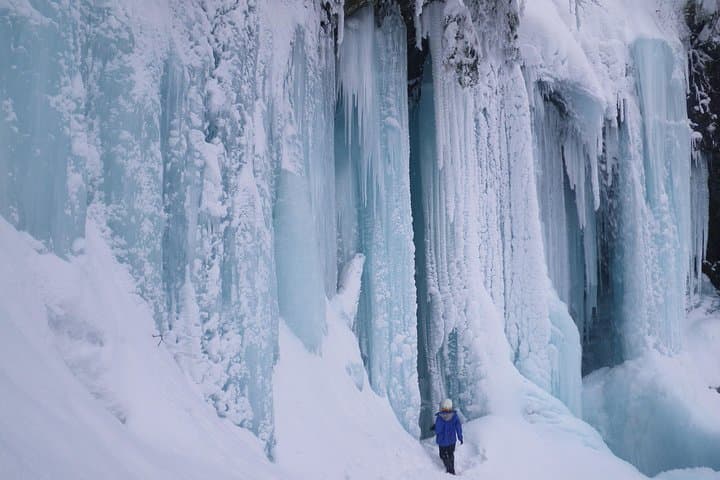
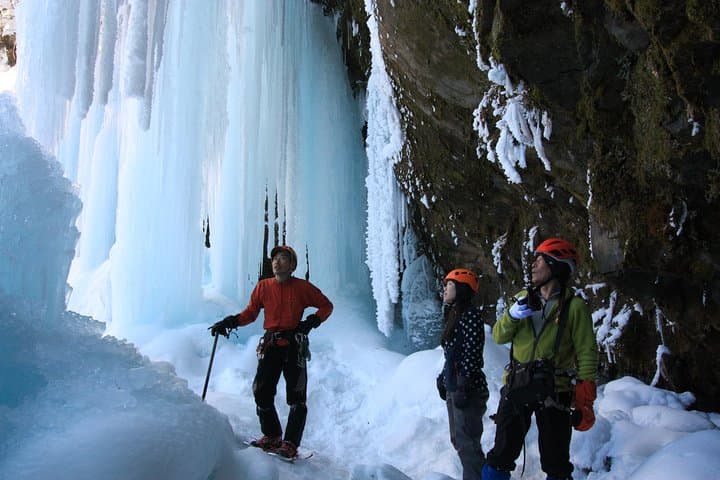
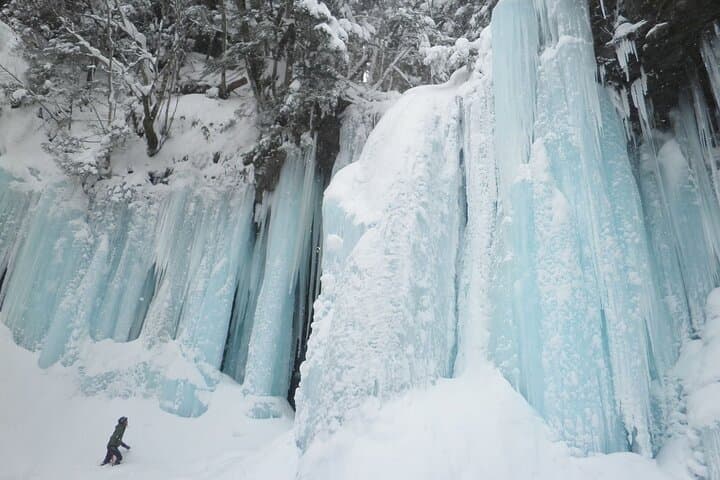
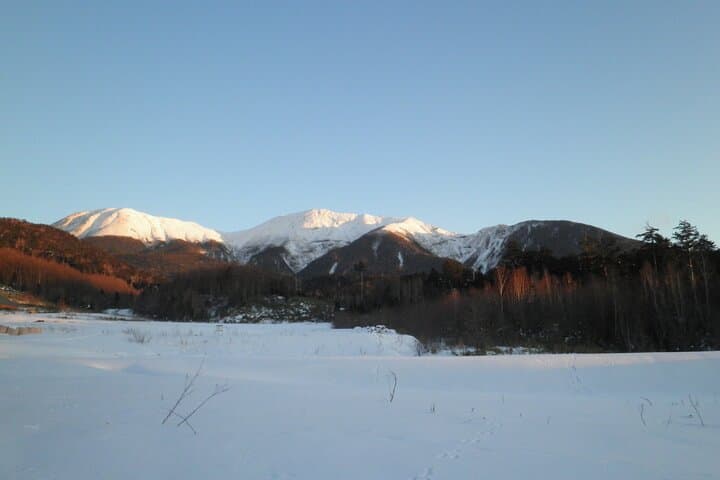
A cold hush settles over the conifer canopy as you begin the climb: boots compact snow, breath puffs, and the forest narrows into a corridor of ribbed trunks. After an hour the trees part and a sheet of blue ice appears—towering, absurd, and absolute. The frozen waterfall in Hida-Osaka reaches roughly 15 meters high and 5 meters wide when fully formed, its faceted face catching low winter light and sending it back as cold, hard color.
A cold hush settles over the conifer canopy as you begin the climb: boots compact snow, breath puffs, and the forest narrows into a corridor of ribbed trunks. After an hour the trees part and a sheet of blue ice appears—towering, absurd, and absolute. The frozen waterfall in Hida-Osaka reaches roughly 15 meters high and 5 meters wide when fully formed, its faceted face catching low winter light and sending it back as cold, hard color.
The route threads volcanic-and-metamorphic ridges of the Hida Mountains, an area shaped by uplift and heavy winter precipitation. Local villagers historically used these valleys for winter timber and mountain passes; today the site is quiet, a seasonal spectacle that lasts from early November through April. Guides combine regional know-how with simple cultural touches: a hot outdoor lunch, stories of past winters, and guidance on how to move safely on snow and ice.
Practically, expect a 4 km (2.5 mi) round trip taking about 4–4.5 hours, starting near 1,800 m where temperatures can fall to -20 °C and drifted snow piles to 2 m. It’s a pure snow trail—snowshoes and traction are required, and the hiking rhythm is steady: short, deliberate steps, frequent breaks, and an eye on changing conditions.
For planning, layer for severe cold, test your crampons before the route, and allow travel time from Takayama or Gero. Book at least three days ahead and be prepared for weather cancellations; the guide’s experience and proper gear make the difference between an exposed scramble and a safe, unforgettable encounter with one of Japan’s winter landscapes.