THE ADVENTURE COLLECTIVE® · Independent discovery and booking for outdoor travel

Walk the French Quarter with a local guide who threads history, architecture, and street-level culture into a two-hour exploration of the Vieux Carré. This small-group tour balances storytelling with practical tips—perfect for first-time visitors who want context before the jazz.
Walk the French Quarter with a local guide who threads history, architecture, and street-level culture into a two-hour exploration of the Vieux Carré. This small-group tour balances storytelling with practical tips—perfect for first-time visitors who want context before the jazz.
Night air in the French Quarter tastes of citrus and spilled music. Lanterns throw long shadows from wrought-iron balconies as travelers thread under steep eaves and past façades older than the United States. On this two-hour small-group walk, a local guide turns the Quarter’s choreography—the parade of street musicians, the clink of café cups, the slow drag of the Mississippi—into a readable map of place and time.
Verified experiences and guided adventures in the surrounding area.
Operated by Unique NOLA · New Orleans, Louisiana
Night air in the French Quarter tastes of citrus and spilled music. Lanterns throw long shadows from wrought-iron balconies as travelers thread under steep eaves and past façades older than the United States. On this two-hour small-group walk, a local guide turns the Quarter’s choreography—the parade of street musicians, the clink of café cups, the slow drag of the Mississippi—into a readable map of place and time.
The Vieux Carré began in 1718 as a colonial grid laid out by Jean-Baptiste Le Moyne de Bienville; its streets carry French and Spanish law, Caribbean commerce, and the slow accretions of immigrant cultures. The tour starts near the river and moves through Jackson Square, past St. Louis Cathedral and the Cabildo, where stories of fires, rebuilds and civic reinvention explain why a single block can feel like an archive. Geology is quiet here but present: the city sits on deltaic silt, and the Quarter’s raised sidewalks and French-to-Spanish architectural transitions are responses to repeated floods and rebuilding.
Cultural threads run loud. The guide explains how Creole identity, Catholic ritual, and free people of color shaped neighborhoods; why brass bands and second-line traditions still pull people into the streets; and how cuisine—from beignets to gumbo—reflects layered trade routes and homegrown ingenuity. There’s practical attention to the Quarter’s evolution: how 19th-century commerce turned to 20th-century tourism, and how preservation efforts after Hurricane Katrina altered both streetscape and social life.
For travelers, this walk is both orientation and invitation. Expect 1.5–2 miles on mostly paved streets, with frequent stops for stories and photo-friendly corners. The small-group size—capped at roughly 15—keeps the pace conversational and allows time to point out hidden details like carved lintels, old inscribed keystones, and the tucked-away courtyards on Royal Street.
Plan ahead: mornings and early evenings give cooler light and thinner crowds. Summer brings humidity and a louder nightlife; winter is mild but can be windy along the river. The tour is wheelchair accessible and rated easy for most fitness levels, but comfortable shoes are non-negotiable—cobblestones and uneven thresholds are part of the terrain.
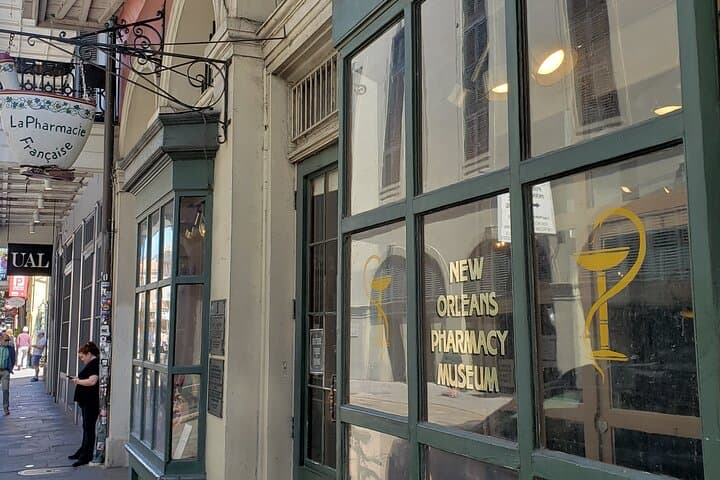
Beyond the standard itinerary of Bourbon Street and the Pharmacy Museum, the local guide will flag contemporary favorites—small bars with storied histories, discreet galleries, and where to find the best muffuletta slice. The result is practical, place-based storytelling: context for every corner, a route that reveals the Quarter’s living history, and enough local notes to help visitors return later with a deeper curiosity.
easy.
2 hours.
Suitable for most fitness levels; involves 1.5–2 miles of walking on paved and uneven surfaces
The tour lasts about two hours and covers roughly 1.5–2 miles of mostly paved streets with several scheduled stops.
Yes—this walk is stroller accessible and described as physically easy, though narrow sidewalks and crowds on Bourbon Street can be a factor.
The meeting point is the Unique NOLA Tours shop near the Mississippi Riverfront; the tour also ends there.
You can receive a full refund if you cancel at least 24 hours before the scheduled departure time.
Yes—the tour is listed as wheelchair accessible, though some streets may have uneven pavement.
Yes—local guides highlight favored bars, restaurants, and hidden gems tailored to visitor interests and time of day.
Founded in 1718, the Vieux Carré is shaped by French and Spanish colonial plans, Creole culture, and commerce along the Mississippi River.
Preservation groups work to maintain historic façades while city initiatives focus on flood mitigation and responsible tourism to reduce wear on fragile structures.
Unique NOLA operates guided outdoor trips and adventures with an emphasis on safety, stewardship, and memorable experiences.
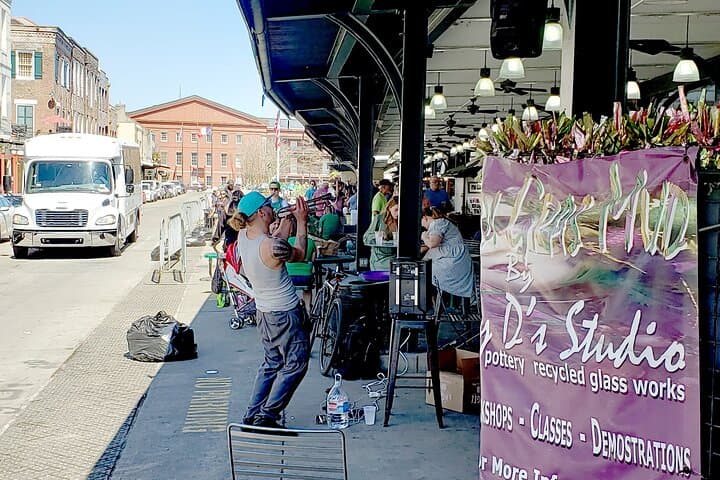
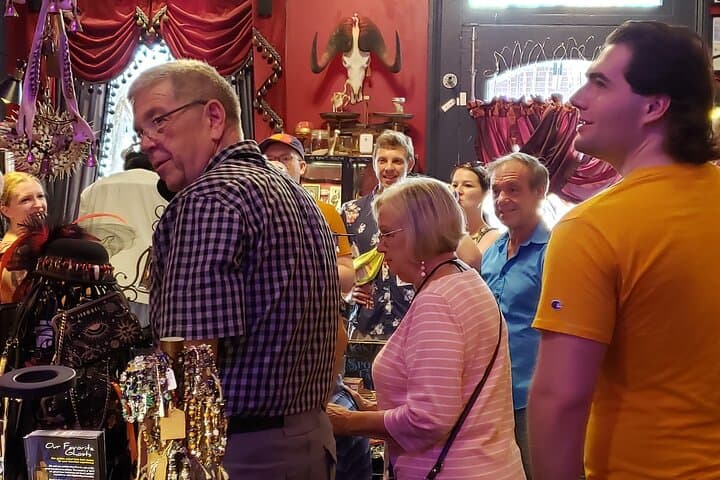
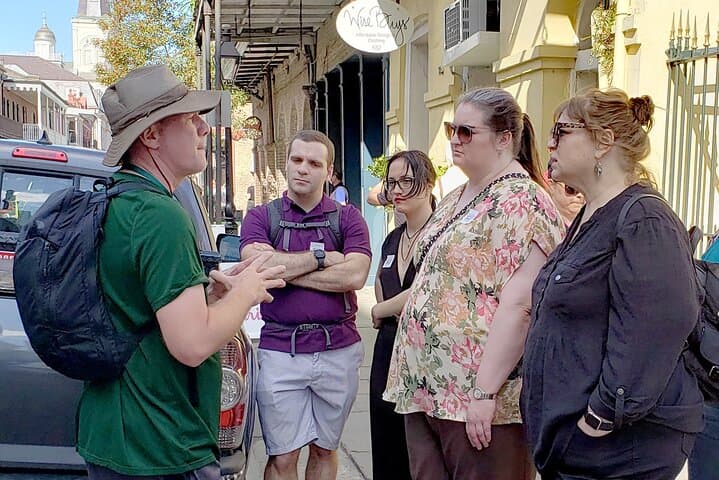
Night air in the French Quarter tastes of citrus and spilled music. Lanterns throw long shadows from wrought-iron balconies as travelers thread under steep eaves and past façades older than the United States. On this two-hour small-group walk, a local guide turns the Quarter’s choreography—the parade of street musicians, the clink of café cups, the slow drag of the Mississippi—into a readable map of place and time.
Night air in the French Quarter tastes of citrus and spilled music. Lanterns throw long shadows from wrought-iron balconies as travelers thread under steep eaves and past façades older than the United States. On this two-hour small-group walk, a local guide turns the Quarter’s choreography—the parade of street musicians, the clink of café cups, the slow drag of the Mississippi—into a readable map of place and time.
The Vieux Carré began in 1718 as a colonial grid laid out by Jean-Baptiste Le Moyne de Bienville; its streets carry French and Spanish law, Caribbean commerce, and the slow accretions of immigrant cultures. The tour starts near the river and moves through Jackson Square, past St. Louis Cathedral and the Cabildo, where stories of fires, rebuilds and civic reinvention explain why a single block can feel like an archive. Geology is quiet here but present: the city sits on deltaic silt, and the Quarter’s raised sidewalks and French-to-Spanish architectural transitions are responses to repeated floods and rebuilding.
Cultural threads run loud. The guide explains how Creole identity, Catholic ritual, and free people of color shaped neighborhoods; why brass bands and second-line traditions still pull people into the streets; and how cuisine—from beignets to gumbo—reflects layered trade routes and homegrown ingenuity. There’s practical attention to the Quarter’s evolution: how 19th-century commerce turned to 20th-century tourism, and how preservation efforts after Hurricane Katrina altered both streetscape and social life.
For travelers, this walk is both orientation and invitation. Expect 1.5–2 miles on mostly paved streets, with frequent stops for stories and photo-friendly corners. The small-group size—capped at roughly 15—keeps the pace conversational and allows time to point out hidden details like carved lintels, old inscribed keystones, and the tucked-away courtyards on Royal Street.
Plan ahead: mornings and early evenings give cooler light and thinner crowds. Summer brings humidity and a louder nightlife; winter is mild but can be windy along the river. The tour is wheelchair accessible and rated easy for most fitness levels, but comfortable shoes are non-negotiable—cobblestones and uneven thresholds are part of the terrain.
Beyond the standard itinerary of Bourbon Street and the Pharmacy Museum, the local guide will flag contemporary favorites—small bars with storied histories, discreet galleries, and where to find the best muffuletta slice. The result is practical, place-based storytelling: context for every corner, a route that reveals the Quarter’s living history, and enough local notes to help visitors return later with a deeper curiosity.