THE ADVENTURE COLLECTIVE® · Independent discovery and booking for outdoor travel

Walk the French Quarter with a guide who blends archival history and local lore—ghost stories, voodoo tales, architectural highlights and bar stops. This 1–2 hour tour is equal parts civic history and theatrical storytelling, best for travelers who like their facts with a side of frisson.
Walk the French Quarter with a guide who blends archival history and local lore—ghost stories, voodoo tales, architectural highlights and bar stops. This 1–2 hour tour is equal parts civic history and theatrical storytelling, best for travelers who like their facts with a side of frisson.
A sultry evening presses against the ironwork of Bourbon Street as the group assembles by Lafitte's Blacksmith Shop Bar. Streetlamps throw amber circles on the bricks; a guide’s voice threads through the chatter and the clink of glasses, switching between documentary cadence and a storyteller’s timing. The tour moves like a local parlor: conversational, occasionally bawdy, always forward. You’ll pass under balconies draped with shadow and filament lights and learn that the city’s past isn’t just in plaques—it’s in the narrow alleys, the creaking shutters and the way the River seems to pull the city toward itself.
Verified experiences and guided adventures in the surrounding area.
Operated by New Orleans Drunk History Tours • Show Me New Orleans Tours · New Orleans, Louisiana
A sultry evening presses against the ironwork of Bourbon Street as the group assembles by Lafitte's Blacksmith Shop Bar. Streetlamps throw amber circles on the bricks; a guide’s voice threads through the chatter and the clink of glasses, switching between documentary cadence and a storyteller’s timing. The tour moves like a local parlor: conversational, occasionally bawdy, always forward. You’ll pass under balconies draped with shadow and filament lights and learn that the city’s past isn’t just in plaques—it’s in the narrow alleys, the creaking shutters and the way the River seems to pull the city toward itself.
The French Quarter is built on layered histories. Spanish and French urban planning, Creole townhouses, and 19th‑century mansions stand side by side. Stops on this route include the LaLaurie Mansion and its grim reputation, the refined rooms of the Beauregard‑Keyes House, the Old Ursuline Convent’s stately brick, and the compact charm of Madame John’s Legacy. Jackson Square acts as a single stop with St. Louis Cathedral, The Cabildo and the Presbytère forming a concentrated museum of civic memory. Guides fold in stories of voodoo practitioners, notorious murders, and local celebrity homes; they also flag where film crews have used the Quarter’s texture for set pieces.
Geology and hydrology show up in unexpected ways here: the city’s elevation quirks, the canal-era engineering, and the Gulf-fed humidity that reshapes paint and stone. Culture is immediate—live brass from a corner band, a bartender’s quick joke, and the ritual of a to‑go drink at a corner bar. The tour’s tone oscillates between recorded folklore and eyewitness urban legend; it’s entertainment rooted in public history rather than séance.
Practicalities follow the color. Tours run roughly 1–2 hours at a moderate walking pace with multiple short stops; guests may enter bars on the route to purchase drinks (alcohol not included). The meeting point is the sidewalk at Lafitte’s Blacksmith Shop Bar—arrive a few minutes early to check in. Video recording of narrations is prohibited; photos are allowed. Wear sturdy, flat shoes—the Quarter’s sidewalks and cobbles are uneven—and bring water for humid days. The route is wheelchair and stroller accessible, but note that bars and interiors visited may have their own policies about minors. Expect a mix of history and showmanship: guides balance archival facts with local lore, so come ready to judge evidence for yourself.
For timing, late afternoon or evening tours catch the Quarter’s shadowed architecture and livelier street atmosphere. Tipping is customary for guides; the experience is best when guests respect street traffic, residents’ privacy, and the city’s fragile historic fabric.
easy.
1–2 hours.
Suitable for most fitness levels; expect moderate walking with short standing stops—wheelchair access is available along the main route.
The tour typically lasts 1–2 hours depending on stops at bars and crowd flow; guides maintain a moderate pace to cover the main route.
No—alcoholic and nonalcoholic drinks are available for purchase at certain stops; bring ID if you plan to buy alcohol.
Yes—the main walking route is wheelchair and stroller accessible, though individual bars and interiors may have their own access limitations.
Children may attend but must be accompanied by an adult; some bars do not admit minors so alternative stops are available.
No—tours are for entertainment and history; guides share documented events and local lore but cannot guarantee paranormal encounters.
For a full refund cancel at least 24 hours before the scheduled departure; tours can be rescheduled or refunded if minimum numbers aren’t met.
The French Quarter preserves urban patterns from colonial France and Spain; many current buildings overlay much older foundations and reflect 18th–19th century rebuilding after fires.
The Quarter is an active historic district—respect for private property, careful foot traffic, and limiting noise help protect fragile façades and residential life.
New Orleans Drunk History Tours • Show Me New Orleans Tours operates guided outdoor trips and adventures with an emphasis on safety, stewardship, and memorable experiences.


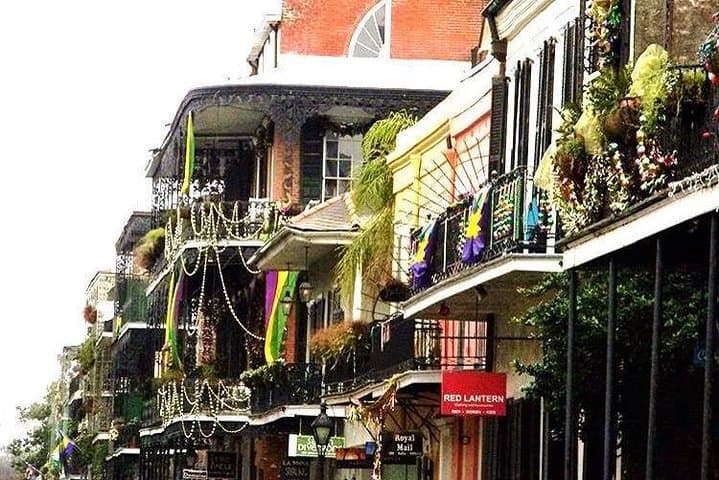

A sultry evening presses against the ironwork of Bourbon Street as the group assembles by Lafitte's Blacksmith Shop Bar. Streetlamps throw amber circles on the bricks; a guide’s voice threads through the chatter and the clink of glasses, switching between documentary cadence and a storyteller’s timing. The tour moves like a local parlor: conversational, occasionally bawdy, always forward. You’ll pass under balconies draped with shadow and filament lights and learn that the city’s past isn’t just in plaques—it’s in the narrow alleys, the creaking shutters and the way the River seems to pull the city toward itself.
A sultry evening presses against the ironwork of Bourbon Street as the group assembles by Lafitte's Blacksmith Shop Bar. Streetlamps throw amber circles on the bricks; a guide’s voice threads through the chatter and the clink of glasses, switching between documentary cadence and a storyteller’s timing. The tour moves like a local parlor: conversational, occasionally bawdy, always forward. You’ll pass under balconies draped with shadow and filament lights and learn that the city’s past isn’t just in plaques—it’s in the narrow alleys, the creaking shutters and the way the River seems to pull the city toward itself.
The French Quarter is built on layered histories. Spanish and French urban planning, Creole townhouses, and 19th‑century mansions stand side by side. Stops on this route include the LaLaurie Mansion and its grim reputation, the refined rooms of the Beauregard‑Keyes House, the Old Ursuline Convent’s stately brick, and the compact charm of Madame John’s Legacy. Jackson Square acts as a single stop with St. Louis Cathedral, The Cabildo and the Presbytère forming a concentrated museum of civic memory. Guides fold in stories of voodoo practitioners, notorious murders, and local celebrity homes; they also flag where film crews have used the Quarter’s texture for set pieces.
Geology and hydrology show up in unexpected ways here: the city’s elevation quirks, the canal-era engineering, and the Gulf-fed humidity that reshapes paint and stone. Culture is immediate—live brass from a corner band, a bartender’s quick joke, and the ritual of a to‑go drink at a corner bar. The tour’s tone oscillates between recorded folklore and eyewitness urban legend; it’s entertainment rooted in public history rather than séance.
Practicalities follow the color. Tours run roughly 1–2 hours at a moderate walking pace with multiple short stops; guests may enter bars on the route to purchase drinks (alcohol not included). The meeting point is the sidewalk at Lafitte’s Blacksmith Shop Bar—arrive a few minutes early to check in. Video recording of narrations is prohibited; photos are allowed. Wear sturdy, flat shoes—the Quarter’s sidewalks and cobbles are uneven—and bring water for humid days. The route is wheelchair and stroller accessible, but note that bars and interiors visited may have their own policies about minors. Expect a mix of history and showmanship: guides balance archival facts with local lore, so come ready to judge evidence for yourself.
For timing, late afternoon or evening tours catch the Quarter’s shadowed architecture and livelier street atmosphere. Tipping is customary for guides; the experience is best when guests respect street traffic, residents’ privacy, and the city’s fragile historic fabric.