THE ADVENTURE COLLECTIVE® · Independent discovery and booking for outdoor travel

A private, four-day ascent of Mount Meru that balances acclimatization and ambition—forest trails, alpine meadows, and a midnight summit push to Socialist Peak. Ideal for fit trekkers who want a challenging, supported climb with local guides and hut accommodation.
A private, four-day ascent of Mount Meru that balances acclimatization and ambition—forest trails, alpine meadows, and a midnight summit push to Socialist Peak. Ideal for fit trekkers who want a challenging, supported climb with local guides and hut accommodation.
You wake in Arusha before dawn and slide into the hired jeep that will take you up the red-dust road toward Momela Gate. The air cools as the town gives way to montane forest; birds twitch in the canopy and, somewhere off-trail, the park’s resident buffalo rustle. By the time the group signs in, the trail has already begun to carve itself uphill through broad-leaf forest, vines swinging like green ropes. This is no walk in the park—Mount Meru rises sharply from the surrounding plains and its profile changes with every switchback: dense rainforest, open afro-alpine moor, and finally the raw, rocky spine toward Socialist Peak.
Verified experiences and guided adventures in the surrounding area.
Operated by Africa Exhibition Safari Agency · Arusha, Arusha Region
You wake in Arusha before dawn and slide into the hired jeep that will take you up the red-dust road toward Momela Gate. The air cools as the town gives way to montane forest; birds twitch in the canopy and, somewhere off-trail, the park’s resident buffalo rustle. By the time the group signs in, the trail has already begun to carve itself uphill through broad-leaf forest, vines swinging like green ropes. This is no walk in the park—Mount Meru rises sharply from the surrounding plains and its profile changes with every switchback: dense rainforest, open afro-alpine moor, and finally the raw, rocky spine toward Socialist Peak.
Mount Meru sits inside Arusha National Park and shares a geological story with Kilimanjaro—both are volcanic cones on the East African Rift. Meru’s crater and ash cone are dramatic reminders of eruptions that reshaped the landscape, leaving fertile plains below and steep, glaciated ridgelines above. The local Maasai and Meru communities have long viewed the mountain as a place of resource and ritual; today, small-scale guides and porters fold traditional knowledge into modern guiding practices to protect cultural and natural values.
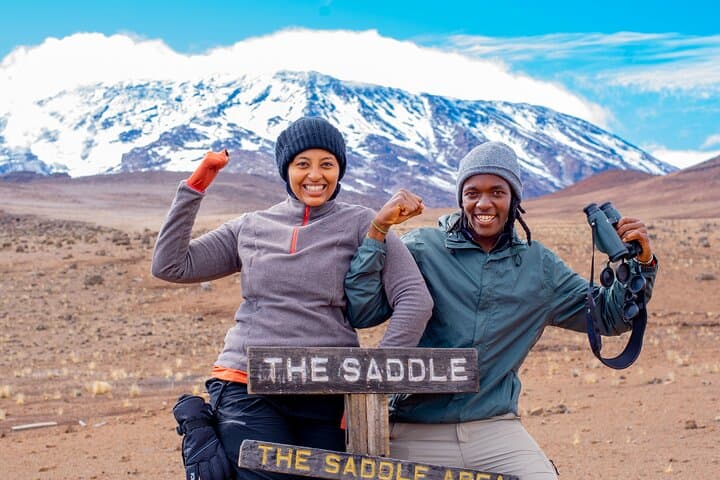
On this private four-day itinerary, days are measured in elevation gain as much as distance. Day 1 eases trekkers from 1,500m to 2,500m across roughly 6km—an intentional acclimatization through forest where colobus monkeys patrol the branches. Day 2 pushes to Saddle Hut; the slope grows steeper and the views of the ash cone open up. Day 3 is the summit bid: a midnight start, a demanding ascent to 4,562m, and a long descent back to Meriakamba Hut—19km and a test of both legs and will. The final day walks out through fig archways and descending cloud forest back to Momela Gate and the drive to Arusha.
Practical planning matters here. Expect temperature swings from tropical warmth at the gate to near-freezing at the summit; layered clothing and a solid pair of waterproof boots are non-negotiable. Hydration and steady pacing beat speed—altitude is the real variable. Because this is a private, guided tour with porter support and huts for accommodation, technical climbing gear isn’t required, but trekking poles and headlamps are essential for the summit night.
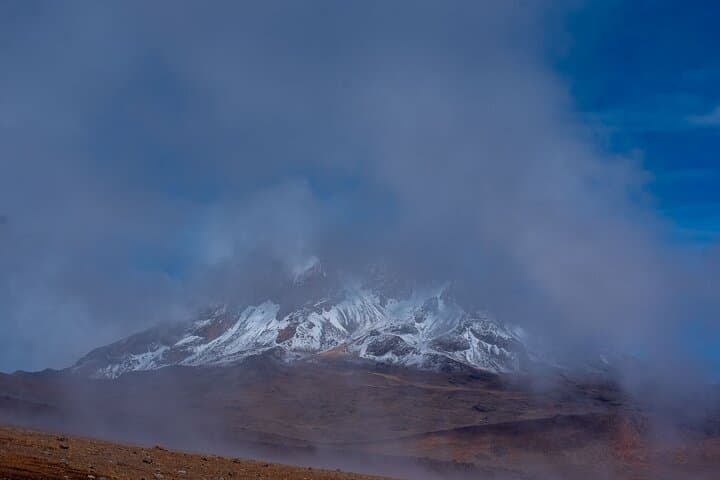
For photographers the mountain rewards early light and summit sunrises with views of Meru’s crater and, on clear days, a silhouette of Kilimanjaro to the east. Respect the fragile alpine flora, follow your guide’s instructions about wildlife distances, and carry out any waste. With careful preparation, this four-day route offers a high-altitude achievement paired with the kind of biodiversity and volcanic drama that keeps mountaineers coming back to Tanzania.
challenging.
4 days.
Good cardiovascular fitness and leg strength recommended; prior multi-day hiking experience helpful
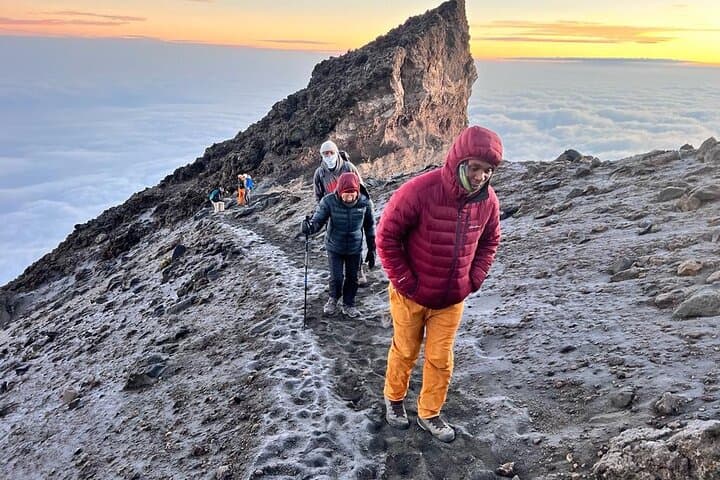
Expect a long, steep day: a midnight start, 10–12 hours of hiking, and sustained climbing to 4,562m followed by a long descent; it's the most demanding day physically and mentally.
No technical climbing skills are required—the route is a non-technical trek—but experience with multi-day hikes and high-altitude trekking is strongly recommended.
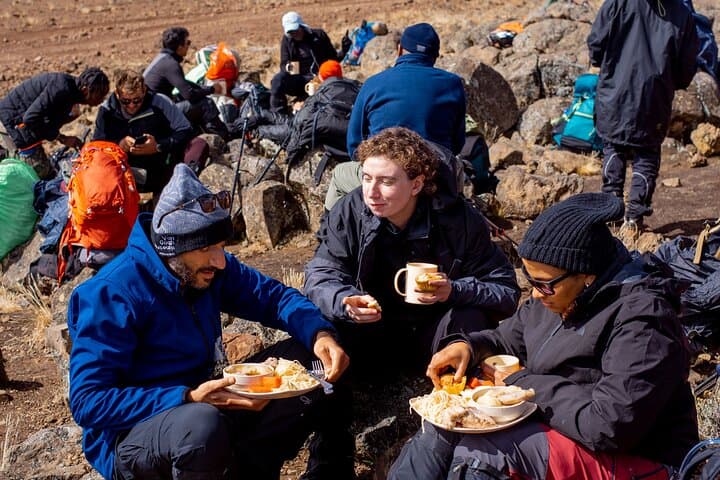
Accommodation is in mountain huts (Meriakamba and Saddle Hut) with basic bedding; expect communal sleeping and simple facilities.
The drier months (June–October and January–February) offer the most reliable weather and trail conditions for summit attempts.
Yes—Arusha National Park hosts colobus monkeys, buffalo, giraffes near lower elevations, and chances of sighting small antelope at higher ridges.
Yes—porter support is typically available as part of guided climbs; check weight limits with the operator and pack essentials in a daypack.
Mount Meru is an active volcanic cone in the East African Rift; its crater and ash cone record geologic activity that shaped the region’s uplands and influenced local settlement patterns.
Arusha National Park manages visitor impact with permits and ranger escorts; stick to marked trails, avoid feeding wildlife, and carry out all waste to minimize footprint.
Africa Exhibition Safari Agency operates guided outdoor trips and adventures with an emphasis on safety, stewardship, and memorable experiences.
You wake in Arusha before dawn and slide into the hired jeep that will take you up the red-dust road toward Momela Gate. The air cools as the town gives way to montane forest; birds twitch in the canopy and, somewhere off-trail, the park’s resident buffalo rustle. By the time the group signs in, the trail has already begun to carve itself uphill through broad-leaf forest, vines swinging like green ropes. This is no walk in the park—Mount Meru rises sharply from the surrounding plains and its profile changes with every switchback: dense rainforest, open afro-alpine moor, and finally the raw, rocky spine toward Socialist Peak.
You wake in Arusha before dawn and slide into the hired jeep that will take you up the red-dust road toward Momela Gate. The air cools as the town gives way to montane forest; birds twitch in the canopy and, somewhere off-trail, the park’s resident buffalo rustle. By the time the group signs in, the trail has already begun to carve itself uphill through broad-leaf forest, vines swinging like green ropes. This is no walk in the park—Mount Meru rises sharply from the surrounding plains and its profile changes with every switchback: dense rainforest, open afro-alpine moor, and finally the raw, rocky spine toward Socialist Peak.
Mount Meru sits inside Arusha National Park and shares a geological story with Kilimanjaro—both are volcanic cones on the East African Rift. Meru’s crater and ash cone are dramatic reminders of eruptions that reshaped the landscape, leaving fertile plains below and steep, glaciated ridgelines above. The local Maasai and Meru communities have long viewed the mountain as a place of resource and ritual; today, small-scale guides and porters fold traditional knowledge into modern guiding practices to protect cultural and natural values.
On this private four-day itinerary, days are measured in elevation gain as much as distance. Day 1 eases trekkers from 1,500m to 2,500m across roughly 6km—an intentional acclimatization through forest where colobus monkeys patrol the branches. Day 2 pushes to Saddle Hut; the slope grows steeper and the views of the ash cone open up. Day 3 is the summit bid: a midnight start, a demanding ascent to 4,562m, and a long descent back to Meriakamba Hut—19km and a test of both legs and will. The final day walks out through fig archways and descending cloud forest back to Momela Gate and the drive to Arusha.
Practical planning matters here. Expect temperature swings from tropical warmth at the gate to near-freezing at the summit; layered clothing and a solid pair of waterproof boots are non-negotiable. Hydration and steady pacing beat speed—altitude is the real variable. Because this is a private, guided tour with porter support and huts for accommodation, technical climbing gear isn’t required, but trekking poles and headlamps are essential for the summit night.
For photographers the mountain rewards early light and summit sunrises with views of Meru’s crater and, on clear days, a silhouette of Kilimanjaro to the east. Respect the fragile alpine flora, follow your guide’s instructions about wildlife distances, and carry out any waste. With careful preparation, this four-day route offers a high-altitude achievement paired with the kind of biodiversity and volcanic drama that keeps mountaineers coming back to Tanzania.