THE ADVENTURE COLLECTIVE® · Independent discovery and booking for outdoor travel

Clip in above the Kaituna River and fly across waterfalls, forest, and a gorge shaped by Rotorua’s volcanic past. This 2.5-hour zipline blends adrenaline with culture, conservation, and quietly spectacular views—plus free photos to relive it all.
Clip in above the Kaituna River and fly across waterfalls, forest, and a gorge shaped by Rotorua’s volcanic past. This 2.5-hour zipline blends adrenaline with culture, conservation, and quietly spectacular views—plus free photos to relive it all.
Mist lifts off the Kaituna at first light, and the river seems to dare you from below—whitewater pushing forward, waterfalls throwing their voices into the gorge. You clip in, step to the edge, and the forest opens. Cables hum, ponga fronds unfurl at eye level, and the current keeps moving whether you’re ready or not. In Ōkere, the elements have agency: water surges, rock holds firm, and you—suspended between them—get a rare perspective on Rotorua’s volcanic heartland.
Verified experiences and guided adventures in the surrounding area.
Operated by Rotorua Ziplines · Okere Falls, Bay of Plenty
Mist lifts off the Kaituna at first light, and the river seems to dare you from below—whitewater pushing forward, waterfalls throwing their voices into the gorge. You clip in, step to the edge, and the forest opens. Cables hum, ponga fronds unfurl at eye level, and the current keeps moving whether you’re ready or not. In Ōkere, the elements have agency: water surges, rock holds firm, and you—suspended between them—get a rare perspective on Rotorua’s volcanic heartland.
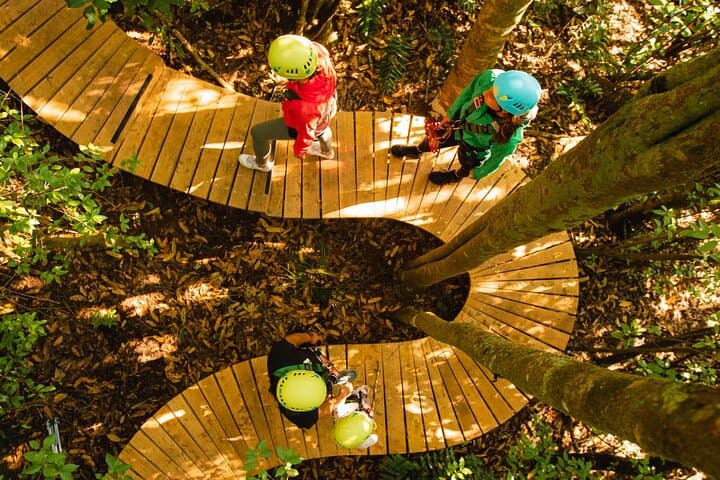
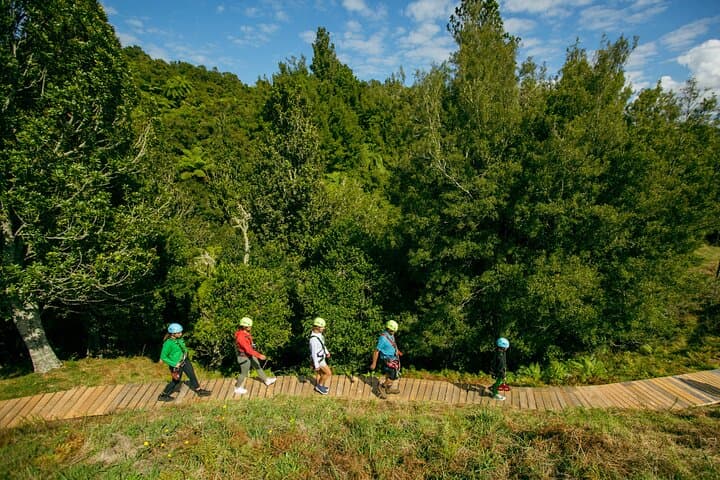
Rotorua Ziplines’ 2.5-hour guided course stitches across native bush and three waterfalls, with swing bridges and boardwalks threading the route. This is not a speed run; it’s an immersion. Guides share kōrero about the Ōkere Awa—how the river slips out of Lake Rotoiti and punches through ignimbrite walls laid down by ancient eruptions. Between flights, you taste a native herbal tea and learn how the operation, a joint venture with Ngāti Hinerangi and local paddling legend Sam Sutton, is planting toward 60,000 native trees by 2025—every guest leaving a tree in their name.
History lines the gorge. A short walk from the platforms, the remnants of the 1901 Okere Falls Power Station hint at the region’s early embrace of hydroelectricity. Recreationally, the river is a modern icon, famous for raft runs over Tutea Falls. Up here, you get the drama without the dunking, watching the river muscle through chutes while kererū thump overhead and tūī work the canopy.
Logistics are refreshingly simple: expect roughly 600 meters of easy walking across the course and a series of progressively longer lines above the Kaituna. Helmets and harnesses are fitted by guides operating under New Zealand’s Adventure Activity Regulations; weight limit is 130 kg. The pace suits most travelers comfortable with heights—plenty of coaching, dry runs, and time on stable platforms. Free trip photos mean you can pocket your phone—or tether it securely—while you enjoy the ride.
Timing matters in this gorge. Mornings tend to bring calmer air and softer light in the forest; afternoon sun drops warm tones into the river corridor. Either way, Ōkere rewards attention to detail: the rattle of the rapids beneath your feet, the peppery nip of kawakawa on your tongue, the moment the line goes taut and the whole valley seems to lean into your glide.
Come for the flight. Leave with a feel for a living river and a project that’s putting more trees in the ground than footprints on the trail.
moderate.
2.5 hours.
Suitable for most; comfortable with heights, able to stand for periods and walk ~600 m with stairs.
Plan for about 2.5 hours with roughly 600 meters of easy walking across platforms, bridges, and short forest tracks.
There is a 130 kg (286 lb) weight limit. Age guidelines can vary; check with the operator before booking for current minimums.
Trips run in light rain—the forest can be beautiful in drizzle—but may be postponed or refunded if conditions become unsafe due to wind or storms.
Yes, but it must be secured with a tether. Free professional photos are included if you prefer not to bring devices on the lines.
Most guests self-drive to the Okere Falls base where there is parking. Confirm transport options with the operator when booking.
Guides progress you gradually, with thorough briefings and redundant safety systems. Many height-wary guests complete the full course comfortably.
Okere Falls powered Rotorua from 1901 via one of New Zealand’s earliest hydro stations, remnants of which line today’s walking track. The zipline is a joint venture with Ngāti Hinerangi, pairing adventure with active kaitiakitanga (guardianship).
Each guest contributes a native tree toward a goal of 60,000 by 2025—restoring canopy and stabilizing banks. Stay on built structures and pack out everything; the gorge is sensitive and heavily used.
Rotorua Ziplines operates guided outdoor trips and adventures with an emphasis on safety, stewardship, and memorable experiences.
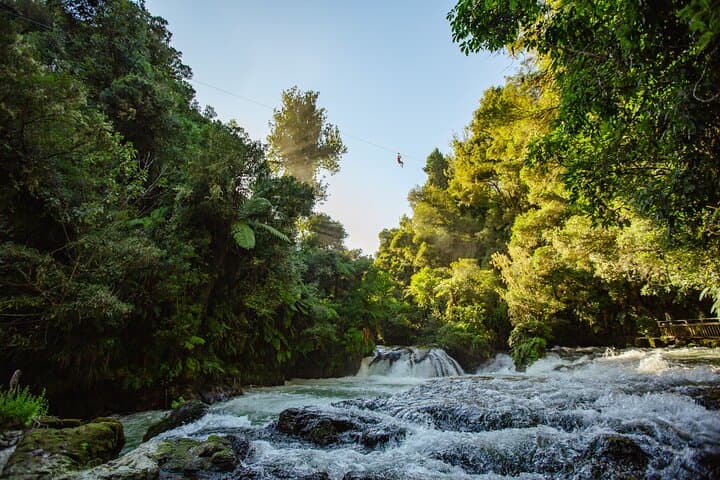
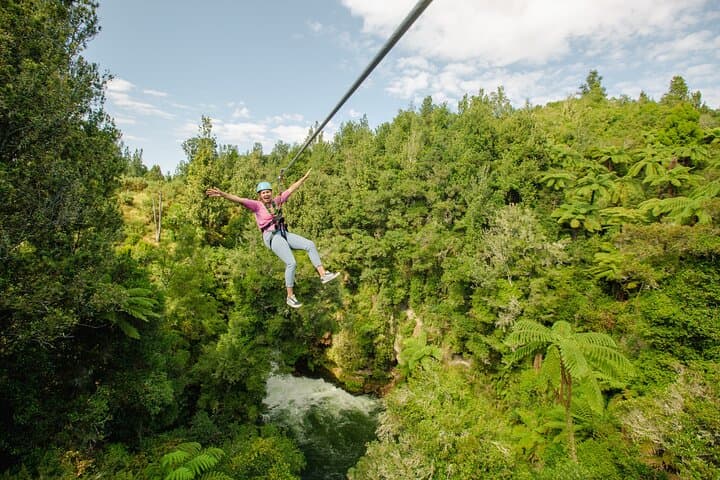
Mist lifts off the Kaituna at first light, and the river seems to dare you from below—whitewater pushing forward, waterfalls throwing their voices into the gorge. You clip in, step to the edge, and the forest opens. Cables hum, ponga fronds unfurl at eye level, and the current keeps moving whether you’re ready or not. In Ōkere, the elements have agency: water surges, rock holds firm, and you—suspended between them—get a rare perspective on Rotorua’s volcanic heartland.
Mist lifts off the Kaituna at first light, and the river seems to dare you from below—whitewater pushing forward, waterfalls throwing their voices into the gorge. You clip in, step to the edge, and the forest opens. Cables hum, ponga fronds unfurl at eye level, and the current keeps moving whether you’re ready or not. In Ōkere, the elements have agency: water surges, rock holds firm, and you—suspended between them—get a rare perspective on Rotorua’s volcanic heartland.
Rotorua Ziplines’ 2.5-hour guided course stitches across native bush and three waterfalls, with swing bridges and boardwalks threading the route. This is not a speed run; it’s an immersion. Guides share kōrero about the Ōkere Awa—how the river slips out of Lake Rotoiti and punches through ignimbrite walls laid down by ancient eruptions. Between flights, you taste a native herbal tea and learn how the operation, a joint venture with Ngāti Hinerangi and local paddling legend Sam Sutton, is planting toward 60,000 native trees by 2025—every guest leaving a tree in their name.
History lines the gorge. A short walk from the platforms, the remnants of the 1901 Okere Falls Power Station hint at the region’s early embrace of hydroelectricity. Recreationally, the river is a modern icon, famous for raft runs over Tutea Falls. Up here, you get the drama without the dunking, watching the river muscle through chutes while kererū thump overhead and tūī work the canopy.
Logistics are refreshingly simple: expect roughly 600 meters of easy walking across the course and a series of progressively longer lines above the Kaituna. Helmets and harnesses are fitted by guides operating under New Zealand’s Adventure Activity Regulations; weight limit is 130 kg. The pace suits most travelers comfortable with heights—plenty of coaching, dry runs, and time on stable platforms. Free trip photos mean you can pocket your phone—or tether it securely—while you enjoy the ride.
Timing matters in this gorge. Mornings tend to bring calmer air and softer light in the forest; afternoon sun drops warm tones into the river corridor. Either way, Ōkere rewards attention to detail: the rattle of the rapids beneath your feet, the peppery nip of kawakawa on your tongue, the moment the line goes taut and the whole valley seems to lean into your glide.
Come for the flight. Leave with a feel for a living river and a project that’s putting more trees in the ground than footprints on the trail.