THE ADVENTURE COLLECTIVE® · Independent discovery and booking for outdoor travel

Swim through a hidden cave in Wadi Shab, watch green turtles nest under desert stars, and cross the Al Hajar by 4WD to peer into Oman’s grandest canyon. This five-day circuit strings together the north’s essential landscapes with time to breathe, explore, and learn.
Swim through a hidden cave in Wadi Shab, watch green turtles nest under desert stars, and cross the Al Hajar by 4WD to peer into Oman’s grandest canyon. This five-day circuit strings together the north’s essential landscapes with time to breathe, explore, and learn.
Dawn slips over Muscat as the Gulf of Oman glints like polished steel. The city loosens its grip, and the road south invites you onward—past limestone cliffs that crumble to a perfect circle of turquoise at Bimmah Sinkhole and a stretch of white sand at Fins where the sea breathes in long, even swells. By late morning, Wadi Shab is calling. The trail threads 35–40 minutes into a palm-lined canyon, heat radiating from honey-colored rock. The pools are cool, clear, and persuasive; swim from basin to basin until the canyon narrows and a crack in the stone opens to a cave where water drops in a soft curtain, pooling turquoise in the filtered light.
Verified experiences and guided adventures in the surrounding area.
Operated by Discover Mazoon Tours Oman · Muscat, Muscat Governorate
Dawn slips over Muscat as the Gulf of Oman glints like polished steel. The city loosens its grip, and the road south invites you onward—past limestone cliffs that crumble to a perfect circle of turquoise at Bimmah Sinkhole and a stretch of white sand at Fins where the sea breathes in long, even swells. By late morning, Wadi Shab is calling. The trail threads 35–40 minutes into a palm-lined canyon, heat radiating from honey-colored rock. The pools are cool, clear, and persuasive; swim from basin to basin until the canyon narrows and a crack in the stone opens to a cave where water drops in a soft curtain, pooling turquoise in the filtered light.
Evening turns coastal in Sur, where dhow builders still coax ocean-going hulls from timber, the scent of sawdust mixing with salt. After dinner, Ras Al Jinz changes the pace: a quiet walk under stars where ancient green turtles heave themselves ashore, determined and unhurried. Guides keep light and distance strict—this beach belongs to them.
The interior answers the next morning. Wadi Bani Khalid offers a quick walk to deep, translucent pools; the rock is warm underfoot and the water pulls you in. Then the sands arrive: Wahiba’s dunes shoulder each other toward the horizon, their wind-cut ridgelines shifting by the hour. A 4WD dances up and over; sunset settles the desert to a hush, and the night sky spills open.
Heritage threads through day three. Al Mudhaireb’s hilltop watchtowers still keep their vigil, while Ibra’s mud-brick lanes hint at trade routes that once pulsed with caravans. On a stony rise at Zukait, Bronze Age beehive tombs stare out across the wadis. Birkat Al Moz follows with shaded alleys and an aflaj irrigation channel—a UNESCO-listed system that has fed date groves for centuries. Nizwa, the former capital, provides a soft landing for the night.
Market voices lift with the sun on day four: clay pots, silver bangles, sacks of frankincense, and—on Fridays—a lively livestock ring. Nizwa Fort’s honeyed walls tell of 17th-century strategy and stubbornness. The mountains gather afterward; terraces stitch Misfat Al Abriyeen to a slope, and Jabal Shams rises to 3,009 meters. From a 2,000-meter rim, the canyon yawns and the afternoon light rakes across ledges.
The finale is a mountain crossing—gritty, gorgeous Wadi Bani Awf—past Balad Sayt’s perfect patchwork of fields and into the sculpted narrows of Snake Canyon. Nakhal Fort closes the loop, a stone citadel peering over date palms before the road carries you back to the sea. Best October to April, this route balances cool cliff pools and desert heat. Bring water shoes for wadis, breathable layers for sun, and a respectful pace—Oman rewards travelers who move with its rhythms.
moderate.
5 days.
Comfortable walking on uneven terrain in warm conditions and able to swim short sections in calm pools.
October to April offers the most comfortable temperatures across mountains and desert. Turtle nesting at Ras Al Jinz occurs year-round, with peak nesting from roughly May to September.
Expect a 35–40 minute walk each way on uneven, sometimes hot rock, followed by optional swimming through several pools to reach the cave. Confident swimming is recommended.
Wear modest clothing that covers shoulders and knees; a light scarf is handy. In wadis and the desert, quick-dry layers are ideal—change at the vehicle if needed.
Sightings are common but never guaranteed. Evening beach access is regulated by guides to protect nesting turtles and hatchlings.
Expect a mix of comfortable hotels, a desert camp with private tents or chalets, and mountain lodges—clean rooms, A/C where available, and traditional dinners.
No. Your guide handles all driving, including the 4WD mountain tracks through Wadi Bani Awf and to Jabal Shams.
Nizwa’s 17th‑century fort once anchored power in Oman’s interior, while the aflaj irrigation systems—some over 2,000 years old—still feed date groves today.
Stick to established tracks in dunes to reduce erosion, pack out all waste, and avoid lights and noise at nesting beaches. Many forts restrict drones and tripod use—check local rules.
Discover Mazoon Tours Oman operates guided outdoor trips and adventures with an emphasis on safety, stewardship, and memorable experiences.
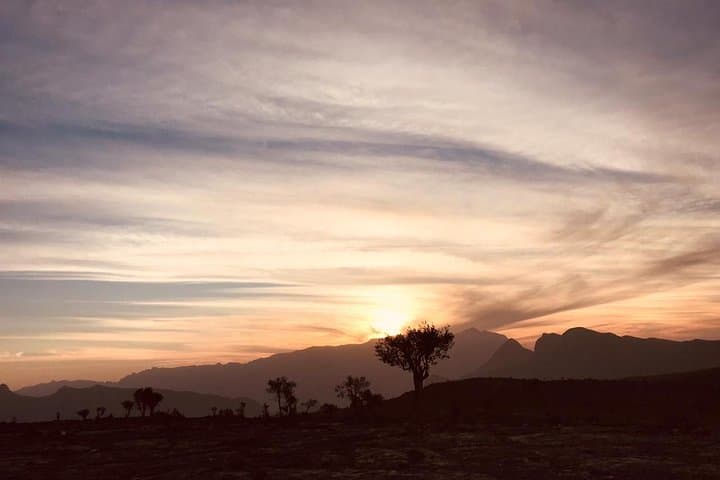
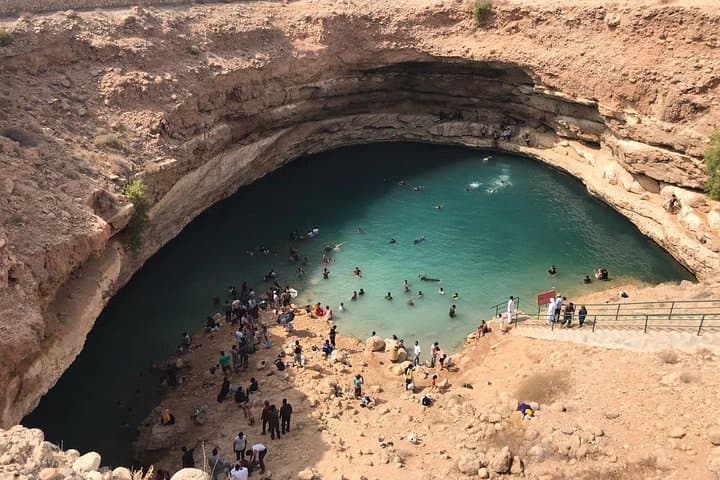
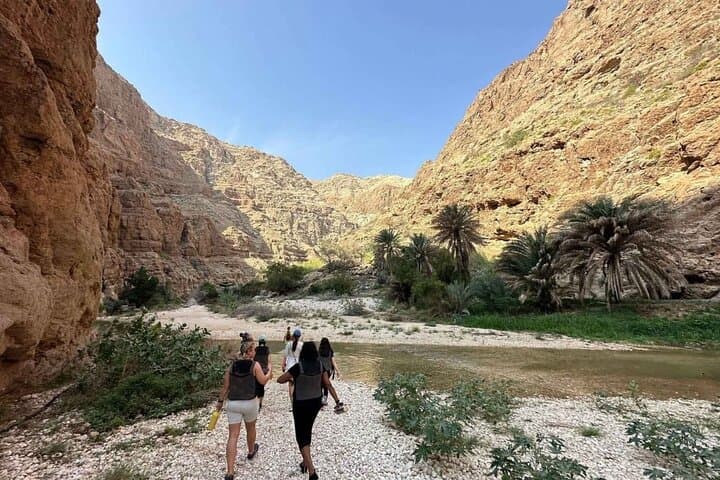
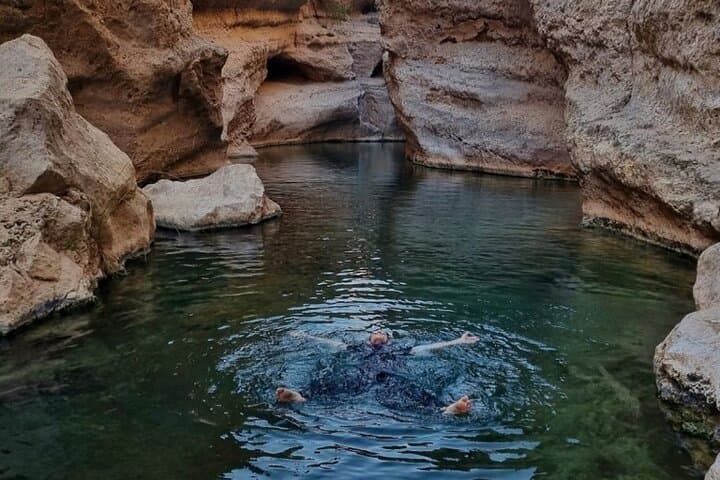
Dawn slips over Muscat as the Gulf of Oman glints like polished steel. The city loosens its grip, and the road south invites you onward—past limestone cliffs that crumble to a perfect circle of turquoise at Bimmah Sinkhole and a stretch of white sand at Fins where the sea breathes in long, even swells. By late morning, Wadi Shab is calling. The trail threads 35–40 minutes into a palm-lined canyon, heat radiating from honey-colored rock. The pools are cool, clear, and persuasive; swim from basin to basin until the canyon narrows and a crack in the stone opens to a cave where water drops in a soft curtain, pooling turquoise in the filtered light.
Dawn slips over Muscat as the Gulf of Oman glints like polished steel. The city loosens its grip, and the road south invites you onward—past limestone cliffs that crumble to a perfect circle of turquoise at Bimmah Sinkhole and a stretch of white sand at Fins where the sea breathes in long, even swells. By late morning, Wadi Shab is calling. The trail threads 35–40 minutes into a palm-lined canyon, heat radiating from honey-colored rock. The pools are cool, clear, and persuasive; swim from basin to basin until the canyon narrows and a crack in the stone opens to a cave where water drops in a soft curtain, pooling turquoise in the filtered light.
Evening turns coastal in Sur, where dhow builders still coax ocean-going hulls from timber, the scent of sawdust mixing with salt. After dinner, Ras Al Jinz changes the pace: a quiet walk under stars where ancient green turtles heave themselves ashore, determined and unhurried. Guides keep light and distance strict—this beach belongs to them.
The interior answers the next morning. Wadi Bani Khalid offers a quick walk to deep, translucent pools; the rock is warm underfoot and the water pulls you in. Then the sands arrive: Wahiba’s dunes shoulder each other toward the horizon, their wind-cut ridgelines shifting by the hour. A 4WD dances up and over; sunset settles the desert to a hush, and the night sky spills open.
Heritage threads through day three. Al Mudhaireb’s hilltop watchtowers still keep their vigil, while Ibra’s mud-brick lanes hint at trade routes that once pulsed with caravans. On a stony rise at Zukait, Bronze Age beehive tombs stare out across the wadis. Birkat Al Moz follows with shaded alleys and an aflaj irrigation channel—a UNESCO-listed system that has fed date groves for centuries. Nizwa, the former capital, provides a soft landing for the night.
Market voices lift with the sun on day four: clay pots, silver bangles, sacks of frankincense, and—on Fridays—a lively livestock ring. Nizwa Fort’s honeyed walls tell of 17th-century strategy and stubbornness. The mountains gather afterward; terraces stitch Misfat Al Abriyeen to a slope, and Jabal Shams rises to 3,009 meters. From a 2,000-meter rim, the canyon yawns and the afternoon light rakes across ledges.
The finale is a mountain crossing—gritty, gorgeous Wadi Bani Awf—past Balad Sayt’s perfect patchwork of fields and into the sculpted narrows of Snake Canyon. Nakhal Fort closes the loop, a stone citadel peering over date palms before the road carries you back to the sea. Best October to April, this route balances cool cliff pools and desert heat. Bring water shoes for wadis, breathable layers for sun, and a respectful pace—Oman rewards travelers who move with its rhythms.