THE ADVENTURE COLLECTIVE® · Independent discovery and booking for outdoor travel

A five-day private circuit through Sri Lanka’s cultural heartland—from the summit terraces of Sigiriya to the sea-sweet streets of Galle Fort. This practical guide explains what to expect on the road, at the temples, and on the reef.
A five-day private circuit through Sri Lanka’s cultural heartland—from the summit terraces of Sigiriya to the sea-sweet streets of Galle Fort. This practical guide explains what to expect on the road, at the temples, and on the reef.
Morning mist pulls itself off the tea slopes as the van eases out of Bandaranaike International Airport and onto the A1, and suddenly the island’s timeline unfolds window-side: colonial facades, temple roofs, the hard silhouette of Sigiriya rising like an ancient watchman. Over five days this private tour stitches together Sri Lanka’s headline acts—Kandy’s sacred tooth, Sigiriya’s cliff-top fortress, the painted caves of Dambulla, the Dutch stones of Galle, and Colombo’s colonial edges—delivered with a local guide and air-conditioned transfer so the focus stays on place, not logistics.
Verified experiences and guided adventures in the surrounding area.
Operated by Ceylon Travel Dream · Kandy, Central Province
Morning mist pulls itself off the tea slopes as the van eases out of Bandaranaike International Airport and onto the A1, and suddenly the island’s timeline unfolds window-side: colonial facades, temple roofs, the hard silhouette of Sigiriya rising like an ancient watchman. Over five days this private tour stitches together Sri Lanka’s headline acts—Kandy’s sacred tooth, Sigiriya’s cliff-top fortress, the painted caves of Dambulla, the Dutch stones of Galle, and Colombo’s colonial edges—delivered with a local guide and air-conditioned transfer so the focus stays on place, not logistics.
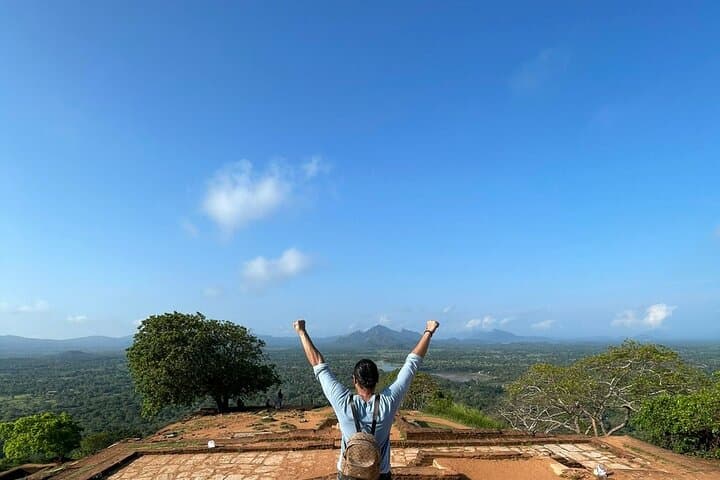
Claims to history arrive in layers. Kandy was the last Sinhala royal capital; its Temple of the Tooth keeps a relic that shaped politics and pilgrimage for centuries. Sigiriya, a 200 m volcanic plug converted into a 5th-century citadel by King Kashyapa, presents engineered gardens and frescoed galleries clinging to rock faces. Dambulla’s cave complex sits 160 m above the plains, an active shrine whose statues and murals span more than 2,000 years. On the southern coast, Galle Fort records the Portuguese, Dutch and British in stone and mortar—its ramparts now guard cafés, courts and classrooms as much as sunsets.
Geology and culture intersect constantly: the island’s laterite and granite feed the dramatic outcrops; coral platforms along Hikkaduwa frame reefs that demand a different kind of attention. Wildlife keeps a softer rhythm—elephants gather in the dry plains around Minneriya, langurs lounge in temple trees, and the sea around Hikkaduwa pushes bright reef fish toward snorkel masks.
Practically: expect five days of light activity. Sigiriya’s climb gains roughly 200 m over 1–1.5 km with stair sections and narrow iron walkways—sturdy shoes and a steady pace matter. Dambulla’s cave floors are uneven and sometimes slippery; modest temple attire is required at religious sites (shoulders and knees covered). Galle’s compact fort invites easy walking on cobbled lanes; allow 2–4 hours to explore and photograph the lighthouse and ramparts. Snorkel trips to Hikkaduwa’s coral gardens depart from shallow beaches; boat rides reduce walking but add sea motion.
Timing tips: start Sigiriya before 9 a.m. to beat heat and crowds. Carry cash for smaller shops and temple donations; credit cards can be inconsistent outside larger towns. Stay hydrated—the tropical sun is efficient at draining energy—and respect local customs at places of worship (remove hats and shoes, speak softly). With a private guide handling permits and routes, this circuit delivers the highlights with context—history, geology and the small, living details that make Sri Lanka travel more than a checklist.
easy.
5 days.
Suitable for travelers who can walk 1–3 hours a day, handle stair climbs (Sigiriya) and short boat rides.
Most visitors require an electronic travel authorization (ETA) obtained online before arrival—check current government requirements and apply in advance.
This tour typically covers transportation and guiding; some attraction admission fees (e.g., Sigiriya, Dambulla) may be included—confirm at booking or bring cash/credit for tickets if needed.
Expect roughly 200 m of elevation gain over stairs and narrow walkways; moderately fit travelers can manage it at a relaxed pace with breaks.
Yes—with basic precautions: heed local boat operators, avoid reef contact, and check sea conditions—operators cancel in rough weather.
English-speaking guides are standard on this private itinerary; guides may also speak Sinhala and Tamil for local context.
Sri Lankan rupee is used locally; tipping is discretionary—small tips for guides and drivers are appreciated and common.
Kandy functioned as the island’s last independent kingdom until the British annexation in 1815; relics like the Temple of the Tooth shaped both faith and politics.
Tourism near Sigiriya and coastal reefs is monitored—support licensed guides, avoid single-use plastics, and use reef-safe sunscreen to reduce local environmental impact.
Ceylon Travel Dream operates guided outdoor trips and adventures with an emphasis on safety, stewardship, and memorable experiences.
Morning mist pulls itself off the tea slopes as the van eases out of Bandaranaike International Airport and onto the A1, and suddenly the island’s timeline unfolds window-side: colonial facades, temple roofs, the hard silhouette of Sigiriya rising like an ancient watchman. Over five days this private tour stitches together Sri Lanka’s headline acts—Kandy’s sacred tooth, Sigiriya’s cliff-top fortress, the painted caves of Dambulla, the Dutch stones of Galle, and Colombo’s colonial edges—delivered with a local guide and air-conditioned transfer so the focus stays on place, not logistics.
Morning mist pulls itself off the tea slopes as the van eases out of Bandaranaike International Airport and onto the A1, and suddenly the island’s timeline unfolds window-side: colonial facades, temple roofs, the hard silhouette of Sigiriya rising like an ancient watchman. Over five days this private tour stitches together Sri Lanka’s headline acts—Kandy’s sacred tooth, Sigiriya’s cliff-top fortress, the painted caves of Dambulla, the Dutch stones of Galle, and Colombo’s colonial edges—delivered with a local guide and air-conditioned transfer so the focus stays on place, not logistics.
Claims to history arrive in layers. Kandy was the last Sinhala royal capital; its Temple of the Tooth keeps a relic that shaped politics and pilgrimage for centuries. Sigiriya, a 200 m volcanic plug converted into a 5th-century citadel by King Kashyapa, presents engineered gardens and frescoed galleries clinging to rock faces. Dambulla’s cave complex sits 160 m above the plains, an active shrine whose statues and murals span more than 2,000 years. On the southern coast, Galle Fort records the Portuguese, Dutch and British in stone and mortar—its ramparts now guard cafés, courts and classrooms as much as sunsets.
Geology and culture intersect constantly: the island’s laterite and granite feed the dramatic outcrops; coral platforms along Hikkaduwa frame reefs that demand a different kind of attention. Wildlife keeps a softer rhythm—elephants gather in the dry plains around Minneriya, langurs lounge in temple trees, and the sea around Hikkaduwa pushes bright reef fish toward snorkel masks.
Practically: expect five days of light activity. Sigiriya’s climb gains roughly 200 m over 1–1.5 km with stair sections and narrow iron walkways—sturdy shoes and a steady pace matter. Dambulla’s cave floors are uneven and sometimes slippery; modest temple attire is required at religious sites (shoulders and knees covered). Galle’s compact fort invites easy walking on cobbled lanes; allow 2–4 hours to explore and photograph the lighthouse and ramparts. Snorkel trips to Hikkaduwa’s coral gardens depart from shallow beaches; boat rides reduce walking but add sea motion.
Timing tips: start Sigiriya before 9 a.m. to beat heat and crowds. Carry cash for smaller shops and temple donations; credit cards can be inconsistent outside larger towns. Stay hydrated—the tropical sun is efficient at draining energy—and respect local customs at places of worship (remove hats and shoes, speak softly). With a private guide handling permits and routes, this circuit delivers the highlights with context—history, geology and the small, living details that make Sri Lanka travel more than a checklist.