THE ADVENTURE COLLECTIVE® · Independent discovery and booking for outdoor travel

Spend a day exploring the seaside Maya ruins of Tulum, plunging into a cavern cenote, and riding seven ziplines capped by a 20‑meter rappel—complete with bilingual guides and a regional buffet. This full‑day from Riviera Maya mixes cultural context with hands‑on adventure.
Spend a day exploring the seaside Maya ruins of Tulum, plunging into a cavern cenote, and riding seven ziplines capped by a 20‑meter rappel—complete with bilingual guides and a regional buffet. This full‑day from Riviera Maya mixes cultural context with hands‑on adventure.
The morning bus eases away from the Riviera Maya strip and the air changes—salt from the Caribbean pulls at your shirt as the coach threads past low scrub and the occasional thatch-roofed casa. By the time the limestone escarpment appears, the guide's voice has already switched between English and Spanish, laying out the day: a guided walk through the seaside ruins of Tulum, an underground cenote swim, seven ziplines, a 20-meter rappel and a regional buffet to close. It feels like two worlds in one day—archaeology framed by open sea and adrenaline carved into rock.
Verified experiences and guided adventures in the surrounding area.
Operated by Caribbean Mayan Tours · Tulum, Quintana Roo
The morning bus eases away from the Riviera Maya strip and the air changes—salt from the Caribbean pulls at your shirt as the coach threads past low scrub and the occasional thatch-roofed casa. By the time the limestone escarpment appears, the guide's voice has already switched between English and Spanish, laying out the day: a guided walk through the seaside ruins of Tulum, an underground cenote swim, seven ziplines, a 20-meter rappel and a regional buffet to close. It feels like two worlds in one day—archaeology framed by open sea and adrenaline carved into rock.
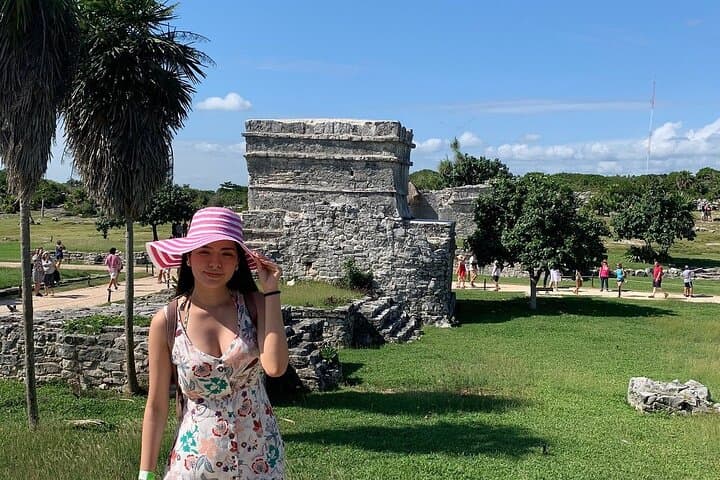
Tulum sits on the eastern rim of the Yucatán Peninsula, a Late Postclassic Maya outpost built to watch the maritime routes. Its compact complex—temples clinging to a coastal cliff—offers a concise lesson in Mesoamerican trade, ritual and coastal engineering. The stone buildings are limestone-made, their weathered facades revealing how coral-rich bedrock once shaped construction and water management. A short drive inland introduces the karst landscape: porous limestone that collapses into cenotes—natural sinkholes that reveal groundwater like an underground sky.
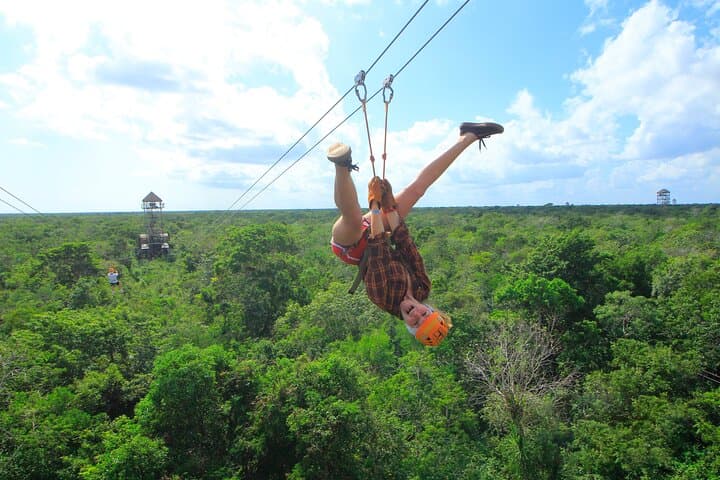
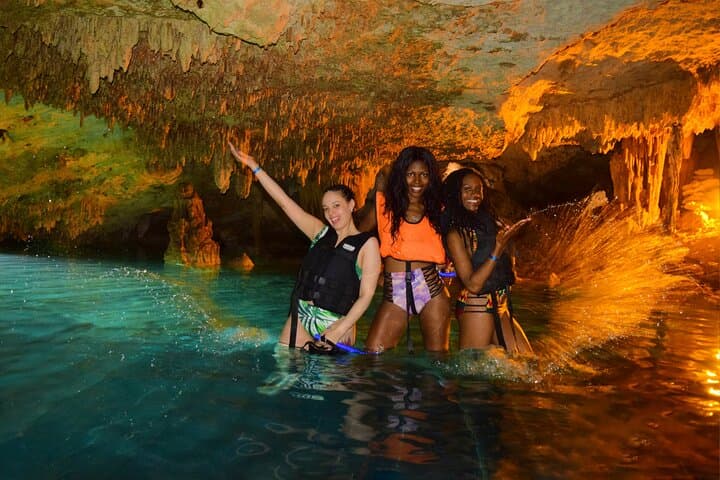
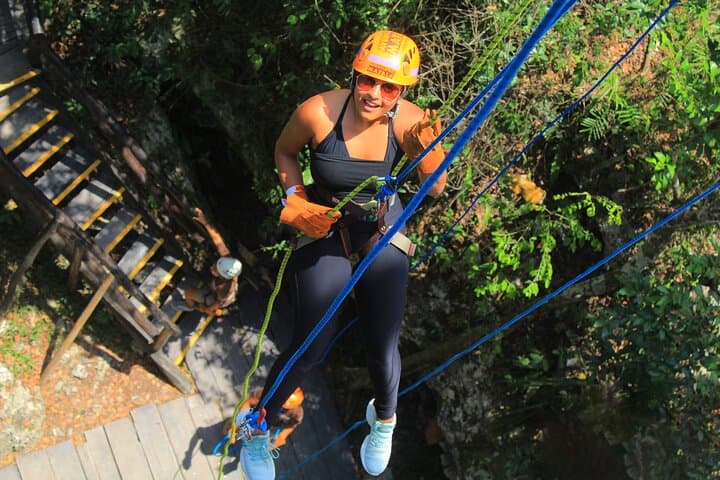
The cenote cavern on this route is a study in contrasts. Above, the jungle hums; below, caverns cool and hold still, clear water daring you to dive in. Guides teach basic conservation practices on the approach—no lotions in the water, minimal disturbance—and fit participants with safe equipment for rappels and ziplines. The zipline circuit threads tree canopy and clearing, giving quick aerial views of the region's scrub and jungle. The 20-meter rappel is short but technical: a vertical face that rewards controlled descents with the calm hush of the cenote below.
Practical detail matters: the whole tour runs about eight hours with round transportation from designated Riviera Maya hotels, bilingual guides and equipment included. Expect moderate physical demand—some walking at the ruins (roughly 1–2 km of paths), stair descents into cenotes, and activity requiring comfort with heights. Bring a swimsuit, quick-dry clothing, closed-toe shoes with grip for rappels, biodegradable sunscreen and cash for the local preservation tax (Tulum’s entry fee) and tips.
Timing changes the experience—early in the day the ruins are less crowded and the light on the Caribbean is cleaner; later, the cenote can feel more private. Safety rules are strict: maximum zipline weight is 135 kg (300 lb) and children under six must be supervised. The day blends cultural context with physical challenge—informative walks followed by hands-on adventure—so you return not just tired but grounded: you’ve walked in an ancient port, swum in the region’s foundation, and left lighter footprints than you found.
moderate.
8 hours.
Moderate fitness: able to walk uneven paths, descend stairs into cenotes and handle short exposure to heights.
The tour is approximately eight hours and includes round transportation from designated hotels, bilingual guides, safety equipment for ziplines and rappels, access to the cavern cenote and a regional buffet lunch.
No—there is a Tulum preservation tax (approximately USD 20) that participants pay separately; bring cash to cover it.
Children under 6 may participate only under direct supervision of a family member; age and weight restrictions apply for ziplines and rappel—check with the operator before booking.
Maximum weight allowed for the zipline system is 135 kilograms (300 pounds).
No prior experience is required; guides provide instruction and safety gear, though participants should be comfortable with heights and basic swimming.
Wear quick‑dry clothing, closed‑toe shoes with grip, biodegradable sunscreen, a swimsuit, a towel and cash for taxes or incidentals.
Tulum was a Late Postclassic Maya port controlling maritime trade on the eastern Yucatán coast; its cliffside Castillo likely served both ritual and navigational roles.
The region depends on clean groundwater—operators emphasize no‑lotion policies in cenotes and recommend biodegradable products to protect aquifers and endemic species.
Caribbean Mayan Tours operates guided outdoor trips and adventures with an emphasis on safety, stewardship, and memorable experiences.
The morning bus eases away from the Riviera Maya strip and the air changes—salt from the Caribbean pulls at your shirt as the coach threads past low scrub and the occasional thatch-roofed casa. By the time the limestone escarpment appears, the guide's voice has already switched between English and Spanish, laying out the day: a guided walk through the seaside ruins of Tulum, an underground cenote swim, seven ziplines, a 20-meter rappel and a regional buffet to close. It feels like two worlds in one day—archaeology framed by open sea and adrenaline carved into rock.
The morning bus eases away from the Riviera Maya strip and the air changes—salt from the Caribbean pulls at your shirt as the coach threads past low scrub and the occasional thatch-roofed casa. By the time the limestone escarpment appears, the guide's voice has already switched between English and Spanish, laying out the day: a guided walk through the seaside ruins of Tulum, an underground cenote swim, seven ziplines, a 20-meter rappel and a regional buffet to close. It feels like two worlds in one day—archaeology framed by open sea and adrenaline carved into rock.
Tulum sits on the eastern rim of the Yucatán Peninsula, a Late Postclassic Maya outpost built to watch the maritime routes. Its compact complex—temples clinging to a coastal cliff—offers a concise lesson in Mesoamerican trade, ritual and coastal engineering. The stone buildings are limestone-made, their weathered facades revealing how coral-rich bedrock once shaped construction and water management. A short drive inland introduces the karst landscape: porous limestone that collapses into cenotes—natural sinkholes that reveal groundwater like an underground sky.
The cenote cavern on this route is a study in contrasts. Above, the jungle hums; below, caverns cool and hold still, clear water daring you to dive in. Guides teach basic conservation practices on the approach—no lotions in the water, minimal disturbance—and fit participants with safe equipment for rappels and ziplines. The zipline circuit threads tree canopy and clearing, giving quick aerial views of the region's scrub and jungle. The 20-meter rappel is short but technical: a vertical face that rewards controlled descents with the calm hush of the cenote below.
Practical detail matters: the whole tour runs about eight hours with round transportation from designated Riviera Maya hotels, bilingual guides and equipment included. Expect moderate physical demand—some walking at the ruins (roughly 1–2 km of paths), stair descents into cenotes, and activity requiring comfort with heights. Bring a swimsuit, quick-dry clothing, closed-toe shoes with grip for rappels, biodegradable sunscreen and cash for the local preservation tax (Tulum’s entry fee) and tips.
Timing changes the experience—early in the day the ruins are less crowded and the light on the Caribbean is cleaner; later, the cenote can feel more private. Safety rules are strict: maximum zipline weight is 135 kg (300 lb) and children under six must be supervised. The day blends cultural context with physical challenge—informative walks followed by hands-on adventure—so you return not just tired but grounded: you’ve walked in an ancient port, swum in the region’s foundation, and left lighter footprints than you found.