THE ADVENTURE COLLECTIVE® · Independent discovery and booking for outdoor travel

Drive through sugar‑cane plains, cool off in a turquoise Taino cave lagoon and end the loop on wind‑blown Macao Beach. This 4‑hour Punta Cana buggy tour mixes fast off‑road runs with cultural stops for coffee, cocoa and mamajuana tastings.
Drive through sugar‑cane plains, cool off in a turquoise Taino cave lagoon and end the loop on wind‑blown Macao Beach. This 4‑hour Punta Cana buggy tour mixes fast off‑road runs with cultural stops for coffee, cocoa and mamajuana tastings.
The engine growls, a spray of red dust rises, and the coastal plain of Punta Cana opens like a map you’re allowed to drive across. Drivers wheel compact, roll‑bar buggies onto narrow dirt tracks threaded through waist‑high sugar cane; the air tastes faintly of molasses and sea salt. Within an hour the bustle of the resorts fades and the landscape becomes a patchwork of palms, farm plots and shallow limestone gullies, punctuated by a turquoise lagoon tucked in the mouth of a Taino cave.
Verified experiences and guided adventures in the surrounding area.
Operated by Palma caribe · Punta Cana, La Altagracia
The engine growls, a spray of red dust rises, and the coastal plain of Punta Cana opens like a map you’re allowed to drive across. Drivers wheel compact, roll‑bar buggies onto narrow dirt tracks threaded through waist‑high sugar cane; the air tastes faintly of molasses and sea salt. Within an hour the bustle of the resorts fades and the landscape becomes a patchwork of palms, farm plots and shallow limestone gullies, punctuated by a turquoise lagoon tucked in the mouth of a Taino cave.
This four‑hour loop combines high‑adrenaline off‑road driving with cultural stops that reveal the Dominican hinterland. Geologically, the coastal east of Hispaniola is dominated by young carbonate rocks and sandy alluvium—easy to churn into clouds of dust but also home to subterranean cavities where freshwater pools founder into caverns. The Taina’s Macao Cave you’ll visit drains one such pocket; its clear water and low stone ceiling offer a cool counterpoint to the sun‑punishing plains.
Culturally the route skirts the island’s colonial economy—sugar cane fields that still shape land use and local livelihoods. Guides pause at an authentic Dominican house to demonstrate coffee and cocoa processing, and to offer mamajuana, a locally infused drink made of rum, honey and tree bark. These stops are small windows into daily life outside the hotel strip: smoke from tobacco leaves, a neighbor’s radio playing bachata, and vendors drying beans by the roadside.
Practicalities are straightforward: the trip lasts about four hours, includes roundtrip hotel transport from Punta Cana resorts, and caps groups at 15 per reservation for a balanced mix of speed and safety. No prior driving experience is required—guides lead and coach novice drivers and provide helmets and safety briefings. Terrain is mostly flat coastal plains with bumpy, loose sand and occasional muddy stretches after rain; expect roughly 20–30 km of off‑road running and minimal elevation gain.
Bring closed‑toe shoes you don’t mind dirtying, a change of clothes for the cave dip, sunscreen and a waterproof phone pouch for the lagoon photos. Travelers with back or heart issues, and pregnant guests, should skip the ride—guides follow strict safety rules and won’t put anyone at risk. Cash helps for small souvenirs like fresh coffee, handmade cigars, or a bottle of locally made mamajuana. If you want the best light for photos, aim for morning departures when the dunes and palms cast long shadows and the cave’s lagoon glows a cleaner turquoise.
The experience balances rush and context: you leave with a handful of dusty, sunburnt snapshots and a clearer sense of the island’s geology, agriculture and living traditions beyond the beaches.
moderate.
4 hours.
Suitable for most fitness levels—able to climb in/out of a buggy and walk short uneven paths.
No—guides provide instruction and lead the group; beginners are allowed and supervised at all times.
Admission and a dip in the freshwater lagoon are included; non‑swimmers should wear provided flotation or stay shallow—guides assess conditions.
Reservations are capped at 15 people per session to keep the convoy manageable and safe.
Yes—roundtrip transportation from Punta Cana hotels, resorts and villas is included; guides usually pick up guests about 60 minutes before departure.
Yes—families are welcome but infants must sit on an adult’s lap during transit; the tour is not recommended for those with spinal, heart problems, or pregnant travelers.
Closed‑toe shoes, sunscreen, swimwear, a change of clothes, cash for souvenirs and a waterproof pouch for electronics are recommended.
The cave and surrounding landscape were used by the Taíno people; local place names and some cave art references preserve that indigenous heritage.
Stay on designated tracks to limit erosion and avoid leaving trash on beaches and in cave areas; buying local coffee and crafts supports community livelihoods.
Palma caribe operates guided outdoor trips and adventures with an emphasis on safety, stewardship, and memorable experiences.
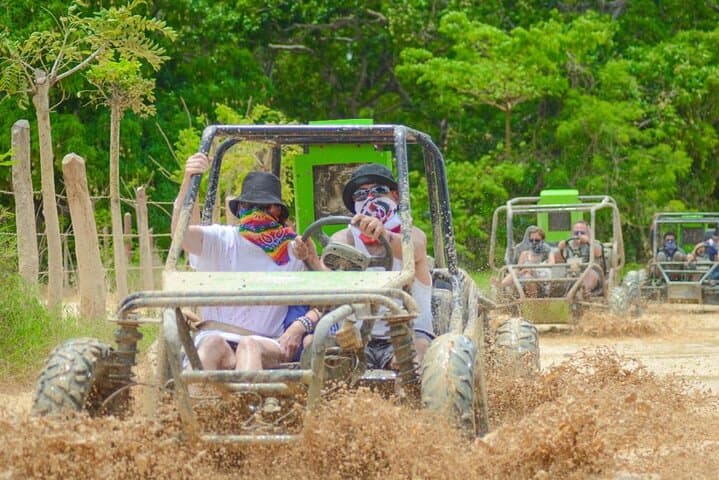
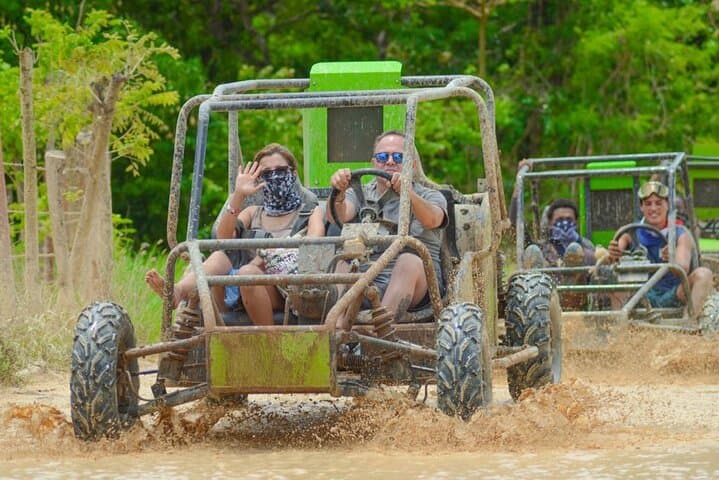
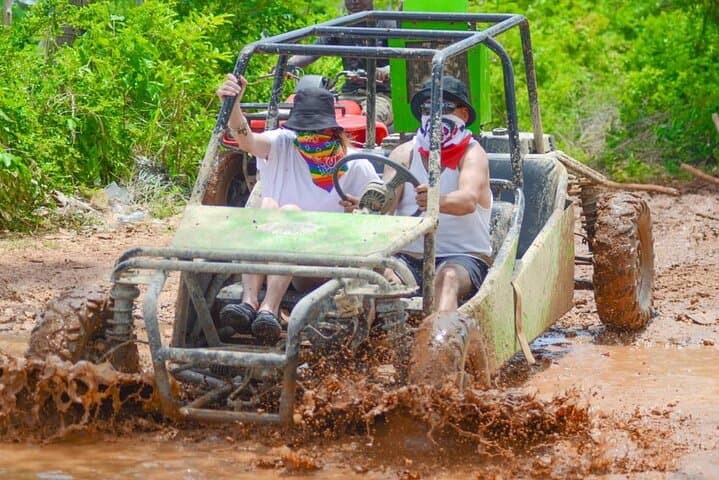
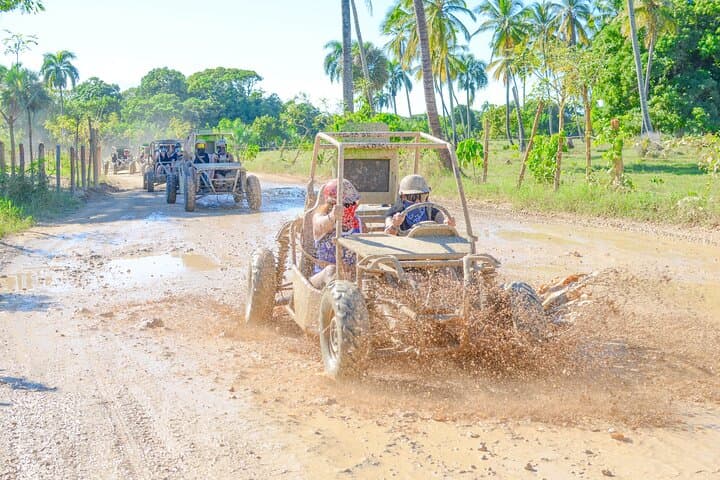
The engine growls, a spray of red dust rises, and the coastal plain of Punta Cana opens like a map you’re allowed to drive across. Drivers wheel compact, roll‑bar buggies onto narrow dirt tracks threaded through waist‑high sugar cane; the air tastes faintly of molasses and sea salt. Within an hour the bustle of the resorts fades and the landscape becomes a patchwork of palms, farm plots and shallow limestone gullies, punctuated by a turquoise lagoon tucked in the mouth of a Taino cave.
The engine growls, a spray of red dust rises, and the coastal plain of Punta Cana opens like a map you’re allowed to drive across. Drivers wheel compact, roll‑bar buggies onto narrow dirt tracks threaded through waist‑high sugar cane; the air tastes faintly of molasses and sea salt. Within an hour the bustle of the resorts fades and the landscape becomes a patchwork of palms, farm plots and shallow limestone gullies, punctuated by a turquoise lagoon tucked in the mouth of a Taino cave.
This four‑hour loop combines high‑adrenaline off‑road driving with cultural stops that reveal the Dominican hinterland. Geologically, the coastal east of Hispaniola is dominated by young carbonate rocks and sandy alluvium—easy to churn into clouds of dust but also home to subterranean cavities where freshwater pools founder into caverns. The Taina’s Macao Cave you’ll visit drains one such pocket; its clear water and low stone ceiling offer a cool counterpoint to the sun‑punishing plains.
Culturally the route skirts the island’s colonial economy—sugar cane fields that still shape land use and local livelihoods. Guides pause at an authentic Dominican house to demonstrate coffee and cocoa processing, and to offer mamajuana, a locally infused drink made of rum, honey and tree bark. These stops are small windows into daily life outside the hotel strip: smoke from tobacco leaves, a neighbor’s radio playing bachata, and vendors drying beans by the roadside.
Practicalities are straightforward: the trip lasts about four hours, includes roundtrip hotel transport from Punta Cana resorts, and caps groups at 15 per reservation for a balanced mix of speed and safety. No prior driving experience is required—guides lead and coach novice drivers and provide helmets and safety briefings. Terrain is mostly flat coastal plains with bumpy, loose sand and occasional muddy stretches after rain; expect roughly 20–30 km of off‑road running and minimal elevation gain.
Bring closed‑toe shoes you don’t mind dirtying, a change of clothes for the cave dip, sunscreen and a waterproof phone pouch for the lagoon photos. Travelers with back or heart issues, and pregnant guests, should skip the ride—guides follow strict safety rules and won’t put anyone at risk. Cash helps for small souvenirs like fresh coffee, handmade cigars, or a bottle of locally made mamajuana. If you want the best light for photos, aim for morning departures when the dunes and palms cast long shadows and the cave’s lagoon glows a cleaner turquoise.
The experience balances rush and context: you leave with a handful of dusty, sunburnt snapshots and a clearer sense of the island’s geology, agriculture and living traditions beyond the beaches.