THE ADVENTURE COLLECTIVE® · Independent discovery and booking for outdoor travel

A private 4‑hour excursion from Lima into the sun‑baked Lurín valley to visit the Temple of the Great God Pachacamac. The trip pairs an official guide and museum entry with hotel pickup—ideal for a concise, contextual visit into Peru’s coastal past.
A private 4‑hour excursion from Lima into the sun‑baked Lurín valley to visit the Temple of the Great God Pachacamac. The trip pairs an official guide and museum entry with hotel pickup—ideal for a concise, contextual visit into Peru’s coastal past.
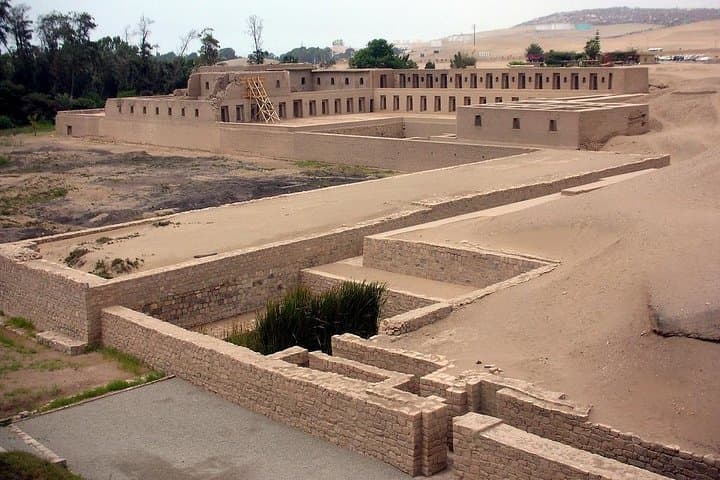
The minivan peels away from Miraflores and the city gutters thin into a ribbon of highway; within 45 minutes the ocean wind sharpens the light and the valley opens, pale and folded. At the edge of the Lurín valley the earth itself seems to change — terraces and adobe platforms climb in stepped bands, and the low, angular outline of the Temple of the Great God Pachacamac sits like a punctuation mark against the sky. On a guided half-day tour you don’t just pass through ruins: you walk into a place that once drew pilgrims from across the Peruvian coast to consult an oracle who, for centuries, shaped local ritual and politics.
Verified experiences and guided adventures in the surrounding area.
Operated by Lima Vip Tours S.A.C · Lurín, Lima
The minivan peels away from Miraflores and the city gutters thin into a ribbon of highway; within 45 minutes the ocean wind sharpens the light and the valley opens, pale and folded. At the edge of the Lurín valley the earth itself seems to change — terraces and adobe platforms climb in stepped bands, and the low, angular outline of the Temple of the Great God Pachacamac sits like a punctuation mark against the sky. On a guided half-day tour you don’t just pass through ruins: you walk into a place that once drew pilgrims from across the Peruvian coast to consult an oracle who, for centuries, shaped local ritual and politics.
Pachacamac is not a single culture’s relic but a palimpsest. Pre-Inca groups — notably the Lima and the Ichma — built the early ceremonial plazas and Adobe pyramids; the Wari left administrative traces; and the Inca reworked ceremonial axes and introduced new stonework. Spanish chroniclers recorded an oracle whose reputation survived conquest; later, colonial roads bisected the sanctuary and looters depleted some deposits. Geologically the site sits on coastal alluvium fed by the Lurín river; wind and seasonal runoff continue to shape the adobe slopes, and preservation is a constant challenge.
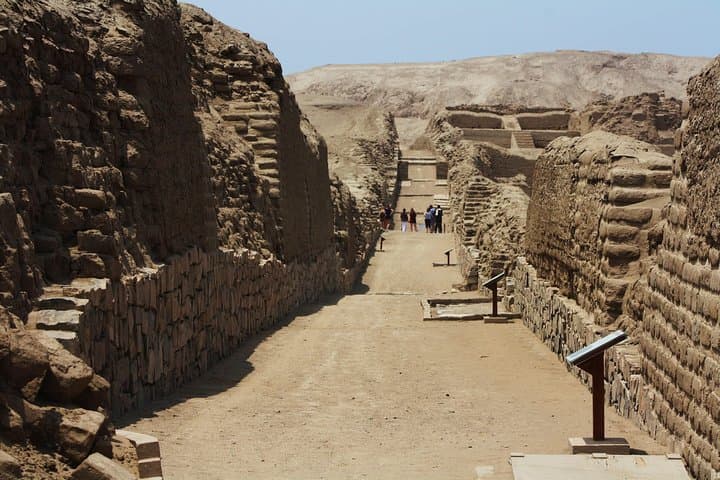
The museum at the entrance quiets the roar of the present. Ceramic vessels, spindle-whorls and the stylized carved idol labeled “Pachacamac” put faces to the site’s past. Outside, the walk between plazas reveals surprising panoramas: low desert dotted with tufts of ichu grass, the distant Pacific glinting on the horizon, and the slow geometry of adobe staircases daring you to climb.
Practical corner: the tour is about four hours with hotel pickup in Lima included, and entrance fees and an official guide are provided. Expect uneven ground, sun exposure and a mix of paved paths and loose gravel. Midday heat is real — groups move faster in the morning. Local vendors near the museum sell textiles and replications; bring small bills if you want a woven souvenir.
Plan for sun protection, light layers (coastal fog can give way to bright sun), and sturdy shoes. If you’ve come to Lima for food and city architecture, slot Pachacamac early in your trip: the site gives context to the coastal cultures you’ll hear about in markets and museums back in town. For photographers, the late afternoon light slants across the adobe and the museum’s displays offer a quieter, detailed counterpoint to the broad, sunlit plazas.
This tour balances historical depth with logistics—private transport to and from Lima, an official guide, and a compact itinerary that leaves you with a clear sense of why Pachacamac mattered then, and why its earthen platforms still push visitors to look and listen today.
easy.
4 hours.
Suitable for travelers with basic mobility; includes short walks on uneven surfaces and some stair climbing.
The tour runs approximately four hours, including hotel pickup in Lima, a guided visit to the archaeological complex and entrance to the on-site museum.
Yes—entrance to the site museum and Archaeological Sanctuary is included with the tour.
Comfortable, closed-toe shoes and sun protection are recommended; wear layers for coastal fog or wind.
The tour is suitable for most fitness levels, but the site has uneven ground and stairs; accessibility is limited in certain areas—check with the operator if you require assistance.
Meals are not included; there are small food vendors and a museum shop where you can purchase snacks.
The sanctuary is roughly a 45–60 minute drive from Miraflores or central Lima depending on traffic; the tour includes private transportation.
Pachacamac was a major coastal pilgrimage center for centuries, with contributions from pre-Inca groups, Wari administrators and later Inca expansions; the oracle at Pachacamac was influential into the colonial era.
The Archaeological Sanctuary is protected but vulnerable to erosion and past looting; staying on marked paths and avoiding climbing on fragile structures helps preserve the site.
Lima Vip Tours S.A.C operates guided outdoor trips and adventures with an emphasis on safety, stewardship, and memorable experiences.
The minivan peels away from Miraflores and the city gutters thin into a ribbon of highway; within 45 minutes the ocean wind sharpens the light and the valley opens, pale and folded. At the edge of the Lurín valley the earth itself seems to change — terraces and adobe platforms climb in stepped bands, and the low, angular outline of the Temple of the Great God Pachacamac sits like a punctuation mark against the sky. On a guided half-day tour you don’t just pass through ruins: you walk into a place that once drew pilgrims from across the Peruvian coast to consult an oracle who, for centuries, shaped local ritual and politics.
The minivan peels away from Miraflores and the city gutters thin into a ribbon of highway; within 45 minutes the ocean wind sharpens the light and the valley opens, pale and folded. At the edge of the Lurín valley the earth itself seems to change — terraces and adobe platforms climb in stepped bands, and the low, angular outline of the Temple of the Great God Pachacamac sits like a punctuation mark against the sky. On a guided half-day tour you don’t just pass through ruins: you walk into a place that once drew pilgrims from across the Peruvian coast to consult an oracle who, for centuries, shaped local ritual and politics.
Pachacamac is not a single culture’s relic but a palimpsest. Pre-Inca groups — notably the Lima and the Ichma — built the early ceremonial plazas and Adobe pyramids; the Wari left administrative traces; and the Inca reworked ceremonial axes and introduced new stonework. Spanish chroniclers recorded an oracle whose reputation survived conquest; later, colonial roads bisected the sanctuary and looters depleted some deposits. Geologically the site sits on coastal alluvium fed by the Lurín river; wind and seasonal runoff continue to shape the adobe slopes, and preservation is a constant challenge.
The museum at the entrance quiets the roar of the present. Ceramic vessels, spindle-whorls and the stylized carved idol labeled “Pachacamac” put faces to the site’s past. Outside, the walk between plazas reveals surprising panoramas: low desert dotted with tufts of ichu grass, the distant Pacific glinting on the horizon, and the slow geometry of adobe staircases daring you to climb.
Practical corner: the tour is about four hours with hotel pickup in Lima included, and entrance fees and an official guide are provided. Expect uneven ground, sun exposure and a mix of paved paths and loose gravel. Midday heat is real — groups move faster in the morning. Local vendors near the museum sell textiles and replications; bring small bills if you want a woven souvenir.
Plan for sun protection, light layers (coastal fog can give way to bright sun), and sturdy shoes. If you’ve come to Lima for food and city architecture, slot Pachacamac early in your trip: the site gives context to the coastal cultures you’ll hear about in markets and museums back in town. For photographers, the late afternoon light slants across the adobe and the museum’s displays offer a quieter, detailed counterpoint to the broad, sunlit plazas.
This tour balances historical depth with logistics—private transport to and from Lima, an official guide, and a compact itinerary that leaves you with a clear sense of why Pachacamac mattered then, and why its earthen platforms still push visitors to look and listen today.