THE ADVENTURE COLLECTIVE® · Independent discovery and booking for outdoor travel

A half-day boat tour from Las Terrenas or Samaná threads mangrove channels, Taíno-painted caves and the white curve of Cayo Levantado. Expect close-up birding, short cave walks and a typical Dominican lunch across 6–7 hours on Samana Bay.
A half-day boat tour from Las Terrenas or Samaná threads mangrove channels, Taíno-painted caves and the white curve of Cayo Levantado. Expect close-up birding, short cave walks and a typical Dominican lunch across 6–7 hours on Samana Bay.
The boat slips away from Sánchez with mangroves leaning in as if to whisper directions. Light falls across Samana Bay in bright sheets—silver on water, warm on skin—while the guide points out a dark notch in the shoreline: Boca Tiburón, a cave scored by centuries of tide and Taíno hands. For six to seven hours this half-day trip stitches together islands, caverns and channel forests, a compact dive into one of the Dominican Republic’s most tactile wild places.
Verified experiences and guided adventures in the surrounding area.
Operated by The Whales Las Ballenas · Samaná, Samaná Province
The boat slips away from Sánchez with mangroves leaning in as if to whisper directions. Light falls across Samana Bay in bright sheets—silver on water, warm on skin—while the guide points out a dark notch in the shoreline: Boca Tiburón, a cave scored by centuries of tide and Taíno hands. For six to seven hours this half-day trip stitches together islands, caverns and channel forests, a compact dive into one of the Dominican Republic’s most tactile wild places.
Los Haitises is limestone folded into rugged islands, where karst towers rise like weathered columns and subterranean rivers have hollowed rooms that once sheltered the Taíno people. Caves along the route bear pictographs and cupules, human marks that make the rocks feel like pages in a living archive. Ecology is immediate: mangrove roots tangle with crab burrows, frigatebirds wait on branches like black flags, and dolphins often thread the boat’s wake. The tour also touches Cayo Levantado—its white-sand crescent a contrast to the park’s green and gray—and stops at local fishing communities that still read the sea by the direction of birds.
Geology, culture and natural history are threaded through the guide’s commentary: why the karst formed, how mangroves protect inland farms from storm surges, and how Taíno imagery links the islands to their former human stewards. The experience feels exploratory rather than frenetic—periods of quiet drifting through narrow channels, then the quick pulse of scanning a birdy islet or climbing into a cave mouth for a short, echoing walk.
Practicalities matter: expect 6–7 hours total, including transit across Samana Bay, guided cave visits, and a typical Dominican lunch. Boarding is easy but involves stepping over a gunwale; water shoes are helpful for slippery cave floors. The trip is rated easy physically but brings exposure to sun and sea—reef-safe sunscreen, a hat, and motion-sickness remedies are smart. Photography opportunities are excellent at the mangrove mouths, cave entrances and on Cayo Levantado’s shoreline; bring a dry bag and secure straps.
Tour logistics are straightforward: pick-up from Las Terrenas or Samaná is available (confirm the meeting point), and the operator includes lunch and a guide. Respect the site—don’t touch pictographs, keep noise low in nesting areas, and use reef-safe sunscreen to protect coral and marine life. Whether you come for the birds, the caves or a fast, scenic lesson in tropical karst, the half-day boat tour delivers a dense, sensory encounter with the Dominican coast that rewards curiosity and careful travel.
easy.
6–7 hours.
Suitable for most fitness levels; must be able to step on/off a boat and walk short uneven cave floors.
The tour lasts about 6–7 hours including boat crossings, cave visits and lunch.
Yes—typical Dominican lunch is included; operators can accommodate vegetarian/vegan requests with advance notice.
Yes; the tour is family-friendly but infants must sit on laps during the boat ride and children should be supervised in caves.
Light, quick‑dry clothing, sun protection, and water shoes for cave landings; bring a small daypack or dry bag.
You’ll likely see seabirds like frigatebirds and often dolphins; sightings of other mammals are less common but possible.
Some crossings can be choppy—take motion-sickness meds beforehand if you’re prone, and sit mid-boat where motion is gentlest.
Caves in Los Haitises contain Taíno pictographs and petroglyphs; the park preserves both pre-Columbian cultural sites and mangrove ecosystems.
Los Haitises is a protected area but faces pressures from development and unregulated tourism; follow guides' rules, avoid single-use plastics and use reef-safe sunscreen to minimize impact.
The Whales Las Ballenas operates guided outdoor trips and adventures with an emphasis on safety, stewardship, and memorable experiences.

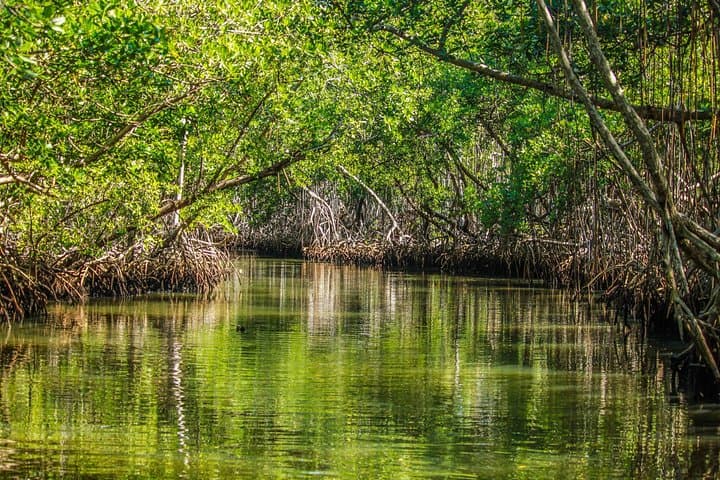


The boat slips away from Sánchez with mangroves leaning in as if to whisper directions. Light falls across Samana Bay in bright sheets—silver on water, warm on skin—while the guide points out a dark notch in the shoreline: Boca Tiburón, a cave scored by centuries of tide and Taíno hands. For six to seven hours this half-day trip stitches together islands, caverns and channel forests, a compact dive into one of the Dominican Republic’s most tactile wild places.
The boat slips away from Sánchez with mangroves leaning in as if to whisper directions. Light falls across Samana Bay in bright sheets—silver on water, warm on skin—while the guide points out a dark notch in the shoreline: Boca Tiburón, a cave scored by centuries of tide and Taíno hands. For six to seven hours this half-day trip stitches together islands, caverns and channel forests, a compact dive into one of the Dominican Republic’s most tactile wild places.
Los Haitises is limestone folded into rugged islands, where karst towers rise like weathered columns and subterranean rivers have hollowed rooms that once sheltered the Taíno people. Caves along the route bear pictographs and cupules, human marks that make the rocks feel like pages in a living archive. Ecology is immediate: mangrove roots tangle with crab burrows, frigatebirds wait on branches like black flags, and dolphins often thread the boat’s wake. The tour also touches Cayo Levantado—its white-sand crescent a contrast to the park’s green and gray—and stops at local fishing communities that still read the sea by the direction of birds.
Geology, culture and natural history are threaded through the guide’s commentary: why the karst formed, how mangroves protect inland farms from storm surges, and how Taíno imagery links the islands to their former human stewards. The experience feels exploratory rather than frenetic—periods of quiet drifting through narrow channels, then the quick pulse of scanning a birdy islet or climbing into a cave mouth for a short, echoing walk.
Practicalities matter: expect 6–7 hours total, including transit across Samana Bay, guided cave visits, and a typical Dominican lunch. Boarding is easy but involves stepping over a gunwale; water shoes are helpful for slippery cave floors. The trip is rated easy physically but brings exposure to sun and sea—reef-safe sunscreen, a hat, and motion-sickness remedies are smart. Photography opportunities are excellent at the mangrove mouths, cave entrances and on Cayo Levantado’s shoreline; bring a dry bag and secure straps.
Tour logistics are straightforward: pick-up from Las Terrenas or Samaná is available (confirm the meeting point), and the operator includes lunch and a guide. Respect the site—don’t touch pictographs, keep noise low in nesting areas, and use reef-safe sunscreen to protect coral and marine life. Whether you come for the birds, the caves or a fast, scenic lesson in tropical karst, the half-day boat tour delivers a dense, sensory encounter with the Dominican coast that rewards curiosity and careful travel.