THE ADVENTURE COLLECTIVE® · Independent discovery and booking for outdoor travel

A four-day loop from Hanoi that pairs Mai Chau's valley life with the terraces of Pu Luong and the karst waterways of Ninh Binh. Expect village homestays, moderate trekking, cycling through rice paddies, and a tranquil Trang An boat trip.
A four-day loop from Hanoi that pairs Mai Chau's valley life with the terraces of Pu Luong and the karst waterways of Ninh Binh. Expect village homestays, moderate trekking, cycling through rice paddies, and a tranquil Trang An boat trip.
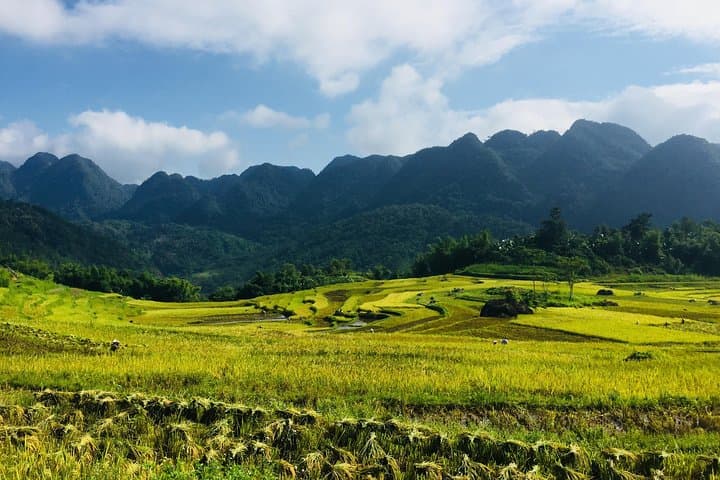
Dawn arrives over Thung Khe Pass like a slow exhale. Mist lifts from the valley and the flagpole on the ridge outlines the silhouette of a landscape shaped by rice and limestone. On the first morning of this four-day route, travelers step from an air-conditioned van onto narrow concrete lanes flanked by stilt houses, bamboo groves, and fields that seem to lean toward you — welcoming and insistent.
Verified experiences and guided adventures in the surrounding area.
Operated by Eco Travel Go Green VietNam · Pu Luong, Thanh Hoa Province
Dawn arrives over Thung Khe Pass like a slow exhale. Mist lifts from the valley and the flagpole on the ridge outlines the silhouette of a landscape shaped by rice and limestone. On the first morning of this four-day route, travelers step from an air-conditioned van onto narrow concrete lanes flanked by stilt houses, bamboo groves, and fields that seem to lean toward you — welcoming and insistent.
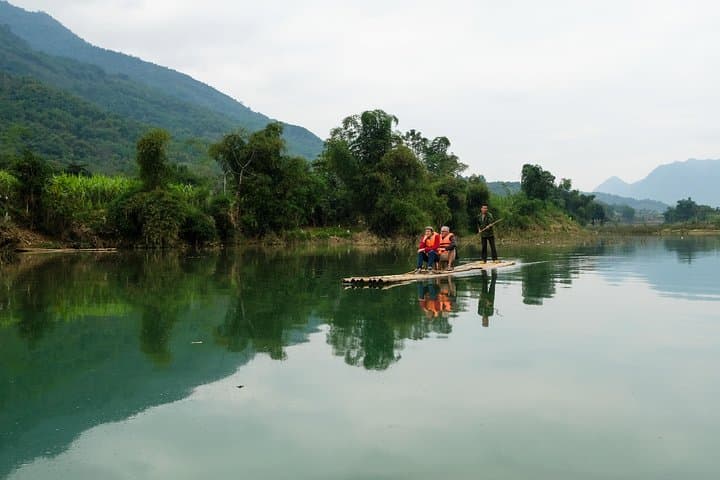
The itinerary threads together three distinct northern Vietnamese landscapes: Mai Chau's folding valley, the wooded limestone ridges and rice terraces of Pu Luong Nature Reserve, and the karst-studded waterways of Ninh Binh. Mai Chau carries the living culture of the White Thai people — brocade workshops, simple homestays, and slow bicycle rides through villages. Pu Luong is geologically younger: steep hills, jungle gullies, and engineered rice terraces that sit in the hollows like green steps. Ninh Binh, by contrast, is water and stone; Trang An's boats slip through caves and channels carved into karst towers laid down millions of years ago.
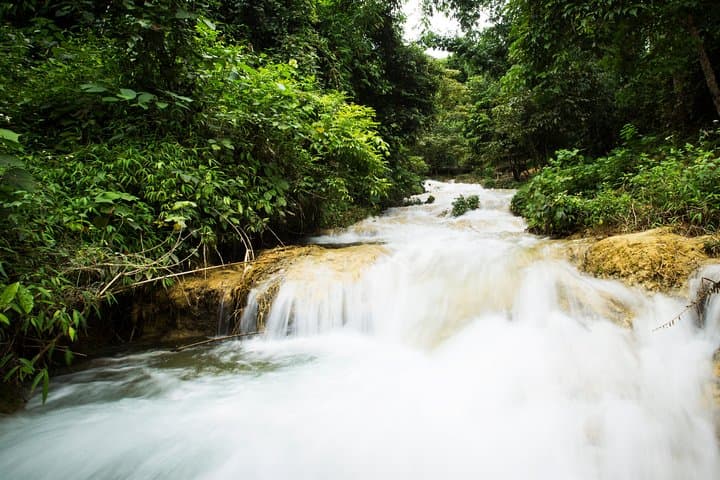
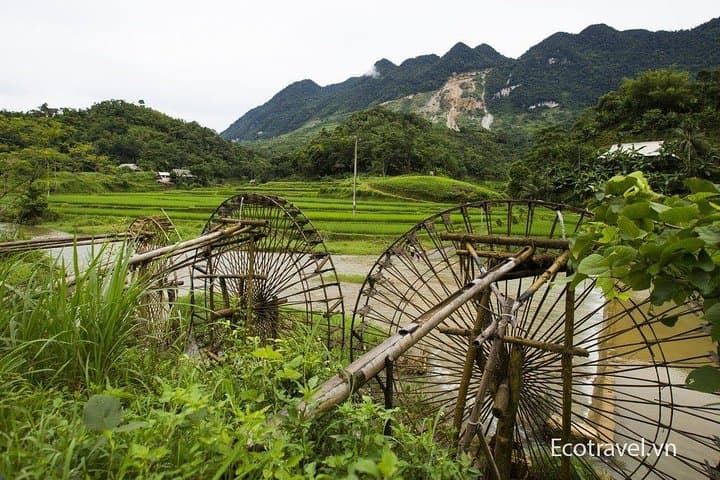
On the trail, paths range from well-graded rural roads to narrow dirt tracks that climb 200–500 meters over a morning. A typical day of walking in Pu Luong includes short steep stretches and a succession of viewpoints that reward the effort with broad panoramas of infinity terraces. Rivers and irrigation channels aren't passive; they move, shift, and push the route with hanging bridges and bamboo waterwheels — the latter still turning in village paddies, shifting water like a communal heartbeat.
Cultural notes are as immediate as the scenery. Expect to meet craftsmen weaving brocade, farmers balancing baskets of seedling rice, and market vendors at Pho Doan selling sticky rice cooked in bamboo. Trang An and Hoa Lu close the loop with monuments and temples from Vietnam's tenth- and eleventh-century dynasties, where limestone cliffs frame centuries-old architecture.
Practicalities are straightforward: the program begins and ends in Hanoi with roughly 130 km of driven transfer on day one and mixed walking and cycling days afterward. Bring footwear that handles slick mud and concrete alike; have cash for small village purchases; and plan for rain — much of the landscape grows because the monsoon feeds it. Hydration and sun protection matter on exposed rice-terrace ridges; insect repellent pays for itself in the evenings.
For travelers who want an efficient, culturally rich sample of northern Vietnam, this four-day loop balances light trekking, gentle cycling, boat time on UNESCO-protected waterways, and stays in local homestays or eco-lodges. It’s not a technical climb, but it asks for steady legs, curiosity, and respect for village rhythms.
moderate.
4 days (approx. 16–20 hours of mixed activity).
Good general fitness; able to walk 4–6 hours in a day with short steep sections and ride a bicycle 10–20 km.
No technical experience is required, but you should be comfortable walking several hours on uneven paths and climbing short steep sections.
Homestays are typically family-style rooms; expect simple private rooms or shared arrangements depending on availability.
The cycling is mostly on flat to rolling rural roads — suitable for a basic fitness level; distances per ride are generally 10–25 km.
Yes, the tour includes the Trang An boat trip and entrance to the site as described in the itinerary.
Vietnamese Dong is preferred; ATMs are available in larger towns but not in remote villages, so carry cash for markets and homestays.
The operator can cancel for heavy rain or unsafe conditions with a full refund if canceled at least 24 hours before departure; parts of the itinerary may be adjusted for safety.
Hoa Lu served as Vietnam's capital in the 10th–11th centuries and the region still holds temples and citadel ruins from early Vietnamese dynasties.
Pu Luong is a protected reserve with community-based ecotourism; travelers should avoid single-use plastics and support local homestays to bolster sustainable livelihoods.
Eco Travel Go Green VietNam operates guided outdoor trips and adventures with an emphasis on safety, stewardship, and memorable experiences.
Dawn arrives over Thung Khe Pass like a slow exhale. Mist lifts from the valley and the flagpole on the ridge outlines the silhouette of a landscape shaped by rice and limestone. On the first morning of this four-day route, travelers step from an air-conditioned van onto narrow concrete lanes flanked by stilt houses, bamboo groves, and fields that seem to lean toward you — welcoming and insistent.
Dawn arrives over Thung Khe Pass like a slow exhale. Mist lifts from the valley and the flagpole on the ridge outlines the silhouette of a landscape shaped by rice and limestone. On the first morning of this four-day route, travelers step from an air-conditioned van onto narrow concrete lanes flanked by stilt houses, bamboo groves, and fields that seem to lean toward you — welcoming and insistent.
The itinerary threads together three distinct northern Vietnamese landscapes: Mai Chau's folding valley, the wooded limestone ridges and rice terraces of Pu Luong Nature Reserve, and the karst-studded waterways of Ninh Binh. Mai Chau carries the living culture of the White Thai people — brocade workshops, simple homestays, and slow bicycle rides through villages. Pu Luong is geologically younger: steep hills, jungle gullies, and engineered rice terraces that sit in the hollows like green steps. Ninh Binh, by contrast, is water and stone; Trang An's boats slip through caves and channels carved into karst towers laid down millions of years ago.
On the trail, paths range from well-graded rural roads to narrow dirt tracks that climb 200–500 meters over a morning. A typical day of walking in Pu Luong includes short steep stretches and a succession of viewpoints that reward the effort with broad panoramas of infinity terraces. Rivers and irrigation channels aren't passive; they move, shift, and push the route with hanging bridges and bamboo waterwheels — the latter still turning in village paddies, shifting water like a communal heartbeat.
Cultural notes are as immediate as the scenery. Expect to meet craftsmen weaving brocade, farmers balancing baskets of seedling rice, and market vendors at Pho Doan selling sticky rice cooked in bamboo. Trang An and Hoa Lu close the loop with monuments and temples from Vietnam's tenth- and eleventh-century dynasties, where limestone cliffs frame centuries-old architecture.
Practicalities are straightforward: the program begins and ends in Hanoi with roughly 130 km of driven transfer on day one and mixed walking and cycling days afterward. Bring footwear that handles slick mud and concrete alike; have cash for small village purchases; and plan for rain — much of the landscape grows because the monsoon feeds it. Hydration and sun protection matter on exposed rice-terrace ridges; insect repellent pays for itself in the evenings.
For travelers who want an efficient, culturally rich sample of northern Vietnam, this four-day loop balances light trekking, gentle cycling, boat time on UNESCO-protected waterways, and stays in local homestays or eco-lodges. It’s not a technical climb, but it asks for steady legs, curiosity, and respect for village rhythms.