THE ADVENTURE COLLECTIVE® · Independent discovery and booking for outdoor travel

See more of Central Park in less time by renting a bike near the park’s 56th Street entrance. This practical guide covers routes, timing, and what to expect on the park loop.
See more of Central Park in less time by renting a bike near the park’s 56th Street entrance. This practical guide covers routes, timing, and what to expect on the park loop.
You roll out of the rental shop on 7th Avenue, the city’s pulse easing as pavement gives way to the park loop. Trees lean toward the road like spectators; joggers and carriage horses mark the rhythm. On a bike, Central Park stretches open—lakes, meadows, and hidden alleys revealed in a single afternoon.
Verified experiences and guided adventures in the surrounding area.
Operated by Fancy Apple · New York, New York
You roll out of the rental shop on 7th Avenue, the city’s pulse easing as pavement gives way to the park loop. Trees lean toward the road like spectators; joggers and carriage horses mark the rhythm. On a bike, Central Park stretches open—lakes, meadows, and hidden alleys revealed in a single afternoon.
The park opened in the 1850s as a deliberate break from Manhattan’s grid, a landscape engineered to bring nature into the city. Its glacially sculpted topography—rock outcrops and rolling hills—creates short climbs and sudden viewpoints, most famously at Belvedere Castle and the Reservoir. Culturally, the park has been a public stage for concerts, protests, and everyday New Yorkers; cycling here is as much urban tradition as recreation.
Practical guidance: rentals are available by the hour or all day; helmets, locks, and maps are provided. Plan a clockwise or counterclockwise loop depending on traffic: the full loop is roughly 6 miles (9.7 km) with short climbs around the North Meadow and Harlem Meer. Expect mixed pavement—bike lanes, shared paths, and occasional cobbles—and steady pedestrian traffic around Bethesda Terrace and the Mall.
Go early or late afternoon to avoid the busiest stretches, carry a refillable water bottle, and set your phone to low-power map mode before you leave. For families, child seats and trailers are offered; for riders seeking quiet, explore the North Woods where the paths narrow and the city recedes. With a bike under you, Central Park becomes a compact wilderness threaded through the city—engaging, efficient, and endlessly rideable.
easy.
1–24 hours.
Suitable for most fitness levels; basic bike-handling and short climbs expected
Yes—helmets are provided free and are required for riders under 14; adults are strongly encouraged to wear them.
Pick-up and return are at the rental shop on 7th Avenue and West 56th Street—same location for both unless otherwise arranged.
Bikes are allowed on park roads and paved loops but must yield to pedestrians; some pedestrian-only areas require you to walk your bike.
Yes—the shop offers child seats, trailers, and smaller-sized bikes; reserve these in advance as inventory can be limited.
Central Park was designed in the mid-19th century by Frederick Law Olmsted and Calvert Vaux to provide urban green space, with deliberate rock exposures and winding paths shaped by glacial geology.
Park management emphasizes native plantings and stormwater control; stick to paved paths to limit erosion and avoid disturbing wildlife habitats.
Fancy Apple operates guided outdoor trips and adventures with an emphasis on safety, stewardship, and memorable experiences.
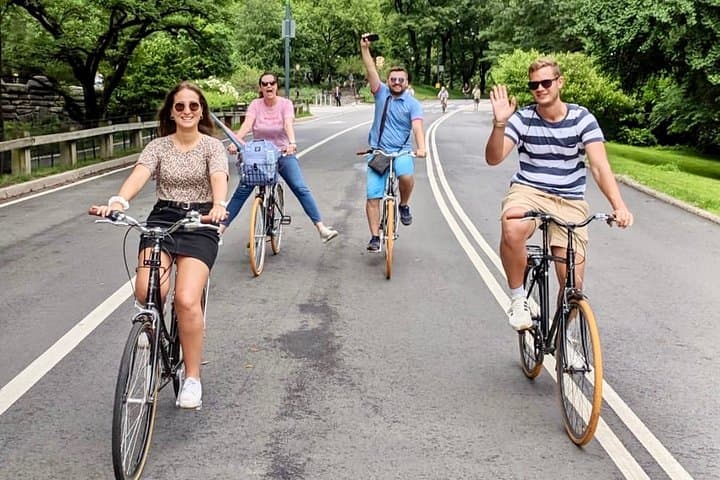
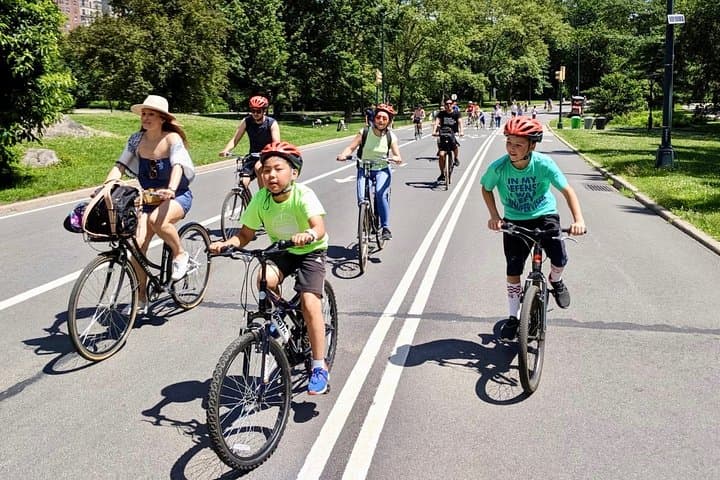
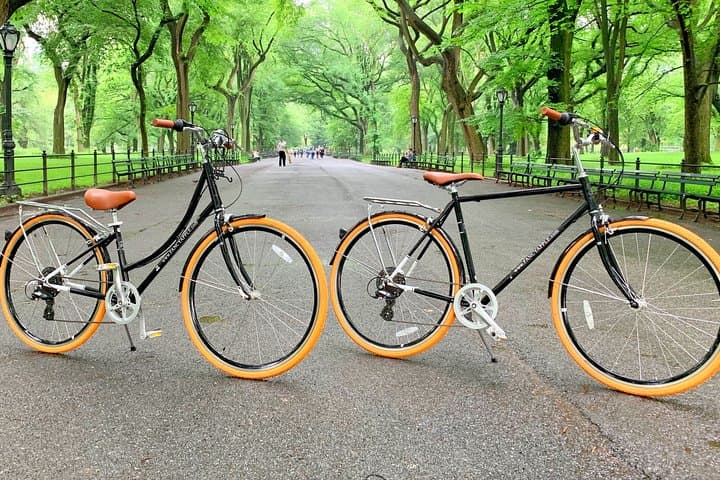
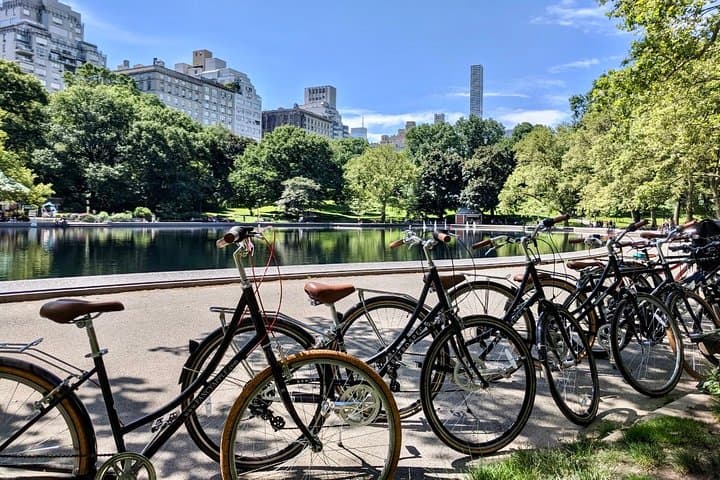
You roll out of the rental shop on 7th Avenue, the city’s pulse easing as pavement gives way to the park loop. Trees lean toward the road like spectators; joggers and carriage horses mark the rhythm. On a bike, Central Park stretches open—lakes, meadows, and hidden alleys revealed in a single afternoon.
You roll out of the rental shop on 7th Avenue, the city’s pulse easing as pavement gives way to the park loop. Trees lean toward the road like spectators; joggers and carriage horses mark the rhythm. On a bike, Central Park stretches open—lakes, meadows, and hidden alleys revealed in a single afternoon.
The park opened in the 1850s as a deliberate break from Manhattan’s grid, a landscape engineered to bring nature into the city. Its glacially sculpted topography—rock outcrops and rolling hills—creates short climbs and sudden viewpoints, most famously at Belvedere Castle and the Reservoir. Culturally, the park has been a public stage for concerts, protests, and everyday New Yorkers; cycling here is as much urban tradition as recreation.
Practical guidance: rentals are available by the hour or all day; helmets, locks, and maps are provided. Plan a clockwise or counterclockwise loop depending on traffic: the full loop is roughly 6 miles (9.7 km) with short climbs around the North Meadow and Harlem Meer. Expect mixed pavement—bike lanes, shared paths, and occasional cobbles—and steady pedestrian traffic around Bethesda Terrace and the Mall.
Go early or late afternoon to avoid the busiest stretches, carry a refillable water bottle, and set your phone to low-power map mode before you leave. For families, child seats and trailers are offered; for riders seeking quiet, explore the North Woods where the paths narrow and the city recedes. With a bike under you, Central Park becomes a compact wilderness threaded through the city—engaging, efficient, and endlessly rideable.