THE ADVENTURE COLLECTIVE® · Independent discovery and booking for outdoor travel

This half-day shore excursion from Ålesund threads Art Nouveau streets with quiet island farms, medieval churches, and coastal viewpoints. In about four hours a small-group minibus tour offers a compact, crowd-avoiding primer on the region’s history, geology, and everyday fjord life.
This half-day shore excursion from Ålesund threads Art Nouveau streets with quiet island farms, medieval churches, and coastal viewpoints. In about four hours a small-group minibus tour offers a compact, crowd-avoiding primer on the region’s history, geology, and everyday fjord life.
You step off the ship and the harbor air hits like a cold note from the Atlantic—salt, diesel, and a hint of wood smoke from a distant fisherman’s stove. The minibus eases away from the quay and Ålesund’s Art Nouveau blocks slide past: carved stone facades, onion-domed roofs, windows that look painted to the rhythm of the sea.
Verified experiences and guided adventures in the surrounding area.
Operated by Uniktur · Ålesund, Møre og Romsdal
You step off the ship and the harbor air hits like a cold note from the Atlantic—salt, diesel, and a hint of wood smoke from a distant fisherman’s stove. The minibus eases away from the quay and Ålesund’s Art Nouveau blocks slide past: carved stone facades, onion-domed roofs, windows that look painted to the rhythm of the sea.
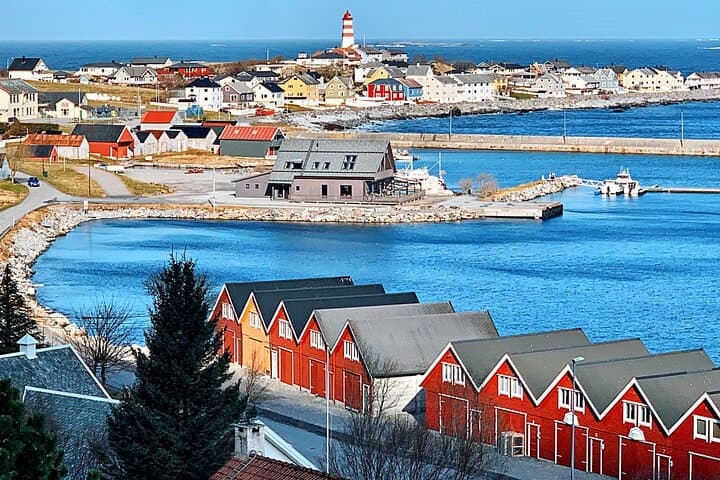
The tour moves at a purposeful, unhurried pace, the kind designed for first-time visitors who want meaning more than monuments. In minutes you cross to the outer islands: lanes narrow, sheep loaf beside stone fences, and the horizon sharpens into a low chain of ridged isles. These islands read like a map of Norway’s geological history—rock breasts hewn by ice and sea, fjords cutting inward like ink lines. The guide threads stories into the landscape: Borgund’s market-town importance in the 1100s, the Giske family’s medieval power, and how Alnes Lighthouse—built in 1852—stood as both wayfinder and target during storm and war.
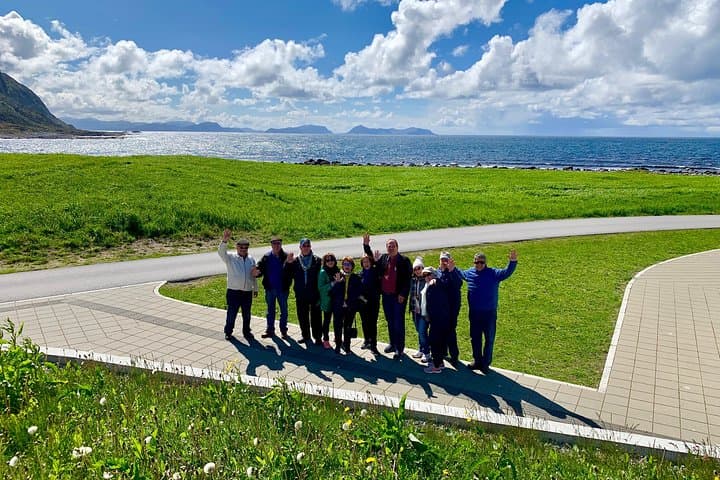
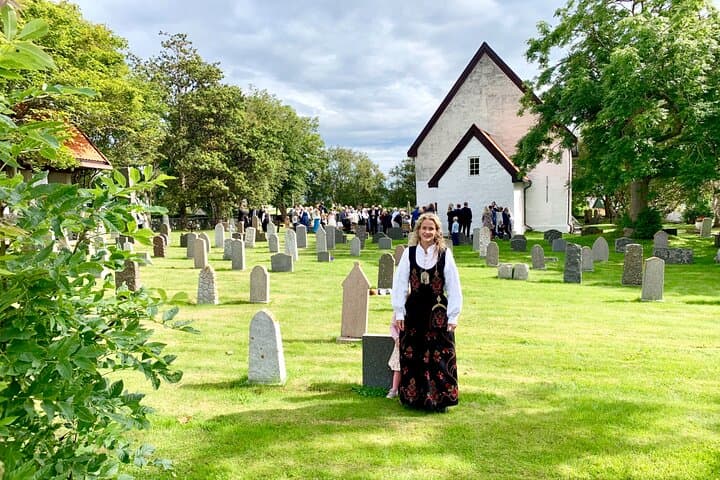
Highlights are compact and tactile. On Godøy a panoramic platform opens to the Atlantic—the ocean feels as if it’s daring you to look away. At Giske Church the cool marble walls carry a 12th-century hush; the church is one of Norway’s rare marble-built medieval sanctuaries still in active use. Back toward town, Aksla Mountain offers the town’s defining vantage: 418 steps to Fjellstua reward walkers with a sprawl of islands, fjords, and the ordered chaos of Ålesund’s jugendstil center. The old Skodje masonry arch bridges, now pedestrian-only, are quiet art—stone curves spanning water and time.
Practical details matter: the itinerary runs roughly four hours, accommodates up to 15 guests, and uses an air-conditioned minibus with bottled water provided. Stops include fee-based access (Aksla panoramic platform ~100 NOK) and small museums or cafés in season; guides will flag where to linger for fresh fish or a local beer after the tour. The route avoids crowded piers and is friendly for mature travelers and families—infant seats can be provided and the physical demands are low, though some short climbs and cobbled lanes require steady shoes.
For travelers with a single port call, this is a concentrated primer on Sunnmøre—history, seascape, and daily life served in manageable sips. Bring a waterproof layer, binoculars, and a charger; the islands will change light every ten minutes and you’ll want to be ready when they do.
easy.
4 hours.
Suitable for travelers in average physical condition; involves short walks and one steeper stair climb (Aksla viewpoint).
The tour lasts about four hours and departs from a central meeting point near Ålesund harbor; pickup options can be arranged from nearby hotels or the port.
Yes—this shore excursion is designed for cruise passengers and aims to return you to port on schedule while avoiding main crowds.
Most transport and bottled water are included; some sites like the Aksla panoramic platform may charge a separate fee (around 100 NOK).
Yes; infant seats are available and the tour is rated easy, though some short climbs and cobbles may be challenging for those with limited mobility.
The operator may cancel or modify the tour in severe weather; dress in layers and expect stronger winds and spray on exposed viewpoints.
Tipping guides is appreciated but not mandatory; a modest tip for excellent service is common practice in Norway.
Ålesund’s roots trace back to Viking and medieval market towns like Borgund; the Giske clan held regional influence in the 1100s, leaving churches and place names behind.
The islands are managed for low-impact tourism—stick to marked paths and respect grazing areas to protect fragile coastal vegetation.
Uniktur operates guided outdoor trips and adventures with an emphasis on safety, stewardship, and memorable experiences.
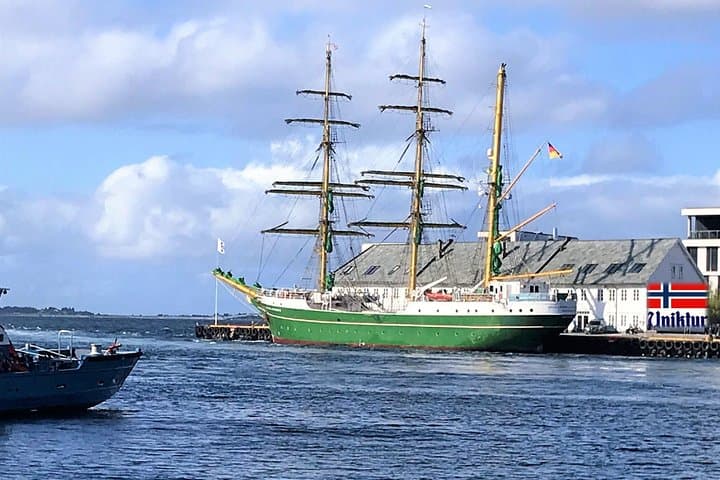
You step off the ship and the harbor air hits like a cold note from the Atlantic—salt, diesel, and a hint of wood smoke from a distant fisherman’s stove. The minibus eases away from the quay and Ålesund’s Art Nouveau blocks slide past: carved stone facades, onion-domed roofs, windows that look painted to the rhythm of the sea.
You step off the ship and the harbor air hits like a cold note from the Atlantic—salt, diesel, and a hint of wood smoke from a distant fisherman’s stove. The minibus eases away from the quay and Ålesund’s Art Nouveau blocks slide past: carved stone facades, onion-domed roofs, windows that look painted to the rhythm of the sea.
The tour moves at a purposeful, unhurried pace, the kind designed for first-time visitors who want meaning more than monuments. In minutes you cross to the outer islands: lanes narrow, sheep loaf beside stone fences, and the horizon sharpens into a low chain of ridged isles. These islands read like a map of Norway’s geological history—rock breasts hewn by ice and sea, fjords cutting inward like ink lines. The guide threads stories into the landscape: Borgund’s market-town importance in the 1100s, the Giske family’s medieval power, and how Alnes Lighthouse—built in 1852—stood as both wayfinder and target during storm and war.
Highlights are compact and tactile. On Godøy a panoramic platform opens to the Atlantic—the ocean feels as if it’s daring you to look away. At Giske Church the cool marble walls carry a 12th-century hush; the church is one of Norway’s rare marble-built medieval sanctuaries still in active use. Back toward town, Aksla Mountain offers the town’s defining vantage: 418 steps to Fjellstua reward walkers with a sprawl of islands, fjords, and the ordered chaos of Ålesund’s jugendstil center. The old Skodje masonry arch bridges, now pedestrian-only, are quiet art—stone curves spanning water and time.
Practical details matter: the itinerary runs roughly four hours, accommodates up to 15 guests, and uses an air-conditioned minibus with bottled water provided. Stops include fee-based access (Aksla panoramic platform ~100 NOK) and small museums or cafés in season; guides will flag where to linger for fresh fish or a local beer after the tour. The route avoids crowded piers and is friendly for mature travelers and families—infant seats can be provided and the physical demands are low, though some short climbs and cobbled lanes require steady shoes.
For travelers with a single port call, this is a concentrated primer on Sunnmøre—history, seascape, and daily life served in manageable sips. Bring a waterproof layer, binoculars, and a charger; the islands will change light every ten minutes and you’ll want to be ready when they do.