THE ADVENTURE COLLECTIVE® · Independent discovery and booking for outdoor travel

This 10‑day private itinerary threads Lima, Arequipa, Colca Canyon, Lake Titicaca and Machu Picchu into a single guided journey. Expect cultural depth, wildlife viewing and significant altitude changes — ideal for travelers who want a curated, off‑the‑beaten main loop of Peru.
This 10‑day private itinerary threads Lima, Arequipa, Colca Canyon, Lake Titicaca and Machu Picchu into a single guided journey. Expect cultural depth, wildlife viewing and significant altitude changes — ideal for travelers who want a curated, off‑the‑beaten main loop of Peru.
You step off the plane into Lima’s warm, ocean-scented air and the itinerary unfolds like a map of elevation lines — from Pacific coast to volcanic highlands, salt flats and the blue-iron of Titicaca.
Verified experiences and guided adventures in the surrounding area.
Operated by Peru4Fun Servicios Turísticos EIRL · Cusco, Cusco Region
You step off the plane into Lima’s warm, ocean-scented air and the itinerary unfolds like a map of elevation lines — from Pacific coast to volcanic highlands, salt flats and the blue-iron of Titicaca.
The tour moves with intention: an introductory sweep of Lima’s pre‑Columbian huacas and colonial cathedrals, a coastal wildlife detour to the Ballestas Islands and Nazca’s enigmatic geoglyphs, then into Arequipa’s white‑stone plazas and the vertiginous amphitheatre of Colca Canyon where condors wheel on thermal lifts. A slow, scenic transfer to Puno gives way to Lake Titicaca’s floating reed islands and a homestay on Llachón; finally the route climbs into Cusco’s Inca heart and finishes with an overnight in Aguas Calientes and a full day at Machu Picchu.
Geology and history run together here. The Andes are living tectonics — volcanic cones around Arequipa, canyons carved by the Colca River, and the uplifted basin that holds Titicaca at roughly 3,800 m. Human history is layered on top: pre‑Inca cultures in Lima, Spanish colonial architecture in Arequipa and Cusco, and the Inca stonework of Sacsayhuamán and Ollantaytambo that lead into the citadel at Machu Picchu.
Culture in this itinerary is intimate by design: private guides translate local rituals, and the Lake Titicaca homestay offers a view of daily life — reed boats, textile looms, and foodways rooted in high‑altitude agriculture.
Practically, this trip demands respect for altitude and logistics. Expect several internal flights and long drives: Arequipa and Colca are a half‑day apart by road; the Puno transfer crosses high puna landscapes and can take 6+ hours depending on stops. Plan for elevation changes: Lima (sea level) to Arequipa (≈2,300 m), Chivay/Colca (≈3,600 m), Puno/Titicaca (≈3,800 m), Cusco (≈3,400 m), Machu Picchu (≈2,430 m).
Bring layered clothing, sun protection for intense high‑altitude UV, and chewable or slow‑release measures to manage altitude symptoms. Hydrate consistently and pace harder efforts during the first 48 hours at altitude. The tour’s private guide and included internal flights simplify connections; however, passports, moderate fitness and advance planning (train reservations for Aguas Calientes) are required.
For travelers who want Peru beyond a postcard — the rare villages, the living reed islands, the Inca stone roads — this itinerary strings the highlights into a coherent journey. It combines wildlife viewing, archaeological depth and cultural exchanges, all under the practical structure of private transport and a professional guide who keeps the journey moving while leaving room for moments that matter: sunrise over Titicaca, the condor’s shadow at the canyon rim, and the first step through Machu Picchu’s sunlit gates.
moderate.
10 days.
Moderate fitness required — able to walk 3–6 miles a day at altitude and manage stairs/cobbled streets.
Yes — a valid passport is required at booking and for all internal flights; bring a photocopy stored separately.
Arrive with at least one easy day if possible, hydrate, avoid alcohol initially and consider consulting your doctor about acetazolamide if you’ve had altitude issues before.
The operator provides infant seats, but note long drives and altitude; families should consult guides about individual child readiness.
The itinerary notes local flights and train transfers as included where indicated — confirm specifics with the operator at booking.
Expect 3–4 hours of walking on uneven stone terraces with moderate elevation changes; stairs are steep in sections.
Yes — advise the operator at booking; local homestays and hotels can typically adapt meals for allergies or dietary needs.
The route threads pre‑Inca Lima culture, colonial Arequipa’s Spanish architecture, and the Inca engineering of the Sacred Valley leading to Machu Picchu.
Tourism pressure at Machu Picchu and Titicaca is managed through permits and community tourism; follow guide instructions, avoid single‑use plastics and respect local craft economies.
Peru4Fun Servicios Turísticos EIRL operates guided outdoor trips and adventures with an emphasis on safety, stewardship, and memorable experiences.
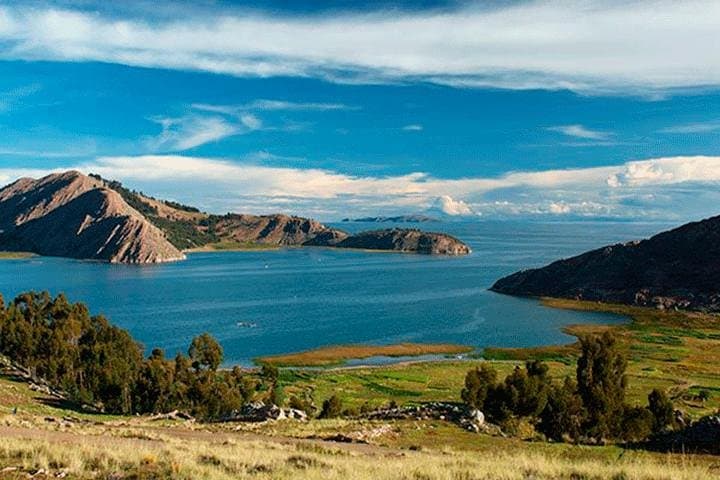


You step off the plane into Lima’s warm, ocean-scented air and the itinerary unfolds like a map of elevation lines — from Pacific coast to volcanic highlands, salt flats and the blue-iron of Titicaca.
You step off the plane into Lima’s warm, ocean-scented air and the itinerary unfolds like a map of elevation lines — from Pacific coast to volcanic highlands, salt flats and the blue-iron of Titicaca.
The tour moves with intention: an introductory sweep of Lima’s pre‑Columbian huacas and colonial cathedrals, a coastal wildlife detour to the Ballestas Islands and Nazca’s enigmatic geoglyphs, then into Arequipa’s white‑stone plazas and the vertiginous amphitheatre of Colca Canyon where condors wheel on thermal lifts. A slow, scenic transfer to Puno gives way to Lake Titicaca’s floating reed islands and a homestay on Llachón; finally the route climbs into Cusco’s Inca heart and finishes with an overnight in Aguas Calientes and a full day at Machu Picchu.
Geology and history run together here. The Andes are living tectonics — volcanic cones around Arequipa, canyons carved by the Colca River, and the uplifted basin that holds Titicaca at roughly 3,800 m. Human history is layered on top: pre‑Inca cultures in Lima, Spanish colonial architecture in Arequipa and Cusco, and the Inca stonework of Sacsayhuamán and Ollantaytambo that lead into the citadel at Machu Picchu.
Culture in this itinerary is intimate by design: private guides translate local rituals, and the Lake Titicaca homestay offers a view of daily life — reed boats, textile looms, and foodways rooted in high‑altitude agriculture.
Practically, this trip demands respect for altitude and logistics. Expect several internal flights and long drives: Arequipa and Colca are a half‑day apart by road; the Puno transfer crosses high puna landscapes and can take 6+ hours depending on stops. Plan for elevation changes: Lima (sea level) to Arequipa (≈2,300 m), Chivay/Colca (≈3,600 m), Puno/Titicaca (≈3,800 m), Cusco (≈3,400 m), Machu Picchu (≈2,430 m).
Bring layered clothing, sun protection for intense high‑altitude UV, and chewable or slow‑release measures to manage altitude symptoms. Hydrate consistently and pace harder efforts during the first 48 hours at altitude. The tour’s private guide and included internal flights simplify connections; however, passports, moderate fitness and advance planning (train reservations for Aguas Calientes) are required.
For travelers who want Peru beyond a postcard — the rare villages, the living reed islands, the Inca stone roads — this itinerary strings the highlights into a coherent journey. It combines wildlife viewing, archaeological depth and cultural exchanges, all under the practical structure of private transport and a professional guide who keeps the journey moving while leaving room for moments that matter: sunrise over Titicaca, the condor’s shadow at the canyon rim, and the first step through Machu Picchu’s sunlit gates.