THE ADVENTURE COLLECTIVE® · Independent discovery and booking for outdoor travel

A well-paced day trip from Madrid that pairs the monumental austerity of El Escorial with the layered streets of Toledo. Expect long coach transfers, several hours of walking, and included admissions to major sites.
A well-paced day trip from Madrid that pairs the monumental austerity of El Escorial with the layered streets of Toledo. Expect long coach transfers, several hours of walking, and included admissions to major sites.
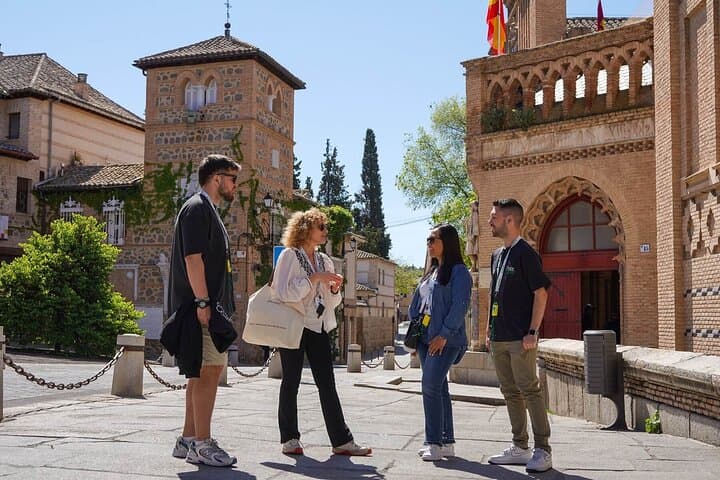
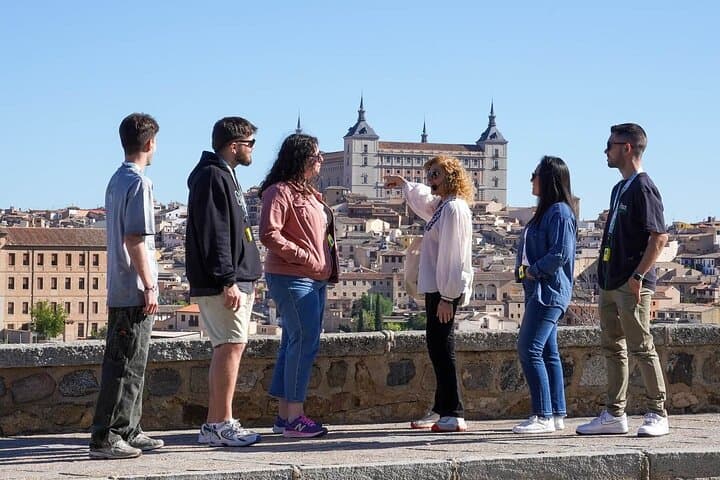
Morning light spills across Plaza de España as a coach eases out of Madrid, highway and rock giving way to granite slopes where El Escorial's stone block sits like a disciplined storybook. The itinerary moves with clear purpose: first the Royal Monastery of San Lorenzo de El Escorial—Renaissance lines, vaulted basilica, royal pantheon—then the stark, tunnel-cut Basilica at the Valley of the Fallen, its 152‑meter cross watching the Guadarrama ridgeline, and finally a guided walk through Toledo's winding old town where El Greco and three faiths leave visible traces.
Verified experiences and guided adventures in the surrounding area.
Operated by Julia Travel S.L · Madrid, Comunidad de Madrid
Morning light spills across Plaza de España as a coach eases out of Madrid, highway and rock giving way to granite slopes where El Escorial's stone block sits like a disciplined storybook. The itinerary moves with clear purpose: first the Royal Monastery of San Lorenzo de El Escorial—Renaissance lines, vaulted basilica, royal pantheon—then the stark, tunnel-cut Basilica at the Valley of the Fallen, its 152‑meter cross watching the Guadarrama ridgeline, and finally a guided walk through Toledo's winding old town where El Greco and three faiths leave visible traces.
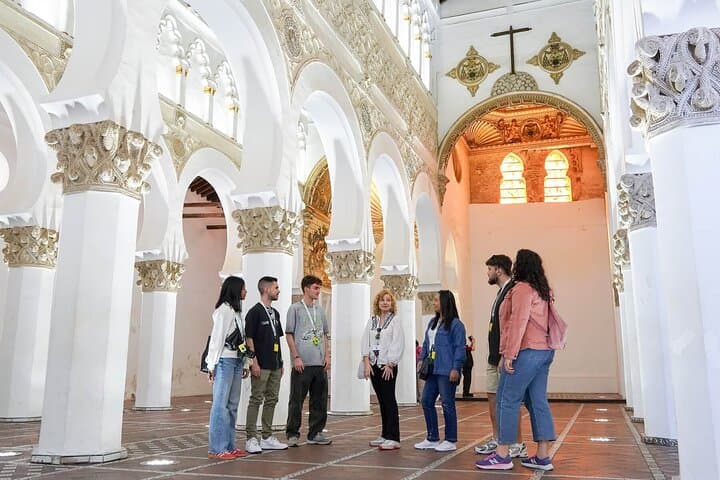
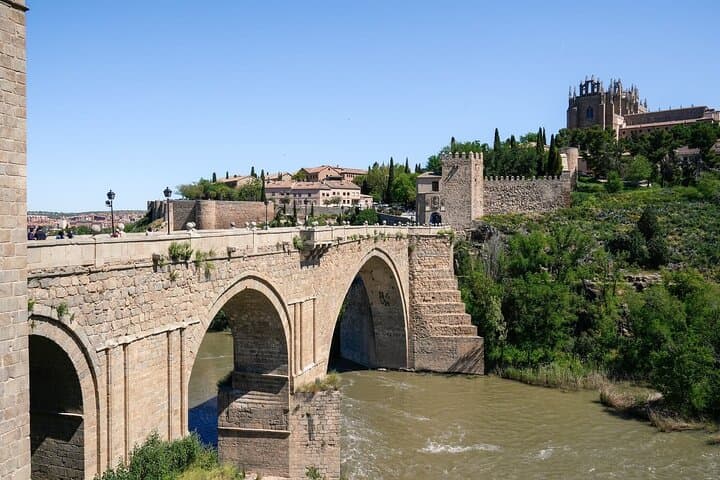
Built in the 16th century by Philip II, El Escorial combined palace, monastery and mausoleum as a center of Habsburg power; its austere granite and axial planning reflect Renaissance humanist ideals. The Valley of the Fallen, completed mid‑20th century, is a controversial monument carved into the Sierra de Guadarrama; its scale and the cross are geological and political landmarks. Toledo, once Visigothic and later Spain's medieval capital, layers Roman, Muslim, Jewish and Christian architecture within stone streets and steep viewpoints.
Expect several hours on foot over cobbles and stairs, indoor visits with limited photography in some chapels, and coach transfers totaling the bulk of the day. Practical notes: wear sturdy shoes, plan for up to 10–11 hours including transfers, carry water and modest clothing for religious sites, and bring a compact umbrella in spring and fall.
Timing your visit for early departures avoids afternoon traffic in Toledo; guides typically operate in English and Spanish and tickets often include entrance fees daily.
moderate.
10–11 hours.
Suitable for travelers in average fitness who can walk several hours on uneven cobbles and climb stairs.
Most operators meet in central Madrid—check the booking confirmation for the exact office address and arrive 15 minutes early.
The tour is rated easy to moderate and is family-friendly, but it involves long coach transfers and walking on cobbles; consider mobility limitations for those with reduced stamina.
The standard offering includes admission to El Escorial and the Valley of the Fallen, and from 16/03/2026 includes the Cathedral of Toledo—confirm specific inclusions on your voucher.
Guides operate in both Spanish and English; the tour description notes bilingual guiding and an individual audio guide system for larger groups.
El Escorial was conceived by Philip II in the 16th century as a royal mausoleum and center of Habsburg power; Toledo served as Spain's capital in earlier medieval periods and preserves layered cultural architecture.
The Sierra de Guadarrama and Toledo's historic core are protected—stay on marked paths, avoid littering, and respect restricted zones and chapel rules to reduce visitor impact.
Julia Travel S.L operates guided outdoor trips and adventures with an emphasis on safety, stewardship, and memorable experiences.
Morning light spills across Plaza de España as a coach eases out of Madrid, highway and rock giving way to granite slopes where El Escorial's stone block sits like a disciplined storybook. The itinerary moves with clear purpose: first the Royal Monastery of San Lorenzo de El Escorial—Renaissance lines, vaulted basilica, royal pantheon—then the stark, tunnel-cut Basilica at the Valley of the Fallen, its 152‑meter cross watching the Guadarrama ridgeline, and finally a guided walk through Toledo's winding old town where El Greco and three faiths leave visible traces.
Morning light spills across Plaza de España as a coach eases out of Madrid, highway and rock giving way to granite slopes where El Escorial's stone block sits like a disciplined storybook. The itinerary moves with clear purpose: first the Royal Monastery of San Lorenzo de El Escorial—Renaissance lines, vaulted basilica, royal pantheon—then the stark, tunnel-cut Basilica at the Valley of the Fallen, its 152‑meter cross watching the Guadarrama ridgeline, and finally a guided walk through Toledo's winding old town where El Greco and three faiths leave visible traces.
Built in the 16th century by Philip II, El Escorial combined palace, monastery and mausoleum as a center of Habsburg power; its austere granite and axial planning reflect Renaissance humanist ideals. The Valley of the Fallen, completed mid‑20th century, is a controversial monument carved into the Sierra de Guadarrama; its scale and the cross are geological and political landmarks. Toledo, once Visigothic and later Spain's medieval capital, layers Roman, Muslim, Jewish and Christian architecture within stone streets and steep viewpoints.
Expect several hours on foot over cobbles and stairs, indoor visits with limited photography in some chapels, and coach transfers totaling the bulk of the day. Practical notes: wear sturdy shoes, plan for up to 10–11 hours including transfers, carry water and modest clothing for religious sites, and bring a compact umbrella in spring and fall.
Timing your visit for early departures avoids afternoon traffic in Toledo; guides typically operate in English and Spanish and tickets often include entrance fees daily.