THE ADVENTURE COLLECTIVE® · Independent discovery and booking for outdoor travel

Skip the longest lines and ride the elevators up the Eiffel Tower with reserved access. Choose the second floor or upgrade to the summit for sweeping, unrivaled views of Paris and focused historical context from a professional guide.
Skip the longest lines and ride the elevators up the Eiffel Tower with reserved access. Choose the second floor or upgrade to the summit for sweeping, unrivaled views of Paris and focused historical context from a professional guide.
You step out of the Parisian pavement into a lattice of iron that tilts the skyline and hushes the city.
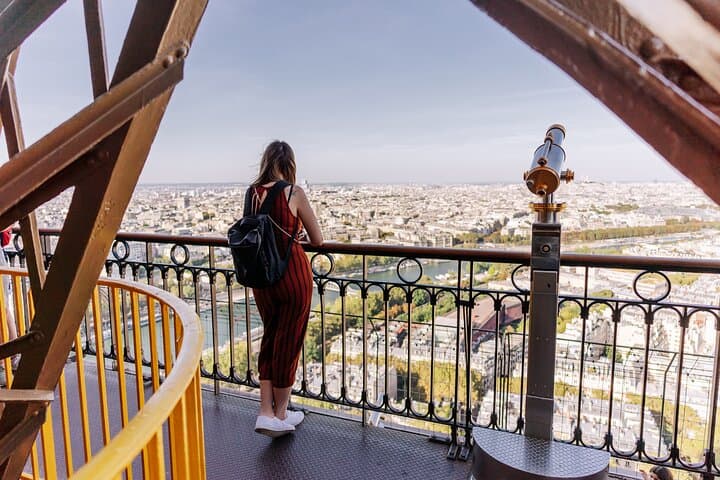
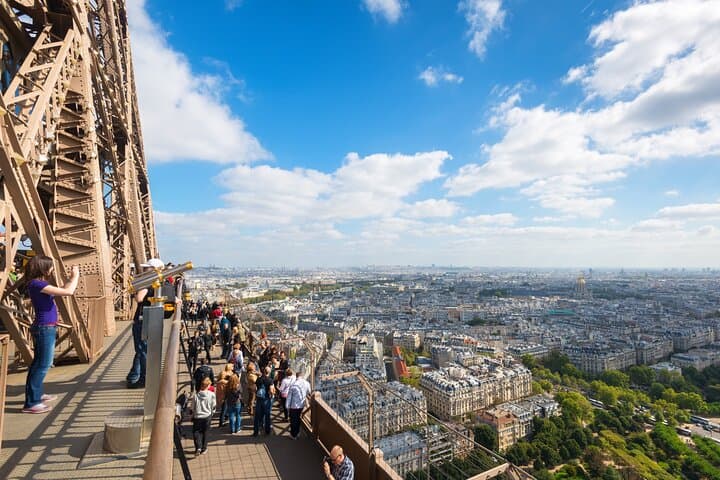
The elevator hums; the city unfolds — rooftops, the Seine slicing through stone, Chaillot and Trocadéro framed beneath you. On the first level a suspended glass floor offers an acute, vertiginous view of pedestrians below; on the second the avenues fan away like spokes, and if you opt for the summit, nearly 300 meters of perspective reorders Paris into a readable map.
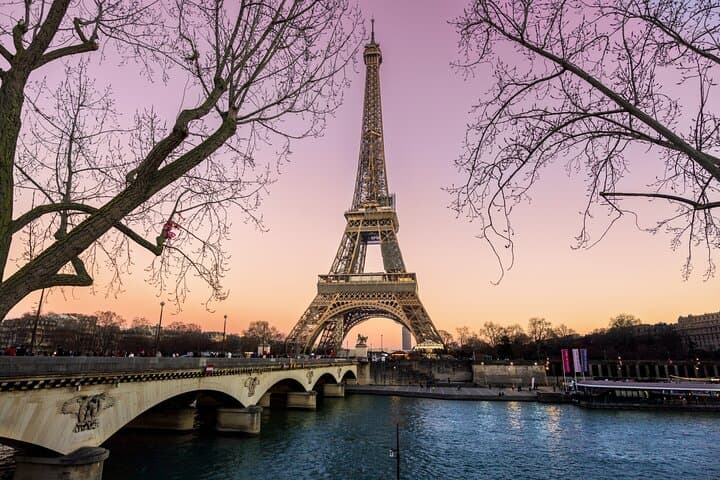
Constructed for the 1889 Exposition Universelle and engineered by Gustave Eiffel, the tower was once derided before it became an international emblem. Its four masonry foundations grip the Champ de Mars and the river plain; the exposed ironwork reflects 19th‑century industrial confidence as well as ongoing conservation efforts.
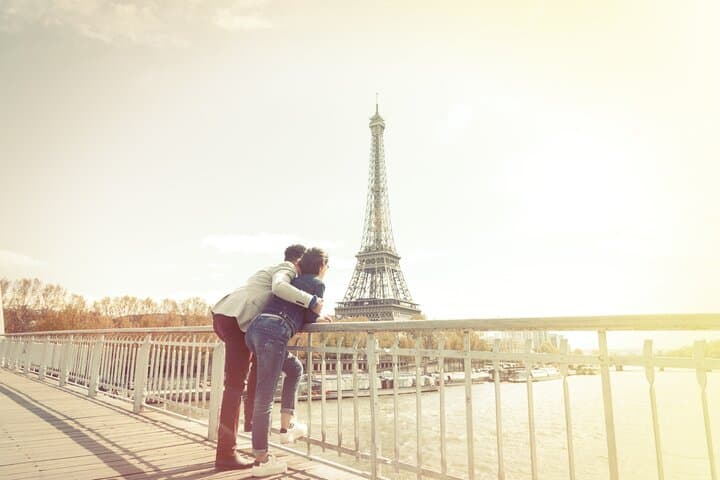
Culturally the tower functions as both meeting point and marker — soldiers, lovers, tourists and photographers all stake a relationship to its levels. Guides will point out Notre‑Dame, the Louvre, Arc de Triomphe and the grid of Haussmann avenues while sharing construction anecdotes and wartime stories.
Practically: this reserved entry minimizes queue time but you still meet at the Paris Lounge and pass security. Plan 90–120 minutes for guided access plus independent time; weather and security checks can add delays. Bring a light layer for the summit wind, a charged phone for photos, and allow clear time windows if you have timed transit. Accessibility is good to the second floor by elevator; summit access is controlled. Visit early morning or late afternoon for softer light and shorter waits.
Verified experiences and guided adventures in the surrounding area.
Operated by BOOKING HOTELS AND TOURS · Paris, Île-de-France
You step out of the Parisian pavement into a lattice of iron that tilts the skyline and hushes the city.
The elevator hums; the city unfolds — rooftops, the Seine slicing through stone, Chaillot and Trocadéro framed beneath you. On the first level a suspended glass floor offers an acute, vertiginous view of pedestrians below; on the second the avenues fan away like spokes, and if you opt for the summit, nearly 300 meters of perspective reorders Paris into a readable map.
Constructed for the 1889 Exposition Universelle and engineered by Gustave Eiffel, the tower was once derided before it became an international emblem. Its four masonry foundations grip the Champ de Mars and the river plain; the exposed ironwork reflects 19th‑century industrial confidence as well as ongoing conservation efforts.
Culturally the tower functions as both meeting point and marker — soldiers, lovers, tourists and photographers all stake a relationship to its levels. Guides will point out Notre‑Dame, the Louvre, Arc de Triomphe and the grid of Haussmann avenues while sharing construction anecdotes and wartime stories.
Practically: this reserved entry minimizes queue time but you still meet at the Paris Lounge and pass security. Plan 90–120 minutes for guided access plus independent time; weather and security checks can add delays. Bring a light layer for the summit wind, a charged phone for photos, and allow clear time windows if you have timed transit. Accessibility is good to the second floor by elevator; summit access is controlled. Visit early morning or late afternoon for softer light and shorter waits.
easy.
1.5–2 hours.
Suitable for all fitness levels; primarily standing and short stair/elevator transitions
Mobile tickets are accepted; present the voucher at the Paris Lounge to receive your entry ticket before proceeding to the tower.
No — summit access is an upgrade option; the guide will take you to security and the elevators, and you must have the summit option selected to go to the very top.
Elevators serve the first and second levels and are accessible; summit access is more limited — check in advance with the operator for specific assistance and boarding procedures.
Plan roughly 90–120 minutes for the guided portion and individual exploration, though busy periods and security checks can extend this to 2–3 hours.
Built for the 1889 Exposition Universelle, the tower was a controversial iron structure that became a symbol of modern engineering and Parisian identity.
The city and tower operators perform regular maintenance and repainting to protect the iron structure; visitors are encouraged to use public transit and follow site rules to reduce wear and crowding.
BOOKING HOTELS AND TOURS operates guided outdoor trips and adventures with an emphasis on safety, stewardship, and memorable experiences.
You step out of the Parisian pavement into a lattice of iron that tilts the skyline and hushes the city.
The elevator hums; the city unfolds — rooftops, the Seine slicing through stone, Chaillot and Trocadéro framed beneath you. On the first level a suspended glass floor offers an acute, vertiginous view of pedestrians below; on the second the avenues fan away like spokes, and if you opt for the summit, nearly 300 meters of perspective reorders Paris into a readable map.
Constructed for the 1889 Exposition Universelle and engineered by Gustave Eiffel, the tower was once derided before it became an international emblem. Its four masonry foundations grip the Champ de Mars and the river plain; the exposed ironwork reflects 19th‑century industrial confidence as well as ongoing conservation efforts.
Culturally the tower functions as both meeting point and marker — soldiers, lovers, tourists and photographers all stake a relationship to its levels. Guides will point out Notre‑Dame, the Louvre, Arc de Triomphe and the grid of Haussmann avenues while sharing construction anecdotes and wartime stories.
Practically: this reserved entry minimizes queue time but you still meet at the Paris Lounge and pass security. Plan 90–120 minutes for guided access plus independent time; weather and security checks can add delays. Bring a light layer for the summit wind, a charged phone for photos, and allow clear time windows if you have timed transit. Accessibility is good to the second floor by elevator; summit access is controlled. Visit early morning or late afternoon for softer light and shorter waits.
You step out of the Parisian pavement into a lattice of iron that tilts the skyline and hushes the city.
The elevator hums; the city unfolds — rooftops, the Seine slicing through stone, Chaillot and Trocadéro framed beneath you. On the first level a suspended glass floor offers an acute, vertiginous view of pedestrians below; on the second the avenues fan away like spokes, and if you opt for the summit, nearly 300 meters of perspective reorders Paris into a readable map.
Constructed for the 1889 Exposition Universelle and engineered by Gustave Eiffel, the tower was once derided before it became an international emblem. Its four masonry foundations grip the Champ de Mars and the river plain; the exposed ironwork reflects 19th‑century industrial confidence as well as ongoing conservation efforts.
Culturally the tower functions as both meeting point and marker — soldiers, lovers, tourists and photographers all stake a relationship to its levels. Guides will point out Notre‑Dame, the Louvre, Arc de Triomphe and the grid of Haussmann avenues while sharing construction anecdotes and wartime stories.
Practically: this reserved entry minimizes queue time but you still meet at the Paris Lounge and pass security. Plan 90–120 minutes for guided access plus independent time; weather and security checks can add delays. Bring a light layer for the summit wind, a charged phone for photos, and allow clear time windows if you have timed transit. Accessibility is good to the second floor by elevator; summit access is controlled. Visit early morning or late afternoon for softer light and shorter waits.