THE ADVENTURE COLLECTIVE® · Independent discovery and booking for outdoor travel

Spend a full day exploring two of France’s most iconic sites: ascend the Eiffel Tower for panoramic city views, then travel by train to Versailles to walk its gardens and royal apartments. This guided day trip pairs big-picture history with practical tips for navigating crowds and transit.
Spend a full day exploring two of France’s most iconic sites: ascend the Eiffel Tower for panoramic city views, then travel by train to Versailles to walk its gardens and royal apartments. This guided day trip pairs big-picture history with practical tips for navigating crowds and transit.
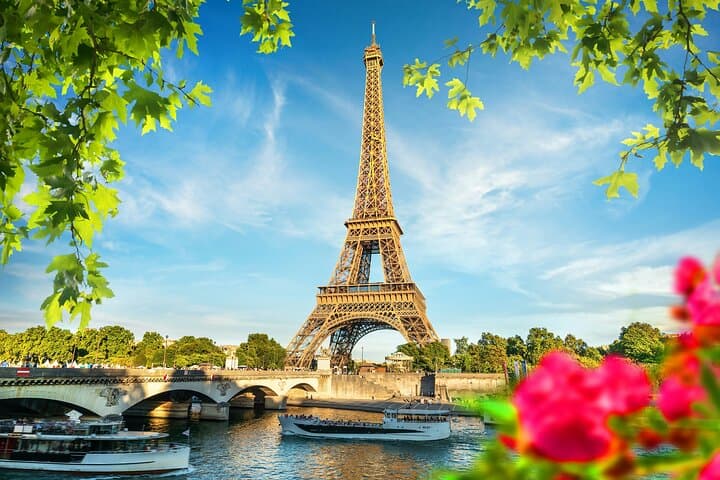
You meet under the lattice of the Eiffel Tower as the morning light skirts the Seine and the city stretches awake beneath its iron ribs.
Your guide opens with the tower’s unexpected engineering poetry — how a temporary 19th-century structure became Paris’s skyline challenge — then escorts you up to the second platform for a wide, patient view of rooftops, boulevards and river curves that dare you to trace the city with your eyes.
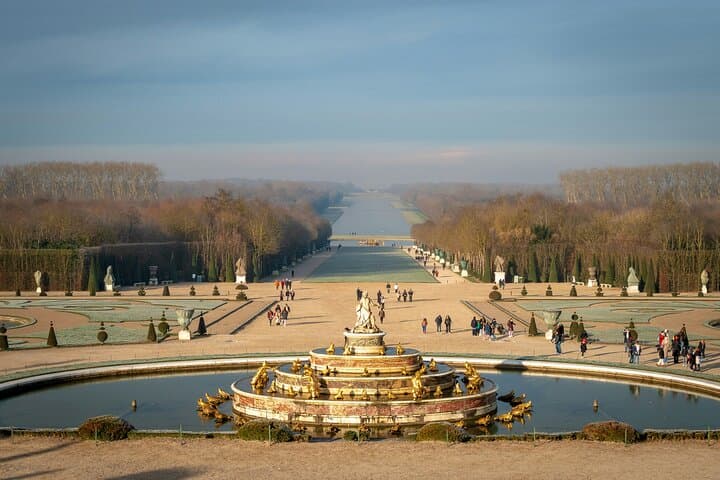
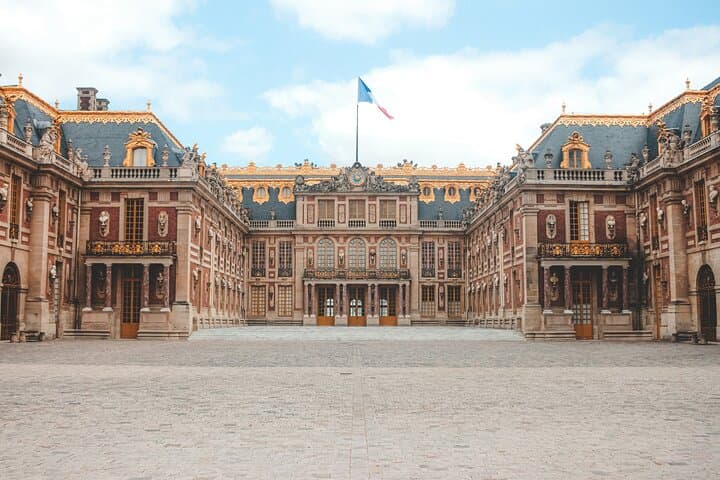
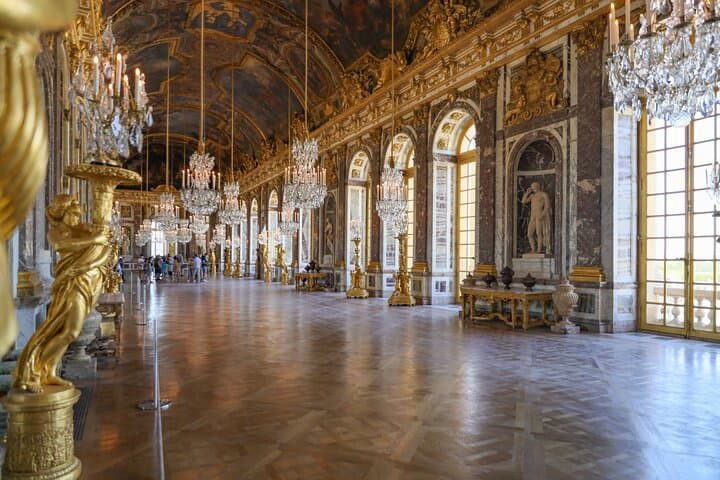
From Paris you travel by RER to Versailles, where avenues of clipped chestnut trees and Le Nôtre’s geometric gardens impose a disciplined calm. The Hall of Mirrors still carries the echo of court ceremony and treaty signatures; the Royal Apartments show how power was choreographed in gilt and silk. Between fountains and statues the Queen’s Hamlet offers a human-scaled counterpoint, small cottages where private life staged itself against imperial spectacle.
History here is tactile: Louis XIV’s centralizing ambition shaped gardens and government, while Eiffel’s tower declared modern engineering as civic art. Expect metal and marble, water engineered for display, and the strain of crowds at peak hours.
Practical guidance: meet 10–15 minutes early at Avenue Silvestre de Sacy, wear comfortable walking shoes and bring a light rain layer. Security checks and stairs are part of the day; round-trip train tickets to Versailles are included. Carry a refillable bottle, plan for 7–8 hours on your feet, and allow extra time if you want to linger in the gardens. Book ahead for quieter mornings and be prepared to follow site rules to protect the fragile lawns and fountains.
Verified experiences and guided adventures in the surrounding area.
Operated by Amigo Tours Spain · Paris, Île-de-France
You meet under the lattice of the Eiffel Tower as the morning light skirts the Seine and the city stretches awake beneath its iron ribs.
Your guide opens with the tower’s unexpected engineering poetry — how a temporary 19th-century structure became Paris’s skyline challenge — then escorts you up to the second platform for a wide, patient view of rooftops, boulevards and river curves that dare you to trace the city with your eyes.
From Paris you travel by RER to Versailles, where avenues of clipped chestnut trees and Le Nôtre’s geometric gardens impose a disciplined calm. The Hall of Mirrors still carries the echo of court ceremony and treaty signatures; the Royal Apartments show how power was choreographed in gilt and silk. Between fountains and statues the Queen’s Hamlet offers a human-scaled counterpoint, small cottages where private life staged itself against imperial spectacle.
History here is tactile: Louis XIV’s centralizing ambition shaped gardens and government, while Eiffel’s tower declared modern engineering as civic art. Expect metal and marble, water engineered for display, and the strain of crowds at peak hours.
Practical guidance: meet 10–15 minutes early at Avenue Silvestre de Sacy, wear comfortable walking shoes and bring a light rain layer. Security checks and stairs are part of the day; round-trip train tickets to Versailles are included. Carry a refillable bottle, plan for 7–8 hours on your feet, and allow extra time if you want to linger in the gardens. Book ahead for quieter mornings and be prepared to follow site rules to protect the fragile lawns and fountains.
moderate.
8 hours.
Moderate fitness; you should be comfortable walking several miles and climbing stairs.
Yes — access to the Eiffel Tower’s second floor is included; your guide will assist with entry and timing for the platform visit.
Round-trip train tickets (RER) between Paris and Versailles are included and arranged as part of the tour.
Versailles has some accessible routes, but older floors and certain apartments involve steps; check with the operator ahead for specifics and assistance options.
Small bags are permitted but subject to security checks; large suitcases are discouraged. Strollers are usually allowed but may be restricted in crowded rooms or on stairs.
Versailles was transformed under Louis XIV into a center of royal power and ceremony, while the Eiffel Tower — built for the 1889 Exposition Universelle — redefined modern engineering and Paris’s image.
High visitor numbers strain Versailles’ lawns and fountain hydraulics; follow posted rules, avoid littering, and use designated paths to protect historic plantings.
Amigo Tours Spain operates guided outdoor trips and adventures with an emphasis on safety, stewardship, and memorable experiences.
You meet under the lattice of the Eiffel Tower as the morning light skirts the Seine and the city stretches awake beneath its iron ribs.
Your guide opens with the tower’s unexpected engineering poetry — how a temporary 19th-century structure became Paris’s skyline challenge — then escorts you up to the second platform for a wide, patient view of rooftops, boulevards and river curves that dare you to trace the city with your eyes.
From Paris you travel by RER to Versailles, where avenues of clipped chestnut trees and Le Nôtre’s geometric gardens impose a disciplined calm. The Hall of Mirrors still carries the echo of court ceremony and treaty signatures; the Royal Apartments show how power was choreographed in gilt and silk. Between fountains and statues the Queen’s Hamlet offers a human-scaled counterpoint, small cottages where private life staged itself against imperial spectacle.
History here is tactile: Louis XIV’s centralizing ambition shaped gardens and government, while Eiffel’s tower declared modern engineering as civic art. Expect metal and marble, water engineered for display, and the strain of crowds at peak hours.
Practical guidance: meet 10–15 minutes early at Avenue Silvestre de Sacy, wear comfortable walking shoes and bring a light rain layer. Security checks and stairs are part of the day; round-trip train tickets to Versailles are included. Carry a refillable bottle, plan for 7–8 hours on your feet, and allow extra time if you want to linger in the gardens. Book ahead for quieter mornings and be prepared to follow site rules to protect the fragile lawns and fountains.
You meet under the lattice of the Eiffel Tower as the morning light skirts the Seine and the city stretches awake beneath its iron ribs.
Your guide opens with the tower’s unexpected engineering poetry — how a temporary 19th-century structure became Paris’s skyline challenge — then escorts you up to the second platform for a wide, patient view of rooftops, boulevards and river curves that dare you to trace the city with your eyes.
From Paris you travel by RER to Versailles, where avenues of clipped chestnut trees and Le Nôtre’s geometric gardens impose a disciplined calm. The Hall of Mirrors still carries the echo of court ceremony and treaty signatures; the Royal Apartments show how power was choreographed in gilt and silk. Between fountains and statues the Queen’s Hamlet offers a human-scaled counterpoint, small cottages where private life staged itself against imperial spectacle.
History here is tactile: Louis XIV’s centralizing ambition shaped gardens and government, while Eiffel’s tower declared modern engineering as civic art. Expect metal and marble, water engineered for display, and the strain of crowds at peak hours.
Practical guidance: meet 10–15 minutes early at Avenue Silvestre de Sacy, wear comfortable walking shoes and bring a light rain layer. Security checks and stairs are part of the day; round-trip train tickets to Versailles are included. Carry a refillable bottle, plan for 7–8 hours on your feet, and allow extra time if you want to linger in the gardens. Book ahead for quieter mornings and be prepared to follow site rules to protect the fragile lawns and fountains.