THE ADVENTURE COLLECTIVE® · Independent discovery and booking for outdoor travel

Ten days across Namibia from Windhoek to Etosha, combining the towering dunes of Sossusvlei, the fog-shrouded Skeleton Coast, desert elephant tracking in Damaraland, and game drives across Etosha. This lodge-based small-group safari blends geology, culture and wildlife with practical logistics handled by local guides.
Ten days across Namibia from Windhoek to Etosha, combining the towering dunes of Sossusvlei, the fog-shrouded Skeleton Coast, desert elephant tracking in Damaraland, and game drives across Etosha. This lodge-based small-group safari blends geology, culture and wildlife with practical logistics handled by local guides.
The bus kicks up a fine red dust as it leaves Windhoek behind, the city shrinking into a grid of tin roofs and jacaranda shade. By midmorning the landscape has changed to a hard, bleached plain; later still the road climbs and the compact mountains of the Naukluft push out of the horizon like an idea taking form. Over ten days, the itinerary moves with purpose — dunes that shift color by the hour, a wind-scoured coast where wrecks slump on the sand, and the cracked white bowl of Etosha where life concentrates around waterholes.
Verified experiences and guided adventures in the surrounding area.
Operated by Lark Journeys Namibia · Windhoek, Khomas
The bus kicks up a fine red dust as it leaves Windhoek behind, the city shrinking into a grid of tin roofs and jacaranda shade. By midmorning the landscape has changed to a hard, bleached plain; later still the road climbs and the compact mountains of the Naukluft push out of the horizon like an idea taking form. Over ten days, the itinerary moves with purpose — dunes that shift color by the hour, a wind-scoured coast where wrecks slump on the sand, and the cracked white bowl of Etosha where life concentrates around waterholes.
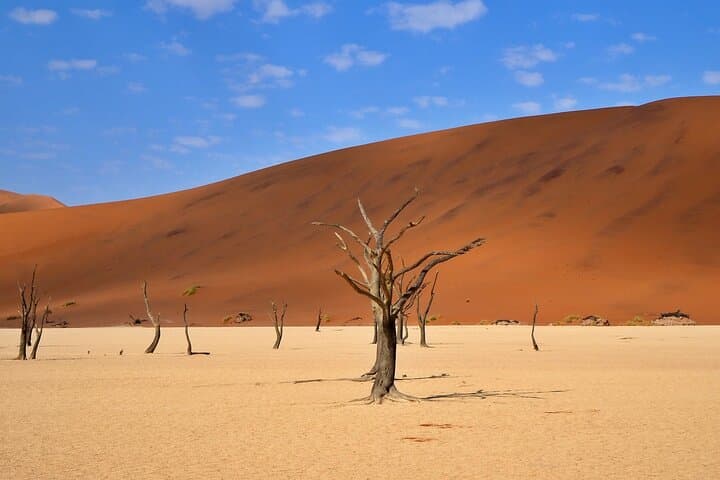
Namibia’s geology reads like a slow-motion film of earth processes. The Namib Desert is ancient; its dunes are among the oldest on the planet and composed of sand transported by wind over millions of years from the interior. Sesriem Canyon is a narrow cut through soft sandstone where seasonal water still remembers the rivers of another climate. In Damaraland, inselbergs and gravel plains shelter desert-adapted elephant and springbok, and the rock faces at Twyfelfontein hold engravings made thousands of years ago — human maps that predate written memory.
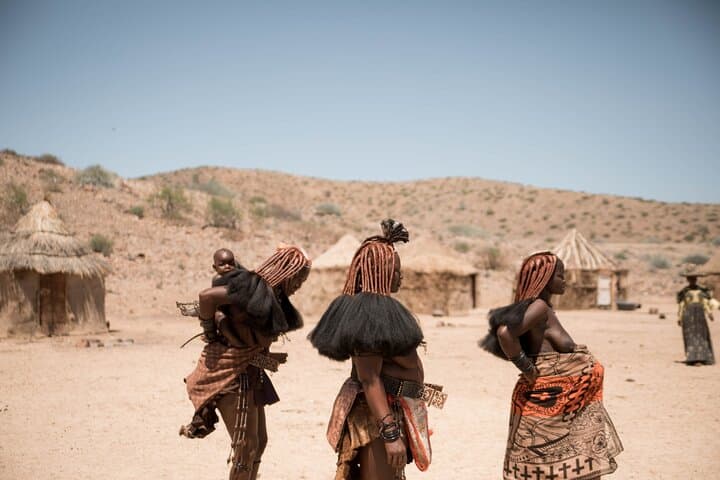
Cultural encounters are threaded into the route. The guide introduces travelers to Himba and Damara artisans selling beaded jewelry and ostrich eggshell trinkets, explaining how communities balance tradition and tourism. In Swakopmund, German colonial architecture meets Atlantic mists; in the coastal lagoons, migratory flamingos stage a noisier, rosier counterpoint to the silence of the dunes.
Practically: the trip is lodge-based with most nights in established accommodations from Dead Valley Lodge to Okaukuejo, and travel is by air-conditioned vehicle. Days start early — pre-dawn departures for Sossusvlei and sunrise drives in Etosha maximize sighting opportunities and the soft light for photography. Distances are long; expect several full driving days punctuated by short walks, canyon scrambles, and guided site visits. Guides handle logistics like park fees, and water is provided in vehicles, but guests should carry a daypack with sun protection, water, and layers.
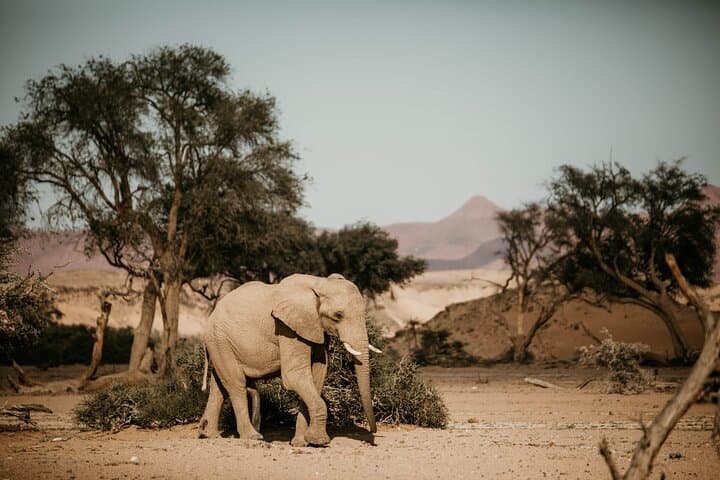
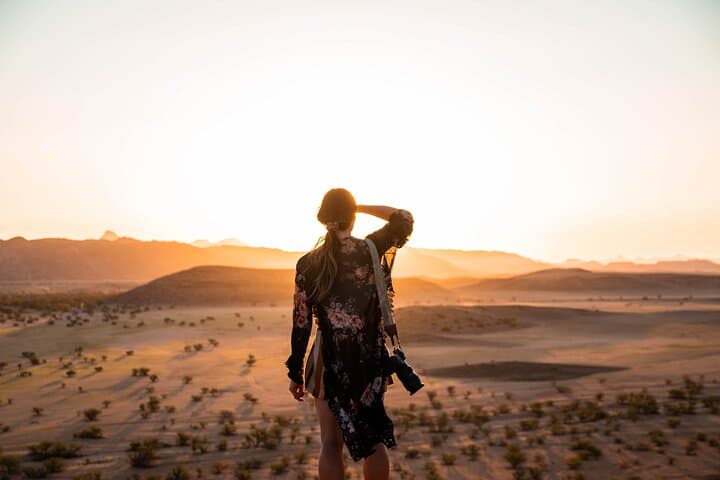
Wildlife sightings range from elephant and giraffe to lion tracks and the unexpected — the desert does not give up its secrets easily. Patience and a quiet vehicle matter more than sprinting after fleeting moments. For photographers, sunrise and late afternoon deliver sculpted light on dunes and wildlife at waterholes.
Booking advice: confirm airport transfer details and passport/visa requirements well before departure. The season you travel will determine temperatures and animal movements — winter brings cooler days and better game viewing at waterholes; summer can mean dramatic thunderstorms on the horizon. Overall, this itinerary is designed to move travelers efficiently between Namibia’s headline landscapes while leaving room for the small discoveries that become the trip's most lasting memories.
moderate.
10 days.
Moderate fitness recommended: able to handle several hours of walking over sand and uneven ground and long drives between destinations.
Visa rules depend on your nationality—check Namibia’s government immigration site and ensure passport validity of at least six months from travel dates.
Yes, national park entry fees and many services are included in the tour; confirm specifics with the operator at booking.
Hikes are generally short and moderate (e.g., 1km to Deadvlei); long-distance travel days require stamina but no technical climbing skills.
Bring insulating layers and a warm hat for mornings and nights, especially in winter when temperatures can drop significantly.
Guides can usually accommodate dietary needs if informed at booking; specify allergies and preferences when you complete reservation forms.
No — sightings depend on animal movements; guides maximize chances by visiting known riverbeds but wildlife remains unpredictable.
Twyfelfontein’s rock engravings record thousands of years of hunter-gatherer presence; later colonial routes shaped many current settlements like Swakopmund and Rehoboth.
Community conservancies in Damaraland support coexistence between people and wildlife, and responsible tourism contributes via park fees and local partnerships.
Lark Journeys Namibia operates guided outdoor trips and adventures with an emphasis on safety, stewardship, and memorable experiences.
The bus kicks up a fine red dust as it leaves Windhoek behind, the city shrinking into a grid of tin roofs and jacaranda shade. By midmorning the landscape has changed to a hard, bleached plain; later still the road climbs and the compact mountains of the Naukluft push out of the horizon like an idea taking form. Over ten days, the itinerary moves with purpose — dunes that shift color by the hour, a wind-scoured coast where wrecks slump on the sand, and the cracked white bowl of Etosha where life concentrates around waterholes.
The bus kicks up a fine red dust as it leaves Windhoek behind, the city shrinking into a grid of tin roofs and jacaranda shade. By midmorning the landscape has changed to a hard, bleached plain; later still the road climbs and the compact mountains of the Naukluft push out of the horizon like an idea taking form. Over ten days, the itinerary moves with purpose — dunes that shift color by the hour, a wind-scoured coast where wrecks slump on the sand, and the cracked white bowl of Etosha where life concentrates around waterholes.
Namibia’s geology reads like a slow-motion film of earth processes. The Namib Desert is ancient; its dunes are among the oldest on the planet and composed of sand transported by wind over millions of years from the interior. Sesriem Canyon is a narrow cut through soft sandstone where seasonal water still remembers the rivers of another climate. In Damaraland, inselbergs and gravel plains shelter desert-adapted elephant and springbok, and the rock faces at Twyfelfontein hold engravings made thousands of years ago — human maps that predate written memory.
Cultural encounters are threaded into the route. The guide introduces travelers to Himba and Damara artisans selling beaded jewelry and ostrich eggshell trinkets, explaining how communities balance tradition and tourism. In Swakopmund, German colonial architecture meets Atlantic mists; in the coastal lagoons, migratory flamingos stage a noisier, rosier counterpoint to the silence of the dunes.
Practically: the trip is lodge-based with most nights in established accommodations from Dead Valley Lodge to Okaukuejo, and travel is by air-conditioned vehicle. Days start early — pre-dawn departures for Sossusvlei and sunrise drives in Etosha maximize sighting opportunities and the soft light for photography. Distances are long; expect several full driving days punctuated by short walks, canyon scrambles, and guided site visits. Guides handle logistics like park fees, and water is provided in vehicles, but guests should carry a daypack with sun protection, water, and layers.
Wildlife sightings range from elephant and giraffe to lion tracks and the unexpected — the desert does not give up its secrets easily. Patience and a quiet vehicle matter more than sprinting after fleeting moments. For photographers, sunrise and late afternoon deliver sculpted light on dunes and wildlife at waterholes.
Booking advice: confirm airport transfer details and passport/visa requirements well before departure. The season you travel will determine temperatures and animal movements — winter brings cooler days and better game viewing at waterholes; summer can mean dramatic thunderstorms on the horizon. Overall, this itinerary is designed to move travelers efficiently between Namibia’s headline landscapes while leaving room for the small discoveries that become the trip's most lasting memories.