THE ADVENTURE COLLECTIVE® · Independent discovery and booking for outdoor travel

Trade the Adriatic for a canopy of waterfalls on a full-day trip from Split to Plitvice Lakes National Park. This guide covers what to expect, how to prepare, and where to find the best viewpoints during an efficient day in Croatia's most famous wilderness.
Trade the Adriatic for a canopy of waterfalls on a full-day trip from Split to Plitvice Lakes National Park. This guide covers what to expect, how to prepare, and where to find the best viewpoints during an efficient day in Croatia's most famous wilderness.
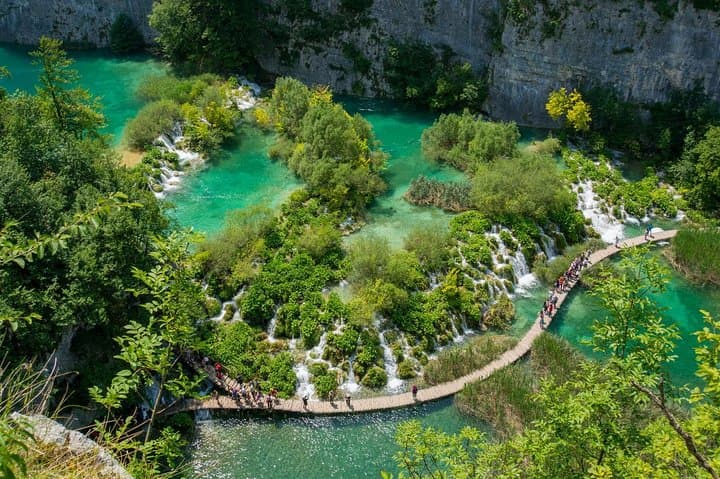
You step off the coastal bus and the first sound is water — not distant waves but the constant, patient fall of streams that have carved terraces of turquoise and green for millennia. On a day trip from Split visitors trade Dalmatian limestone and Adriatic light for the damp, shaded groves of Plitvice Lakes National Park, where wooden boardwalks thread directly over glassy pools and waterfalls tumble from ledge to ledge like pages in slow motion.
Verified experiences and guided adventures in the surrounding area.
Operated by Šugaman Tours · Plitvička Jezera, Lika-Senj County
You step off the coastal bus and the first sound is water — not distant waves but the constant, patient fall of streams that have carved terraces of turquoise and green for millennia. On a day trip from Split visitors trade Dalmatian limestone and Adriatic light for the damp, shaded groves of Plitvice Lakes National Park, where wooden boardwalks thread directly over glassy pools and waterfalls tumble from ledge to ledge like pages in slow motion.
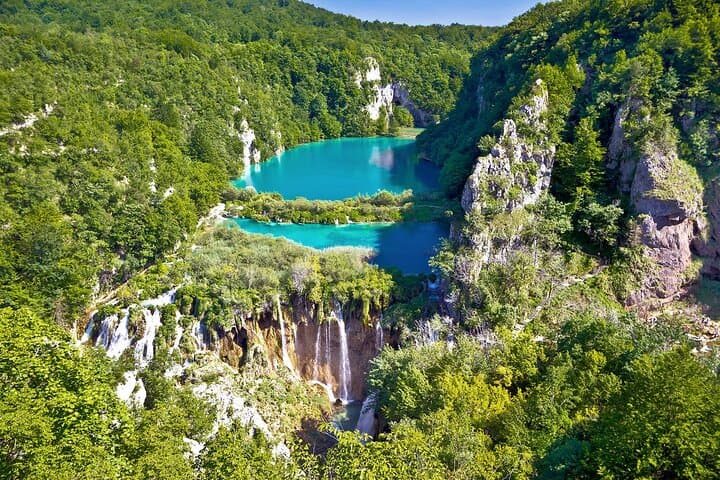
Plitvice is Croatia’s oldest national park, protected since 1949 and declared a UNESCO World Heritage Site in 1979. Geology here is tactile: a karst landscape of travertine dams and tufa formations built by mineral-rich water and moss over thousands of years. The result is a stepped series of 16 lakes—upper and lower—separated by curtains of travertine that still accrete today if left undisturbed.
The human history around Plitvice is quieter but no less present. Small Lika villages dot the hills, and the park has long been a seasonal route for shepherds and a refuge during past conflicts. Tourism is now the local economy; fees, guides, and regulated access balance preservation with the practical need to support surrounding towns.
On an economy day tour from Split you’ll be driven across the coastal plain into the continental interior, arriving at one of the park entrances with roughly three hours to explore on foot and by boat. The itinerary is compact but well-paced: boardwalk sections at the lower lakes offer intimate waterfall views; a short boat hop crosses Kozjak, the largest lake; and short hikes to viewpoints reward you with panoramic frames of the terraced basins.
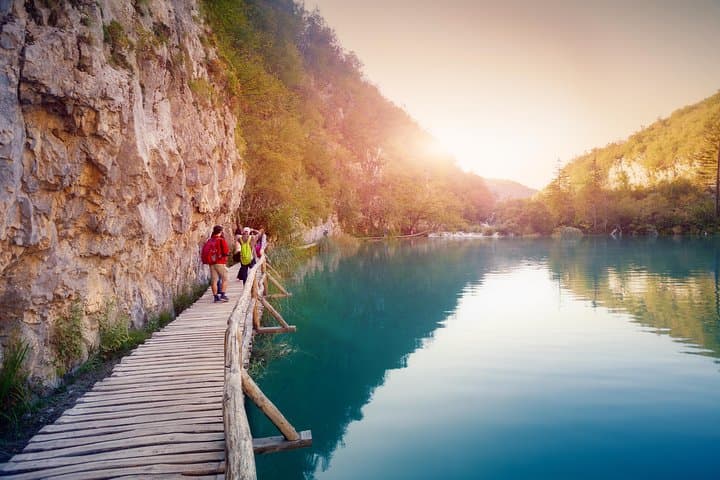
Practicalities matter here. Entrance tickets must be paid in cash at the park (prices vary seasonally and can spike in summer); wear sturdy shoes—boardwalks are wet and slippery—and carry water and a light rain layer. Photography is compelling at every turn, but the best shots often come early or late in the day when light slants across the falls and crowds thin.
If you’re planning the trip, expect a full 11-hour day from Split, moderate walking and many stairs, and limited time for lingering. Treat the landscape with care: stay on paths, avoid touching fragile travertine, and pack out wrappers. With respect and a bit of preparation, a Plitvice day trip is one of those rare excursions that pairs cinematic scenery with a straightforward, invigorating hike—accessible enough for most travelers and unforgettable for anyone who loves water, geology, and crisp forest air.
moderate.
11 hours (full-day).
Moderate fitness—expect several hours of walking, uneven boardwalks and stairs.
For this economy day tour do not buy park tickets online; entry is paid in cash at the park gates and prices vary by season.
Expect about an 11-hour day including round-trip transport and approximately three hours inside the park for guided or self-guided exploration.
Many boardwalk sections are uneven and there are stairs; the park is not recommended for participants with walking disabilities.
Meals are not included; bring snacks or buy food at park kiosks when time allows.
June through September are peak season with higher entrance fees and larger crowds—plan accordingly.
Yes—children are welcome. Children under 7 enter the park free, but parents should supervise near water and steep drops.
Plitvice was established as a national park in 1949 and listed as a UNESCO World Heritage Site in 1979 due to its outstanding travertine lake system.
Park management limits access and invests entrance fees into trail maintenance and protection of fragile travertine formations; stay on marked paths to prevent damage.
Šugaman Tours operates guided outdoor trips and adventures with an emphasis on safety, stewardship, and memorable experiences.
You step off the coastal bus and the first sound is water — not distant waves but the constant, patient fall of streams that have carved terraces of turquoise and green for millennia. On a day trip from Split visitors trade Dalmatian limestone and Adriatic light for the damp, shaded groves of Plitvice Lakes National Park, where wooden boardwalks thread directly over glassy pools and waterfalls tumble from ledge to ledge like pages in slow motion.
You step off the coastal bus and the first sound is water — not distant waves but the constant, patient fall of streams that have carved terraces of turquoise and green for millennia. On a day trip from Split visitors trade Dalmatian limestone and Adriatic light for the damp, shaded groves of Plitvice Lakes National Park, where wooden boardwalks thread directly over glassy pools and waterfalls tumble from ledge to ledge like pages in slow motion.
Plitvice is Croatia’s oldest national park, protected since 1949 and declared a UNESCO World Heritage Site in 1979. Geology here is tactile: a karst landscape of travertine dams and tufa formations built by mineral-rich water and moss over thousands of years. The result is a stepped series of 16 lakes—upper and lower—separated by curtains of travertine that still accrete today if left undisturbed.
The human history around Plitvice is quieter but no less present. Small Lika villages dot the hills, and the park has long been a seasonal route for shepherds and a refuge during past conflicts. Tourism is now the local economy; fees, guides, and regulated access balance preservation with the practical need to support surrounding towns.
On an economy day tour from Split you’ll be driven across the coastal plain into the continental interior, arriving at one of the park entrances with roughly three hours to explore on foot and by boat. The itinerary is compact but well-paced: boardwalk sections at the lower lakes offer intimate waterfall views; a short boat hop crosses Kozjak, the largest lake; and short hikes to viewpoints reward you with panoramic frames of the terraced basins.
Practicalities matter here. Entrance tickets must be paid in cash at the park (prices vary seasonally and can spike in summer); wear sturdy shoes—boardwalks are wet and slippery—and carry water and a light rain layer. Photography is compelling at every turn, but the best shots often come early or late in the day when light slants across the falls and crowds thin.
If you’re planning the trip, expect a full 11-hour day from Split, moderate walking and many stairs, and limited time for lingering. Treat the landscape with care: stay on paths, avoid touching fragile travertine, and pack out wrappers. With respect and a bit of preparation, a Plitvice day trip is one of those rare excursions that pairs cinematic scenery with a straightforward, invigorating hike—accessible enough for most travelers and unforgettable for anyone who loves water, geology, and crisp forest air.