THE ADVENTURE COLLECTIVE® · Independent discovery and booking for outdoor travel

Escape Hanoi for a long day in Mai Chau: a green valley ringed by low karst, stilt houses, and active weaving workshops. This fast-paced day trip pairs scenic viewpoints with village visits and a traditional lunch.
Escape Hanoi for a long day in Mai Chau: a green valley ringed by low karst, stilt houses, and active weaving workshops. This fast-paced day trip pairs scenic viewpoints with village visits and a traditional lunch.
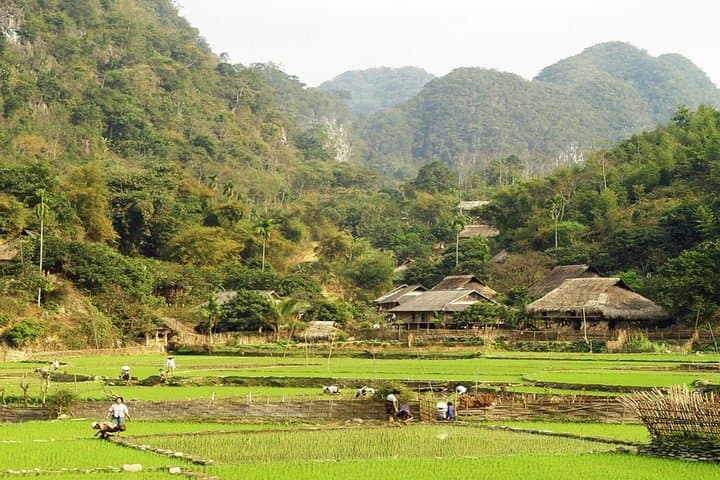
The van eases out of Hanoi's Old Quarter before breakfast light lifts the city's haze. Highway and secondary road unwind through low karst ridges and roadside paddies; by mid-morning you are watching the foothills open and a wide green basin appear below — Mai Chau's valley stretching like a cultivated bowl. The air here is cooler, the scent of wet earth and cooking fires more immediate; farmers bend at the edges of the paddies while children chase water buffalo across shallow ditches.
Verified experiences and guided adventures in the surrounding area.
Operated by Vietnam Tours VIP · Mai Chau, Hòa Bình Province
The van eases out of Hanoi's Old Quarter before breakfast light lifts the city's haze. Highway and secondary road unwind through low karst ridges and roadside paddies; by mid-morning you are watching the foothills open and a wide green basin appear below — Mai Chau's valley stretching like a cultivated bowl. The air here is cooler, the scent of wet earth and cooking fires more immediate; farmers bend at the edges of the paddies while children chase water buffalo across shallow ditches.
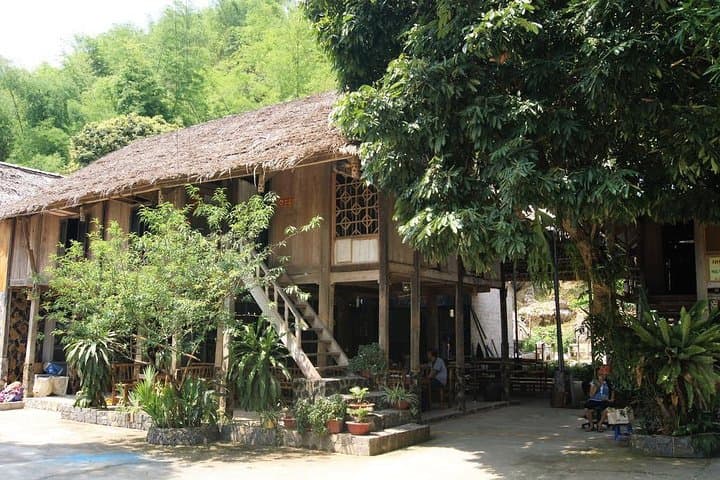
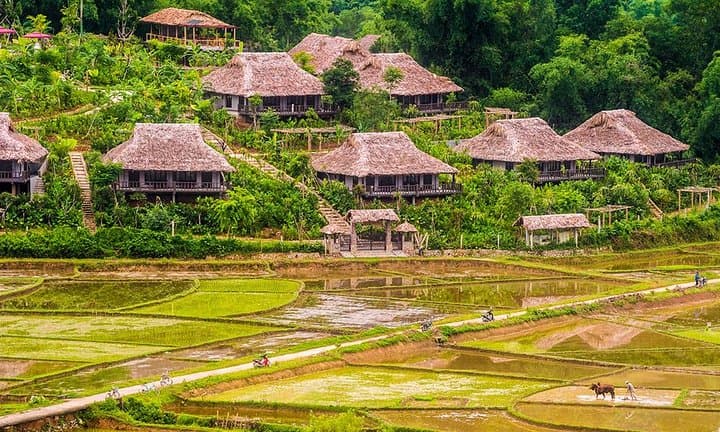
Mai Chau sits in Hòa Bình Province, a low valley carved between limestone ridgelines and layered alluvial plains. For centuries the valley has been home to Thai ethnic communities who built elevated wooden stilt houses to cope with seasonal water and humidity. Weaving and brocade remain both practical craft and cultural currency: patterns mark identity, seasons and even marriageability. The region's geography — a gentle, sheltered plain ringed by karst outcrops — made it a natural agricultural pocket and a corridor for upland-lowland trade.
On a tightly scheduled day trip you get the essentials: a morning departure from Hanoi, a comfort stop at Luong Suong in Hoa Binh, a scenic photo pause when the valley drops into view, and a village lunch of home-style dishes. After lunch a local guide walks you through village lanes, pointing out stilt-house architecture, communal kitchens, and active looms where women and men weave scarves and traditional garments. The encounter is intimate but brief: the tour is designed to show rather than slow-cook, so you leave with impressions more than immersion.
Practical planning tips: the round-trip takes roughly 11 hours including stops, with about 3.5–4 hours of driving each way. Wear comfortable walking shoes for uneven village paths, bring cash for small purchases and tips (ATMs are scarce), and pack a lightweight rain layer during the May–October rainy season. If you're short on time but want a meaningful snapshot of Vietnam's highland valley life, this itinerary delivers — balanced between photography stops and cultural exchange.
Respect matters: these are working villages, not staged sets. Ask before photographing people, accept hospitality on their terms, and buy from cooperative stalls to ensure your spending benefits locals. For travelers planning onward travel, Mai Chau is compact enough for a single-day visit but rewarding enough to justify an overnight if you want to linger in a homestay and hear the valley settle after sunset.
easy.
11 hours.
Light walking ability; suitable for most fitness levels and families
Pickup and drop-off are included for hotels inside Hanoi's Old Quarter; suburban pickups are available for an additional surcharge.
Expect about 3–4 hours each way with a short comfort stop en route and a scenic pause when the valley appears.
Yes — a traditional local lunch is included and vegetarian options are available if requested in advance.
Yes — the tour is rated easy with light walking; infant seats can be provided and the schedule is low-impact.
Yes — artisans sell woven scarves and handicrafts; carry cash and consider buying from cooperative stalls to support the community.
The tour runs in light rain; heavy storms may affect driving conditions and the operator's cancellation policy applies for refunds if you cancel at least 24 hours ahead.
Mai Chau has long been home to Thai ethnic groups who built stilt houses and developed distinctive brocade weaving; its valley role as a pocket of rice agriculture shaped regional trade links.
Tour spending supports local income, but visitors should avoid single-use plastics, stay on paths to prevent terrace erosion, and buy directly from artisans to ensure fair distribution.
Vietnam Tours VIP operates guided outdoor trips and adventures with an emphasis on safety, stewardship, and memorable experiences.
The van eases out of Hanoi's Old Quarter before breakfast light lifts the city's haze. Highway and secondary road unwind through low karst ridges and roadside paddies; by mid-morning you are watching the foothills open and a wide green basin appear below — Mai Chau's valley stretching like a cultivated bowl. The air here is cooler, the scent of wet earth and cooking fires more immediate; farmers bend at the edges of the paddies while children chase water buffalo across shallow ditches.
The van eases out of Hanoi's Old Quarter before breakfast light lifts the city's haze. Highway and secondary road unwind through low karst ridges and roadside paddies; by mid-morning you are watching the foothills open and a wide green basin appear below — Mai Chau's valley stretching like a cultivated bowl. The air here is cooler, the scent of wet earth and cooking fires more immediate; farmers bend at the edges of the paddies while children chase water buffalo across shallow ditches.
Mai Chau sits in Hòa Bình Province, a low valley carved between limestone ridgelines and layered alluvial plains. For centuries the valley has been home to Thai ethnic communities who built elevated wooden stilt houses to cope with seasonal water and humidity. Weaving and brocade remain both practical craft and cultural currency: patterns mark identity, seasons and even marriageability. The region's geography — a gentle, sheltered plain ringed by karst outcrops — made it a natural agricultural pocket and a corridor for upland-lowland trade.
On a tightly scheduled day trip you get the essentials: a morning departure from Hanoi, a comfort stop at Luong Suong in Hoa Binh, a scenic photo pause when the valley drops into view, and a village lunch of home-style dishes. After lunch a local guide walks you through village lanes, pointing out stilt-house architecture, communal kitchens, and active looms where women and men weave scarves and traditional garments. The encounter is intimate but brief: the tour is designed to show rather than slow-cook, so you leave with impressions more than immersion.
Practical planning tips: the round-trip takes roughly 11 hours including stops, with about 3.5–4 hours of driving each way. Wear comfortable walking shoes for uneven village paths, bring cash for small purchases and tips (ATMs are scarce), and pack a lightweight rain layer during the May–October rainy season. If you're short on time but want a meaningful snapshot of Vietnam's highland valley life, this itinerary delivers — balanced between photography stops and cultural exchange.
Respect matters: these are working villages, not staged sets. Ask before photographing people, accept hospitality on their terms, and buy from cooperative stalls to ensure your spending benefits locals. For travelers planning onward travel, Mai Chau is compact enough for a single-day visit but rewarding enough to justify an overnight if you want to linger in a homestay and hear the valley settle after sunset.