THE ADVENTURE COLLECTIVE® · Independent discovery and booking for outdoor travel

A long day that compresses the high Alps into a single, unforgettable afternoon—travel from Geneva to Interlaken, ride the funicular to Harder Kulm and stand above the twin lakes with the Eiger, Mönch and Jungfrau on the horizon.
A long day that compresses the high Alps into a single, unforgettable afternoon—travel from Geneva to Interlaken, ride the funicular to Harder Kulm and stand above the twin lakes with the Eiger, Mönch and Jungfrau on the horizon.
You leave Geneva before dawn and the city’s lakefront slides away in a ribbon of fields and villages. The coach climbs out of the Swiss Plateau and the air visibly thins; by mid-morning the jagged teeth of the Bernese Alps pierce the horizon and Interlaken appears between two glassy lakes like a town called to the mountains.
Verified experiences and guided adventures in the surrounding area.
Operated by Keytours (Switzerland) · Interlaken, Bern
You leave Geneva before dawn and the city’s lakefront slides away in a ribbon of fields and villages. The coach climbs out of the Swiss Plateau and the air visibly thins; by mid-morning the jagged teeth of the Bernese Alps pierce the horizon and Interlaken appears between two glassy lakes like a town called to the mountains.
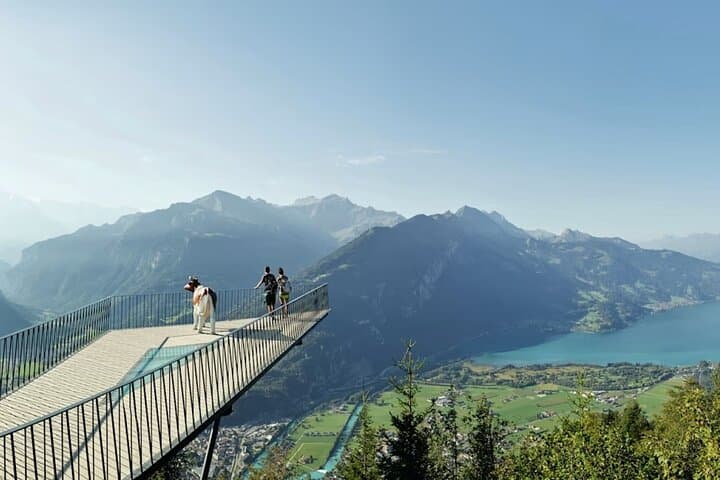
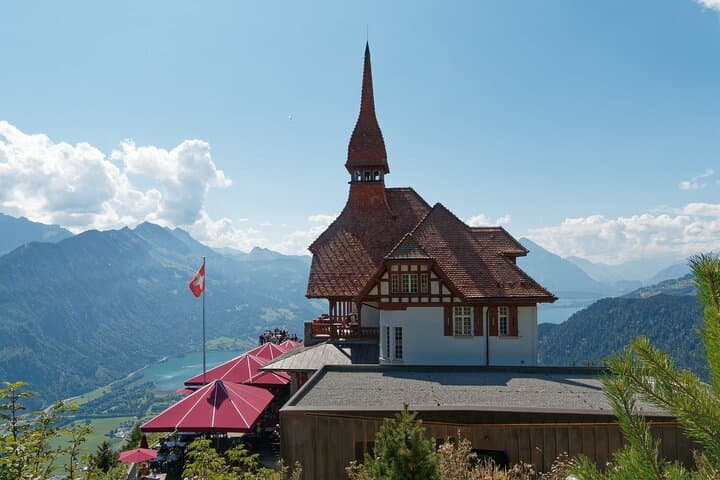
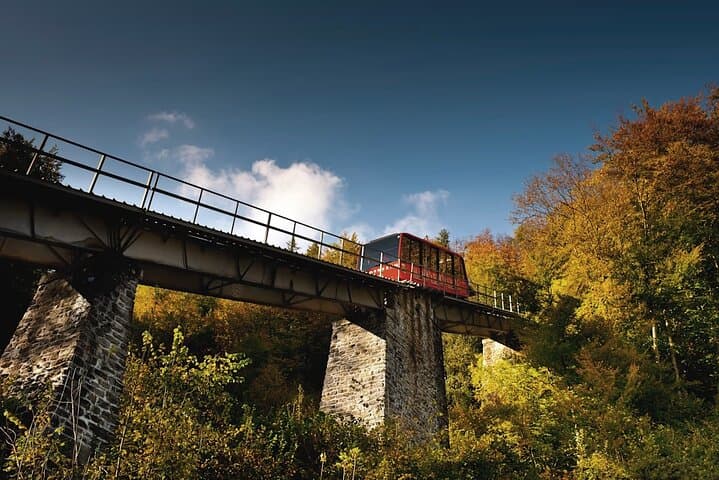
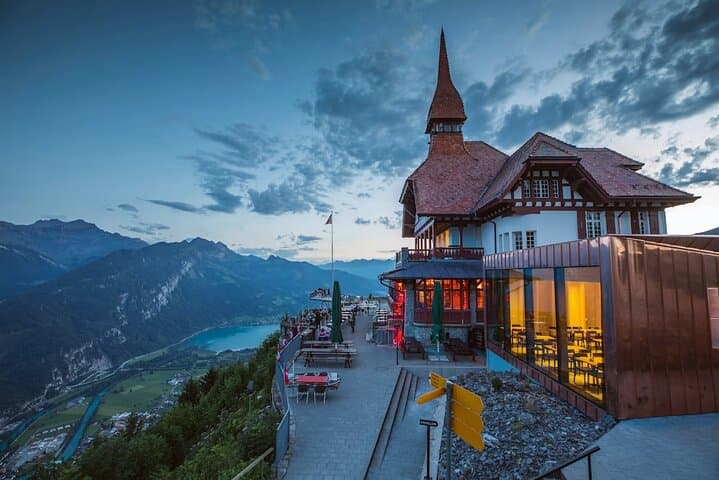
The real ascent begins at Interlaken Ost. The funicular to Harder Kulm, built in the early 20th century, jerks you uphill for about 10 minutes and deposits you at 1,322 meters on a viewing platform that forces a new vocabulary for scale. The platform extends over a steep drop—glass sections give a surprising perspective on the town below—while the Eiger, Mönch and Jungfrau stand in a ragged line across the skyline. To the west, Lake Thun catches light like polished metal; to the east, Brienz spills deep turquoise.
Geology here is obvious. The Bernese Alps were carved by ice; the sharp ridgelines and bowl-shaped valleys are the scars of glaciers that once scoured the rock into the peaks you see. Interlaken’s name literally means “between lakes,” and its position made it a 19th-century playground for early alpine tourism after rail and mountain railways reduced travel time from cities across Europe.
Culture in Interlaken is an efficient friendliness: cafés on the Höheweg, watch shops, and an unmistakable paragliding scene. Pilots launch from the Harder slopes and drift down over Höhematte, often landing within sight of the promenade. Local guides will tell you the best chocolate shop for a quick recharge and point toward quieter corners like Unterseen’s old quarter.
Practically, expect a long day. The round trip from Geneva is roughly 13 hours door-to-door on a guided coach, with three to four hours of free time in Interlaken and time at the Harder Kulm summit. Weather changes fast at altitude—bring windproof layers and a waterproof shell. If you want to hike from the funicular station, trails range from an easy 30–45 minute viewpoint loop to routes that continue along the Hardergrat for serious hikers. The restaurant at the top accepts walk-ins but fills on sunny days; plan a midweek or early-late-season visit for fewer crowds.
This trip is perfect as an introduction to the high Alps in a single day: impressive vistas, approachable infrastructure, and enough local flavor to make the return to Geneva feel like the end of a proper expedition rather than a long commute.
easy.
13 hours.
Suitable for most fitness levels; some walking on uneven surfaces and optional short hikes require basic fitness
The funicular from Interlaken Ost to Harder Kulm takes about 8–10 minutes each way.
Yes—this is a low-impact day trip with comfortable transport and short, optional walks; mobility issues may limit access to some viewpoints.
Meals are not included; there is a panorama restaurant at the summit where you can buy food and drinks.
Tours typically continue unless conditions are dangerous; visibility can be limited—check cancellation terms and bring waterproof clothing.
Yes—there are marked trails from Interlaken that reach viewpoints, but they vary in difficulty and add several hours to your day.
Cards are widely accepted in Interlaken and at Harder Kulm, but carry some Swiss francs for small vendors or markets.
Interlaken developed as a tourist hub in the 19th century after railways opened alpine routes; Harder Kulm’s funicular dates to the early 1900s, part of Switzerland’s long mountain-railway tradition.
The Bernese Alps are sensitive to climate change and increasing visitor pressure—stick to marked trails, pack out trash, and favor public transport when possible.
Keytours (Switzerland) operates guided outdoor trips and adventures with an emphasis on safety, stewardship, and memorable experiences.
You leave Geneva before dawn and the city’s lakefront slides away in a ribbon of fields and villages. The coach climbs out of the Swiss Plateau and the air visibly thins; by mid-morning the jagged teeth of the Bernese Alps pierce the horizon and Interlaken appears between two glassy lakes like a town called to the mountains.
You leave Geneva before dawn and the city’s lakefront slides away in a ribbon of fields and villages. The coach climbs out of the Swiss Plateau and the air visibly thins; by mid-morning the jagged teeth of the Bernese Alps pierce the horizon and Interlaken appears between two glassy lakes like a town called to the mountains.
The real ascent begins at Interlaken Ost. The funicular to Harder Kulm, built in the early 20th century, jerks you uphill for about 10 minutes and deposits you at 1,322 meters on a viewing platform that forces a new vocabulary for scale. The platform extends over a steep drop—glass sections give a surprising perspective on the town below—while the Eiger, Mönch and Jungfrau stand in a ragged line across the skyline. To the west, Lake Thun catches light like polished metal; to the east, Brienz spills deep turquoise.
Geology here is obvious. The Bernese Alps were carved by ice; the sharp ridgelines and bowl-shaped valleys are the scars of glaciers that once scoured the rock into the peaks you see. Interlaken’s name literally means “between lakes,” and its position made it a 19th-century playground for early alpine tourism after rail and mountain railways reduced travel time from cities across Europe.
Culture in Interlaken is an efficient friendliness: cafés on the Höheweg, watch shops, and an unmistakable paragliding scene. Pilots launch from the Harder slopes and drift down over Höhematte, often landing within sight of the promenade. Local guides will tell you the best chocolate shop for a quick recharge and point toward quieter corners like Unterseen’s old quarter.
Practically, expect a long day. The round trip from Geneva is roughly 13 hours door-to-door on a guided coach, with three to four hours of free time in Interlaken and time at the Harder Kulm summit. Weather changes fast at altitude—bring windproof layers and a waterproof shell. If you want to hike from the funicular station, trails range from an easy 30–45 minute viewpoint loop to routes that continue along the Hardergrat for serious hikers. The restaurant at the top accepts walk-ins but fills on sunny days; plan a midweek or early-late-season visit for fewer crowds.
This trip is perfect as an introduction to the high Alps in a single day: impressive vistas, approachable infrastructure, and enough local flavor to make the return to Geneva feel like the end of a proper expedition rather than a long commute.