THE ADVENTURE COLLECTIVE® · Independent discovery and booking for outdoor travel

A single-day escape from Nice takes you from Mediterranean light into the dramatic cliffs and turquoise waters of the Gorges du Verdon. Visit Castellane, Moustiers-Sainte-Marie, and Lac de Sainte-Croix with stops for views, pottery, and—if summer—swimming.
A single-day escape from Nice takes you from Mediterranean light into the dramatic cliffs and turquoise waters of the Gorges du Verdon. Visit Castellane, Moustiers-Sainte-Marie, and Lac de Sainte-Croix with stops for views, pottery, and—if summer—swimming.
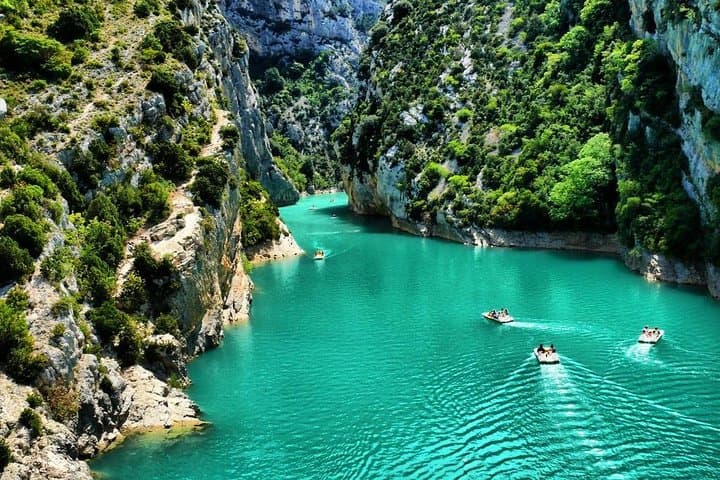
You step onto the coach in Nice with the Mediterranean already at your back and a ribbon of highway unfurling inland. The bus climbs out of the coastal light into limestone country where cliffs begin to sharpen and the air takes on a dry, resinous scent. By midmorning the Verdon reveals itself: a deep cut in Provençal rock, a river that kept pushing until it carved one of Europe’s most dramatic canyons.
Verified experiences and guided adventures in the surrounding area.
Operated by BINGO TOUR · Nice, Provence-Alpes-Côte d'Azur
You step onto the coach in Nice with the Mediterranean already at your back and a ribbon of highway unfurling inland. The bus climbs out of the coastal light into limestone country where cliffs begin to sharpen and the air takes on a dry, resinous scent. By midmorning the Verdon reveals itself: a deep cut in Provençal rock, a river that kept pushing until it carved one of Europe’s most dramatic canyons.
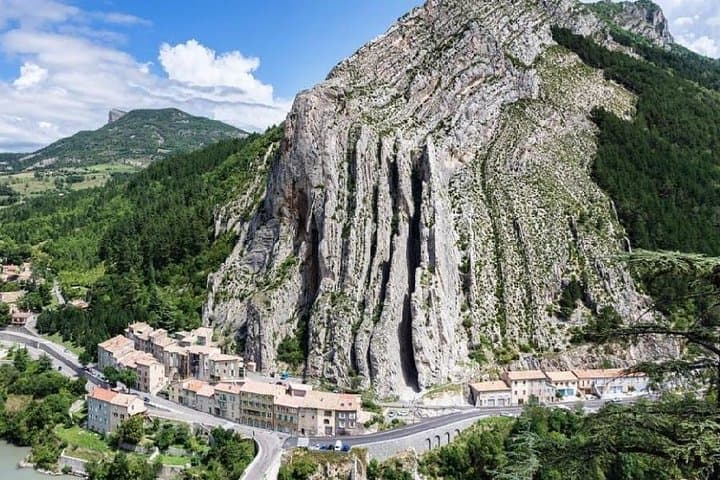
The first stop is Castellane, a small town where a 16th-century bell tower watches over a cobbled square. Here the story of the region is written in stone — Route Napoléon tracing military roads, ramparts speaking of medieval insecurity, and a culture shaped by pastoralism and pottery. The geology is blunt and simple: Jurassic limestone uplifted, fractured, and eaten by water until sheer walls and narrow gorges remain. The river that carved it, the Verdon, is pale blue from dissolved limestone, daring you to come closer.
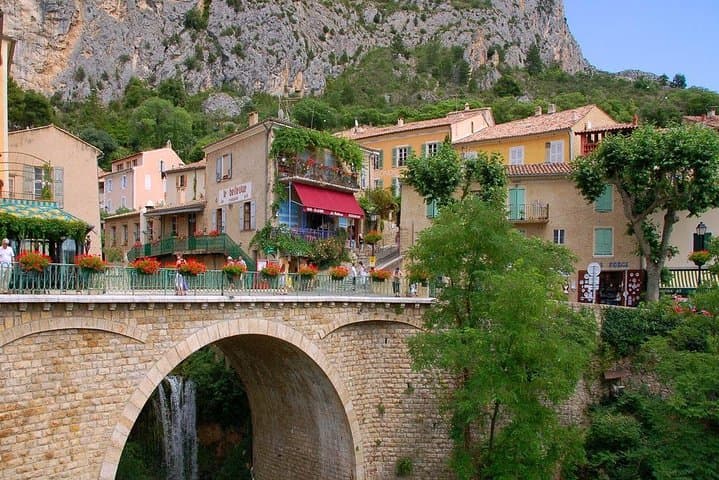
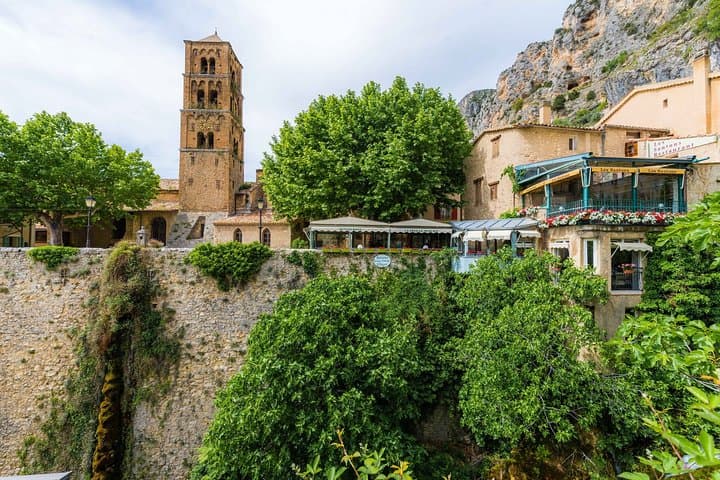
Later the bus curves down to the expansive Lac de Sainte-Croix, where the canyon relaxes into a broad turquoise lake ringed by lavender-colored hills in summer. Moustiers-Sainte-Marie sits above the water like an amphitheater of ochre houses and workshop smoke stacks; it’s a capital of faience pottery—fine-glazed earthenware produced here since the 17th century. Spend an hour here and you’ll see kilns, hand-painted plates, and alleyways that slope toward viewpoints of the gorge.
This shared tour compresses a lot into one day: panoramic pullouts, two village stops for exploration and lunch, and a lakeside break where you can rent a canoe or swim when the weather allows. Guides and drivers manage logistics; you bring curiosity and a sense of pace.
Practical edge: expect a 9-hour day with about 2–3 miles of easy walking spread across short village circuits and viewpoints, most on paved streets or well-graded trails. Weather in Provence is mercurial—hot sun in July and sudden mistral winds at times—so layer and carry sun protection. Photography is rich from rim viewpoints and the Moustiers terraces, but if you want in-water shots plan for midafternoon when the lake warms.
For a first-timer based in Nice, this is the cleanest way to see the Grand Canyon of France in a day: efficient, revealing, and rooted in local crafts, lavender routes, and the limestone spine that defines the Verdon.
easy.
9 hours.
Suitable for travellers with basic mobility; short walks on uneven surfaces and short stair sections in villages.
The tour runs approximately 9 hours, including transport from Nice and time at Castellane, Moustiers-Sainte-Marie, and Lac de Sainte-Croix.
Yes—during warmer months you can swim and there are canoe and pedal-boat rentals at the lake (seasonal, at your expense).
This shared tour includes only short village walks and viewpoint stops—no technical canyon hikes; it’s suitable for most fitness levels.
Lavender typically blooms from late June to mid-July, but timing depends on annual weather patterns.
Travel insurance is recommended for trip cancellations and medical coverage but is not mandated by the tour operator.
The tour departs and returns to Nice; hotel pickup within Nice is usually provided (confirm pickup point at booking).
The Verdon region was shaped by centuries of pastoral life and trade routes like Route Napoléon; Moustiers’ faience industry dates from the 17th century.
The Gorges du Verdon is a protected area with guidelines to limit erosion and litter; visitors are encouraged to stay on paths and avoid disturbing nesting birds.
BINGO TOUR operates guided outdoor trips and adventures with an emphasis on safety, stewardship, and memorable experiences.
You step onto the coach in Nice with the Mediterranean already at your back and a ribbon of highway unfurling inland. The bus climbs out of the coastal light into limestone country where cliffs begin to sharpen and the air takes on a dry, resinous scent. By midmorning the Verdon reveals itself: a deep cut in Provençal rock, a river that kept pushing until it carved one of Europe’s most dramatic canyons.
You step onto the coach in Nice with the Mediterranean already at your back and a ribbon of highway unfurling inland. The bus climbs out of the coastal light into limestone country where cliffs begin to sharpen and the air takes on a dry, resinous scent. By midmorning the Verdon reveals itself: a deep cut in Provençal rock, a river that kept pushing until it carved one of Europe’s most dramatic canyons.
The first stop is Castellane, a small town where a 16th-century bell tower watches over a cobbled square. Here the story of the region is written in stone — Route Napoléon tracing military roads, ramparts speaking of medieval insecurity, and a culture shaped by pastoralism and pottery. The geology is blunt and simple: Jurassic limestone uplifted, fractured, and eaten by water until sheer walls and narrow gorges remain. The river that carved it, the Verdon, is pale blue from dissolved limestone, daring you to come closer.
Later the bus curves down to the expansive Lac de Sainte-Croix, where the canyon relaxes into a broad turquoise lake ringed by lavender-colored hills in summer. Moustiers-Sainte-Marie sits above the water like an amphitheater of ochre houses and workshop smoke stacks; it’s a capital of faience pottery—fine-glazed earthenware produced here since the 17th century. Spend an hour here and you’ll see kilns, hand-painted plates, and alleyways that slope toward viewpoints of the gorge.
This shared tour compresses a lot into one day: panoramic pullouts, two village stops for exploration and lunch, and a lakeside break where you can rent a canoe or swim when the weather allows. Guides and drivers manage logistics; you bring curiosity and a sense of pace.
Practical edge: expect a 9-hour day with about 2–3 miles of easy walking spread across short village circuits and viewpoints, most on paved streets or well-graded trails. Weather in Provence is mercurial—hot sun in July and sudden mistral winds at times—so layer and carry sun protection. Photography is rich from rim viewpoints and the Moustiers terraces, but if you want in-water shots plan for midafternoon when the lake warms.
For a first-timer based in Nice, this is the cleanest way to see the Grand Canyon of France in a day: efficient, revealing, and rooted in local crafts, lavender routes, and the limestone spine that defines the Verdon.