THE ADVENTURE COLLECTIVE® · Independent discovery and booking for outdoor travel

Make a full day of Sri Lanka’s Cultural Triangle with a private circuit from Kandy: explore the painted caves of Dambulla, climb Sigiriya’s ancient palace rock, and finish with a safari at Minneriya where wild elephants gather. Practical tips and timing make this one-day route work.
Make a full day of Sri Lanka’s Cultural Triangle with a private circuit from Kandy: explore the painted caves of Dambulla, climb Sigiriya’s ancient palace rock, and finish with a safari at Minneriya where wild elephants gather. Practical tips and timing make this one-day route work.
You step into the day while Kandy's morning traffic thins and the landscape opens—paddy fields flatten, limestone outcrops grow bolder, and the road points toward a 5th-century idea of power: Sigiriya.
Verified experiences and guided adventures in the surrounding area.
Operated by Travel with Hasith · Sigiriya, Central Province
You step into the day while Kandy's morning traffic thins and the landscape opens—paddy fields flatten, limestone outcrops grow bolder, and the road points toward a 5th-century idea of power: Sigiriya.
The tour moves like a short novel. First, Dambulla's cave temple grips you with cool, dim chambers where painted ceilings and rows of seated Buddhas keep a hush. The caves are carved into a 160-meter rock face and have been a place of worship for more than two millennia; the art inside tracks Sri Lanka’s Buddhist history through shifting styles and restored pigments.
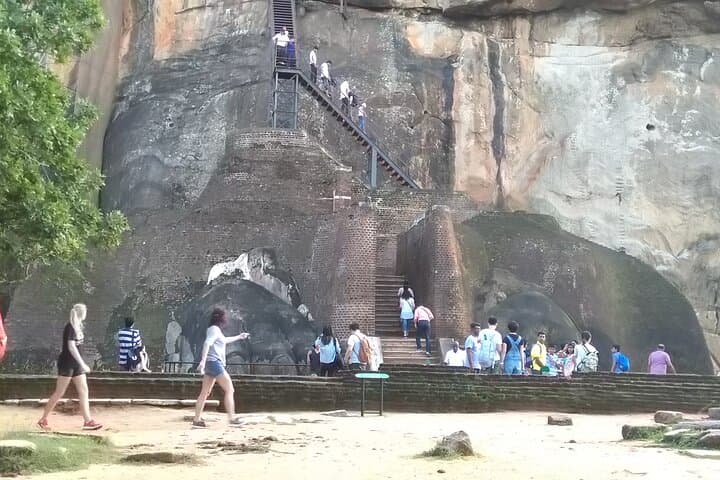
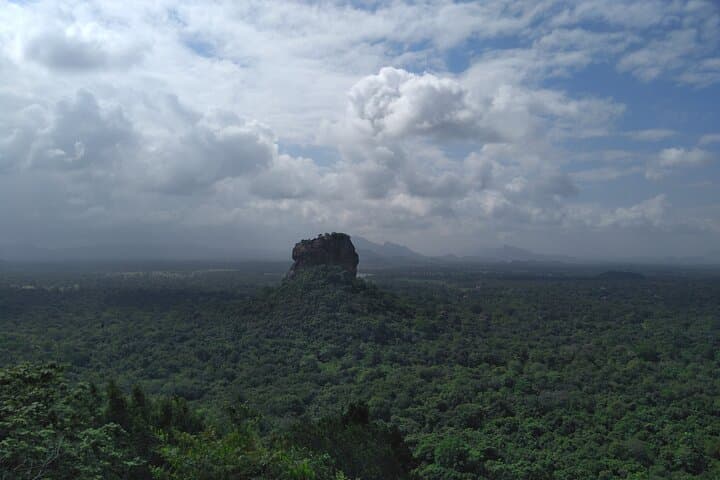
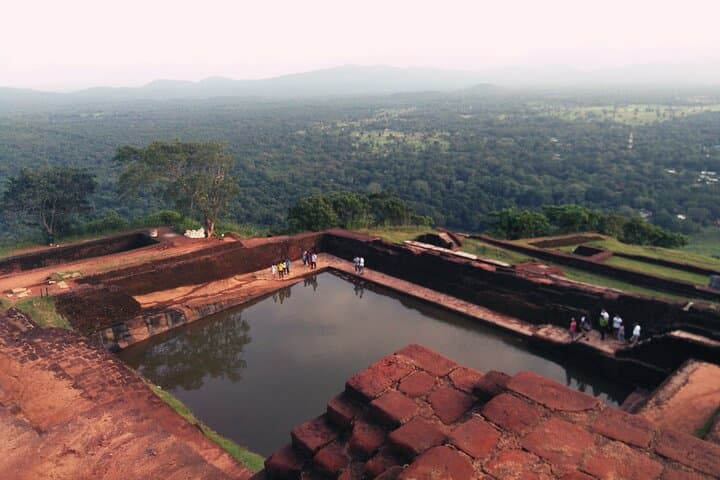
From there the road climbs toward Sigiriya, the so-called Lion Rock that rises roughly 200 meters above the plains. King Kashyapa’s palace ruins sit on the summit, linked by an engineered stair sequence and the carved remains of a gigantic lion gateway. Climbing the steep metal and stone steps rewards you with frescoes halfway up—the famous celestial maidens—and a Mirror Wall where ancient scribes left early graffiti, a human echo of the site's long visitation.
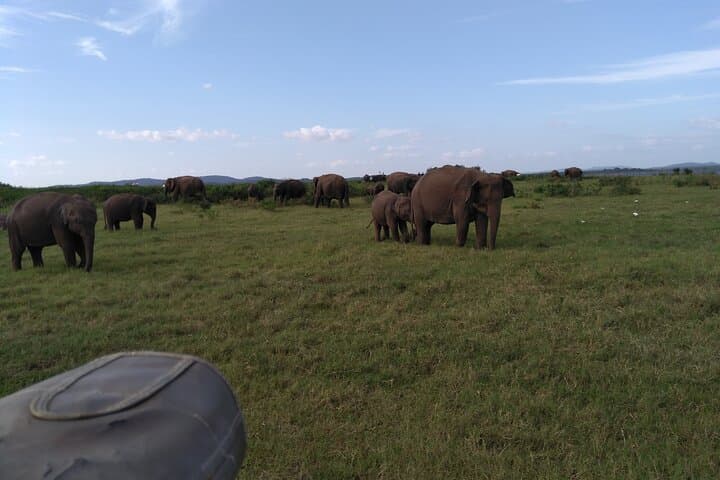
After the archaeological high, the day takes another turn: Minneriya National Park. The dry-season reservoir pulls elephants like a magnet; families converge on exposed grass and muddy edges to feed, rest and interact. The landscape here is pragmatic—open scrub, scattered tanks (reservoirs) and termite mounds—and it makes wildlife sightings feel immediate rather than staged.
History and geology share the stage: volcanic and sedimentary layers form the rocky prominences, while irrigation systems from ancient Sri Lankan kingdoms shaped the flatlands into productive rice fields and reservoirs that now attract wildlife.
Practical edge: this is a long day—expect 6–9 hours out of Kandy, with private transport and hotel pickup included. Bring sturdy shoes for the rock steps and a small daypack for water, sunscreen, and insect repellent. Timing matters—late afternoon safaris during the dry months increase the chance of seeing the Minneriya 'Gathering'. And respect the sites: Dambulla and Sigiriya are active cultural landmarks—dress modestly and move quietly in sacred zones.
Done well, the circuit gives you a compact cross-section of Sri Lanka: cliff-top courtcraft, centuries of devotional practice, and a near-primeval wildlife moment at a tank where elephants read the slow weather like a calendar. You arrive back to Kandy with dust on your shoes and a clearer sense of how human ambition and nature have shaped this central plain.
moderate.
6–9 hours.
Requires reasonable mobility and stamina for short steep climbs and several hours in a vehicle; not suitable for those with serious spinal/heart issues.
Pickup is available from Kandy city or any hotel in Kandy; confirm your pickup point when booking.
Entrance fees for Dambulla, Sigiriya and Minneriya are not included—payable on site; guide can advise current prices.
The climb is steep with stone steps and metal sections; allow 45–90 minutes depending on pace and fitness.
Dry season months (June–September) and late afternoon drives tend to yield the highest chance of large gatherings.
Yes for school-aged children who can manage the climb; supervise near edges and keep children close during safari sightings.
Light snacks are fine; there are basic food options near major sites but pack snacks if you prefer specific dietary items.
Sigiriya was transformed into a fortified royal palace by King Kashyapa in the 5th century AD; the complex includes engineered gardens and frescoes.
Minneriya supports large elephant herds but faces pressures from agriculture and development—observe animals from vehicles, avoid feeding, and support certified guides.
Travel with Hasith operates guided outdoor trips and adventures with an emphasis on safety, stewardship, and memorable experiences.
You step into the day while Kandy's morning traffic thins and the landscape opens—paddy fields flatten, limestone outcrops grow bolder, and the road points toward a 5th-century idea of power: Sigiriya.
You step into the day while Kandy's morning traffic thins and the landscape opens—paddy fields flatten, limestone outcrops grow bolder, and the road points toward a 5th-century idea of power: Sigiriya.
The tour moves like a short novel. First, Dambulla's cave temple grips you with cool, dim chambers where painted ceilings and rows of seated Buddhas keep a hush. The caves are carved into a 160-meter rock face and have been a place of worship for more than two millennia; the art inside tracks Sri Lanka’s Buddhist history through shifting styles and restored pigments.
From there the road climbs toward Sigiriya, the so-called Lion Rock that rises roughly 200 meters above the plains. King Kashyapa’s palace ruins sit on the summit, linked by an engineered stair sequence and the carved remains of a gigantic lion gateway. Climbing the steep metal and stone steps rewards you with frescoes halfway up—the famous celestial maidens—and a Mirror Wall where ancient scribes left early graffiti, a human echo of the site's long visitation.
After the archaeological high, the day takes another turn: Minneriya National Park. The dry-season reservoir pulls elephants like a magnet; families converge on exposed grass and muddy edges to feed, rest and interact. The landscape here is pragmatic—open scrub, scattered tanks (reservoirs) and termite mounds—and it makes wildlife sightings feel immediate rather than staged.
History and geology share the stage: volcanic and sedimentary layers form the rocky prominences, while irrigation systems from ancient Sri Lankan kingdoms shaped the flatlands into productive rice fields and reservoirs that now attract wildlife.
Practical edge: this is a long day—expect 6–9 hours out of Kandy, with private transport and hotel pickup included. Bring sturdy shoes for the rock steps and a small daypack for water, sunscreen, and insect repellent. Timing matters—late afternoon safaris during the dry months increase the chance of seeing the Minneriya 'Gathering'. And respect the sites: Dambulla and Sigiriya are active cultural landmarks—dress modestly and move quietly in sacred zones.
Done well, the circuit gives you a compact cross-section of Sri Lanka: cliff-top courtcraft, centuries of devotional practice, and a near-primeval wildlife moment at a tank where elephants read the slow weather like a calendar. You arrive back to Kandy with dust on your shoes and a clearer sense of how human ambition and nature have shaped this central plain.