THE ADVENTURE COLLECTIVE® · Independent discovery and booking for outdoor travel

Swap Dresden’s baroque streets for a day of sandstone towers, cliff bridges and a natural rock gate that commands the skyline. This easy guided tour hits Bastei, Pravcicka Gate and the Tisa Rocks with hotel pickup, lunch and expert interpretation.
Swap Dresden’s baroque streets for a day of sandstone towers, cliff bridges and a natural rock gate that commands the skyline. This easy guided tour hits Bastei, Pravcicka Gate and the Tisa Rocks with hotel pickup, lunch and expert interpretation.
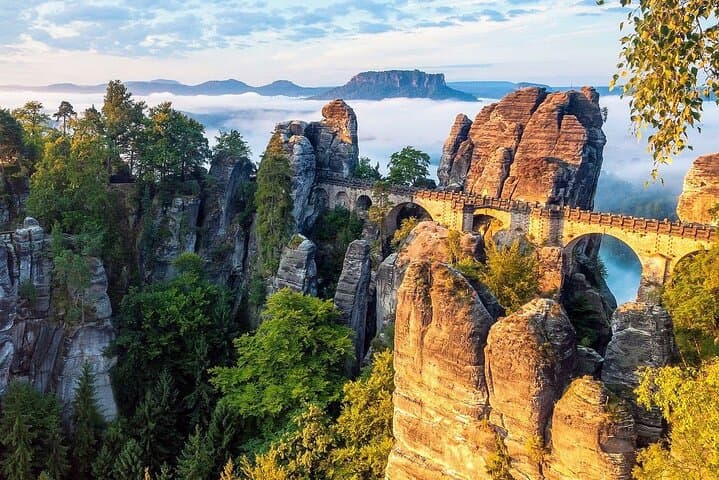
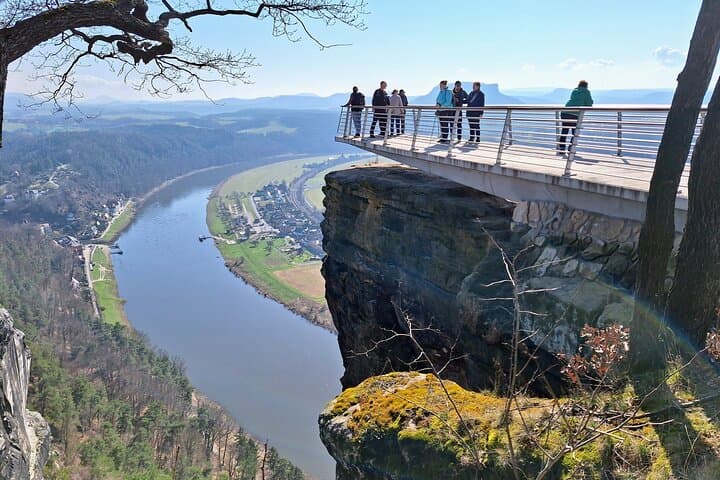
The minivan pulls away from Dresden while morning light slices through the Elbe valley. Within an hour the city’s brick facades give way to a different geometry: tabular limestone peaks, stacked sandstone towers and cliff faces weathered into bridges and windows. At the Bastei, the trail narrows and the air seems to hold its breath; wind threads through the gaps in the rock and the Elbe Canyon stretches below like a living map.
Verified experiences and guided adventures in the surrounding area.
Operated by Saxon Tours · Dresden, Saxony
The minivan pulls away from Dresden while morning light slices through the Elbe valley. Within an hour the city’s brick facades give way to a different geometry: tabular limestone peaks, stacked sandstone towers and cliff faces weathered into bridges and windows. At the Bastei, the trail narrows and the air seems to hold its breath; wind threads through the gaps in the rock and the Elbe Canyon stretches below like a living map.
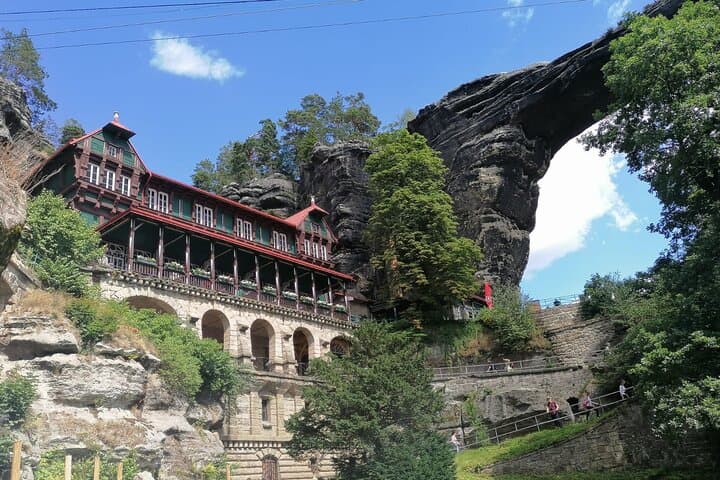
This one-day route stitches together two national parks divided by a border and united by sandstone. Saxon Switzerland on the German side is a landscape carved in layers of siltstone and sandstone laid down in the Cretaceous, later lifted, fractured and sculpted by millennia of rain and frost. Across the border, Bohemian Switzerland's most famous arch, Pravcicka Gate, stands as the largest natural sandstone arch in Europe — an architectural flourish written in stone.
History here reads like a slow-motion drama. Neurathen Fortress clings to ledges, its carved stairways and millstone pits reminders of medieval life on the cliffs, while the 19th-century wooden Bastei bridge was engineered to let visitors move between viewpoints and sample the panorama. The region’s culture has long balanced tourism and local livelihoods: Czech and Saxon villages trade in beer, bread and route knowledge, and lunchtime in a family-run restaurace is as much about the food as it is about recharging for the labyrinth ahead.
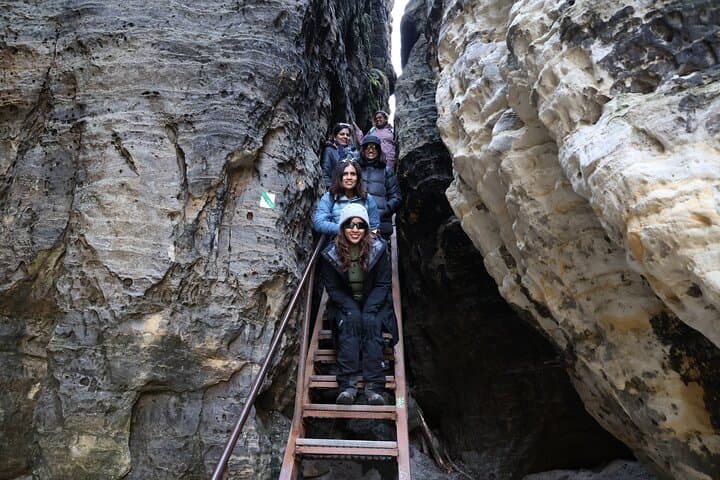
The Tisa Rocks, with their towers, alleys and narrow chimneys, feel cinematic — portions of Chronicles of Narnia were filmed amid these passages — and here the rock seems to have personality, daring you to find its secret clefts and quiet courtyards.
Practicalities make the day easy. The itinerary covers roughly 9 km (about 6 miles) of walking on maintained trails with uneven surfaces and stone steps; expect cumulative elevation changes around 200–300 m depending on your route choices. The tour includes hotel pickup in Dresden, an English-speaking guide, local a la carte lunch, bottled water and basic rain gear if the forecast turns.
Pack comfortable, grippy shoes, a light waterproof and a small daypack with snacks and an extra layer. Start early if you want softer light for photos at Bastei and less crowded trails at Pravcicka Gate. If you cross into the Czech park be mindful of conservation rules: stick to marked paths, avoid picking plants and carry out any trash. By dusk you’re back in Dresden with stone dust still on your boots and a day’s worth of cliffside views to sort through — the kind of trip that proves the wilderness around the Elbe can reset a city weekend into something a little wilder.
easy.
9 hours.
Suitable for travelers who can walk 6 miles on uneven terrain; short climbs and steps required
The tour includes about 9 km (6 miles) of walking across varied terrain, divided into multiple short hikes and viewpoints.
Yes—hotel pickup and drop-off are included; exact pickup time is emailed the day before.
Yes—the route is classified as easy and family-friendly, but children should be comfortable with uneven paths and stairs.
Pravcicka Gate admission is included when applicable (seasonal restrictions apply); your guide will handle tickets for included stops.
Wear sturdy shoes with grip, layered clothing for changing conditions and a waterproof shell; sunscreen and a hat are useful on exposed sections.
The operator may alter the program in case of extreme weather; standard cancellation policy allows a full refund if cancelled at least 24 hours beforehand.
Neurathen Fortress and the Bastei bridge date to different eras: medieval cliff dwellings and 19th-century tourism infrastructure combined to shape visitor routes through the sandstone.
Both parks enforce stick-to-trail rules to protect fragile sandstone and rare plant communities; visitors are asked to pack out trash and respect local signage.
Saxon Tours operates guided outdoor trips and adventures with an emphasis on safety, stewardship, and memorable experiences.
The minivan pulls away from Dresden while morning light slices through the Elbe valley. Within an hour the city’s brick facades give way to a different geometry: tabular limestone peaks, stacked sandstone towers and cliff faces weathered into bridges and windows. At the Bastei, the trail narrows and the air seems to hold its breath; wind threads through the gaps in the rock and the Elbe Canyon stretches below like a living map.
The minivan pulls away from Dresden while morning light slices through the Elbe valley. Within an hour the city’s brick facades give way to a different geometry: tabular limestone peaks, stacked sandstone towers and cliff faces weathered into bridges and windows. At the Bastei, the trail narrows and the air seems to hold its breath; wind threads through the gaps in the rock and the Elbe Canyon stretches below like a living map.
This one-day route stitches together two national parks divided by a border and united by sandstone. Saxon Switzerland on the German side is a landscape carved in layers of siltstone and sandstone laid down in the Cretaceous, later lifted, fractured and sculpted by millennia of rain and frost. Across the border, Bohemian Switzerland's most famous arch, Pravcicka Gate, stands as the largest natural sandstone arch in Europe — an architectural flourish written in stone.
History here reads like a slow-motion drama. Neurathen Fortress clings to ledges, its carved stairways and millstone pits reminders of medieval life on the cliffs, while the 19th-century wooden Bastei bridge was engineered to let visitors move between viewpoints and sample the panorama. The region’s culture has long balanced tourism and local livelihoods: Czech and Saxon villages trade in beer, bread and route knowledge, and lunchtime in a family-run restaurace is as much about the food as it is about recharging for the labyrinth ahead.
The Tisa Rocks, with their towers, alleys and narrow chimneys, feel cinematic — portions of Chronicles of Narnia were filmed amid these passages — and here the rock seems to have personality, daring you to find its secret clefts and quiet courtyards.
Practicalities make the day easy. The itinerary covers roughly 9 km (about 6 miles) of walking on maintained trails with uneven surfaces and stone steps; expect cumulative elevation changes around 200–300 m depending on your route choices. The tour includes hotel pickup in Dresden, an English-speaking guide, local a la carte lunch, bottled water and basic rain gear if the forecast turns.
Pack comfortable, grippy shoes, a light waterproof and a small daypack with snacks and an extra layer. Start early if you want softer light for photos at Bastei and less crowded trails at Pravcicka Gate. If you cross into the Czech park be mindful of conservation rules: stick to marked paths, avoid picking plants and carry out any trash. By dusk you’re back in Dresden with stone dust still on your boots and a day’s worth of cliffside views to sort through — the kind of trip that proves the wilderness around the Elbe can reset a city weekend into something a little wilder.