THE ADVENTURE COLLECTIVE® · Independent discovery and booking for outdoor travel

A full-day ascent along Kilimanjaro’s Marangu Route that climbs through mossy montane forest to Mandara Huts—perfect for birdwatchers and travelers seeking a taste of the mountain without an overnight. Expect streams, waterfalls and 4 hours up, 3 hours back down.
A full-day ascent along Kilimanjaro’s Marangu Route that climbs through mossy montane forest to Mandara Huts—perfect for birdwatchers and travelers seeking a taste of the mountain without an overnight. Expect streams, waterfalls and 4 hours up, 3 hours back down.
You set out before dawn from Arusha, the van cutting across coffee plantations as Kilimanjaro’s broad profile grows taller in the windshield. At Marangu Gate the air changes—cooler, thick with the smell of damp earth—and the trail pulls you into a green world where clouds brush the leaves and small streams seem to dare you to slow down. The path climbs steadily through montane forest: giant lobelias punctuate stands of moss-draped trees, and bird calls ricochet off trunks as if the mountain is keeping score.
Verified experiences and guided adventures in the surrounding area.
Operated by Adventure Bats · Marangu, Kilimanjaro Region
You set out before dawn from Arusha, the van cutting across coffee plantations as Kilimanjaro’s broad profile grows taller in the windshield. At Marangu Gate the air changes—cooler, thick with the smell of damp earth—and the trail pulls you into a green world where clouds brush the leaves and small streams seem to dare you to slow down. The path climbs steadily through montane forest: giant lobelias punctuate stands of moss-draped trees, and bird calls ricochet off trunks as if the mountain is keeping score.
The Marangu Route is often called the ‘tourist’ route because it’s the most established, with a long history. Early 20th-century explorers used these tracks and the Chagga people cultivated the lower slopes for generations; terraces of banana and coffee still color the foothills. Geologically, Kilimanjaro is a dormant stratovolcano—layers of lava and ash built the massif, and the east-facing Marangu path slides up ancient volcanic flanks rather than a single etched summit ridge.
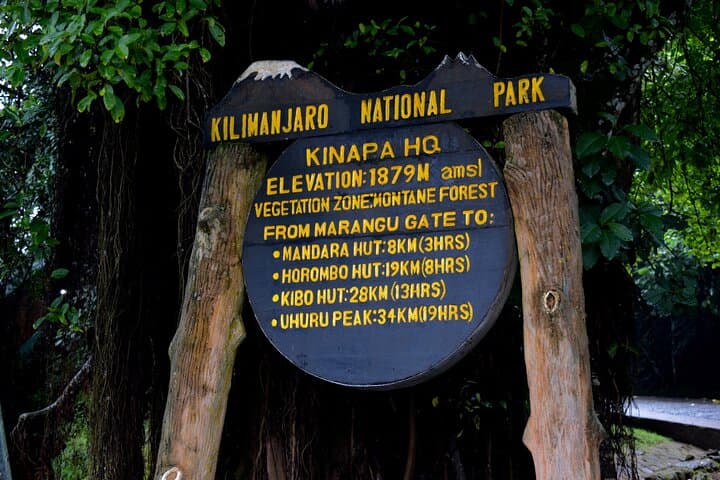
On this day hike you aim for Mandara Huts, sitting at roughly 2,700 meters, a classic stop on multi-day ascents. The forest here feels alive—branches sweep like hands, streams chat over rock, and small waterfalls punctuate the route. Guides point out endemic plants and birds; watch for colobus monkeys moving like ink on the canopy. Lunch at the hut is simple and warming (vegetarian options available), and when the clouds open you can catch the first real glimpses of higher slopes capped in scrub and heath.
Practical side: the outing is a long day—expect about 4 hours up and 3 hours down on trail surfaces that range from packed dirt to rooty, wet sections near streams. Trails are well-marked but can be slippery after rain. Altitude tops out around the hut—enough to feel short of breath if you move fast, but not so high that serious acclimatization is normally required for a day trip. The operator provides a licensed guide; transport time to and from Arusha or Moshi is included in the schedule.
Timing and preparation matter. Start early to avoid afternoon clouds, wear sturdy waterproof footwear, and layer for shifting temperatures. Bring at least 2–3 liters of water, rain protection, and snacks beyond the provided lunch if you want extra energy. Respect park rules—stay on trail and pack out waste. For a single day on Kilimanjaro’s classic eastern flank, the Mandara Hut hike offers a concentrated slice of the mountain: forested steps, honest climbs, and the kind of views that remind you why people cross continents for a morning on a volcanic giant.
moderate.
10–12 hours (door-to-door).
Moderate fitness—comfortable walking uphill for several hours, with occasional steep, rooty sections
The trail portion is about 4 hours up and 3 hours down for most groups; transport to and from Arusha or Moshi makes the full-day experience roughly 10–12 hours.
Yes for reasonably fit beginners who can handle several hours of uphill hiking; the guide will set the pace and rest stops.
Lunch at Mandara Huts is included and vegetarian options are available; bring extra snacks if you have higher energy needs.
Mandara Huts sit around 2,700 m—mild symptoms (shortness of breath, headache) are possible; ascend slowly and communicate with your guide if you feel unwell.
Basic forest latrines are available near camps and the hut area, but facilities are minimal—carry hand sanitizer and respect Leave No Trace practices.
Entrance fees and park charges are handled by the operator and included in the trip’s fees; confirm details at booking.
Marangu is one of Kilimanjaro’s oldest routes and runs through land historically farmed by the Chagga people; Mandara Hut is a traditional stop for multi-day ascents.
Kilimanjaro National Park is protected—stick to marked trails, avoid feeding wildlife, and carry out all trash to limit human impact.
Adventure Bats operates guided outdoor trips and adventures with an emphasis on safety, stewardship, and memorable experiences.
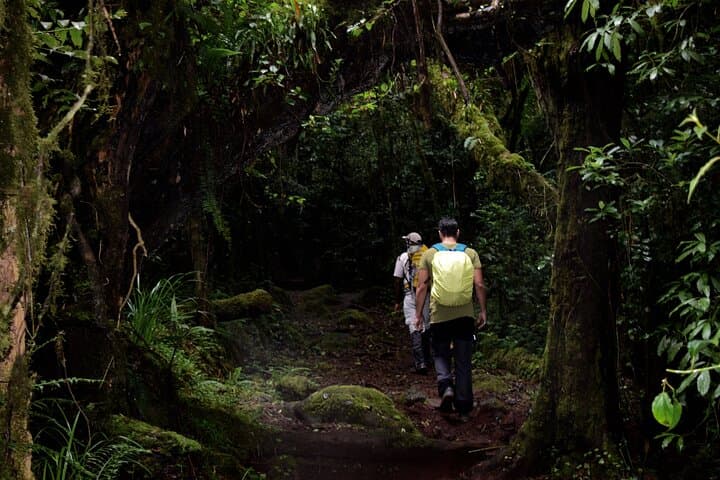
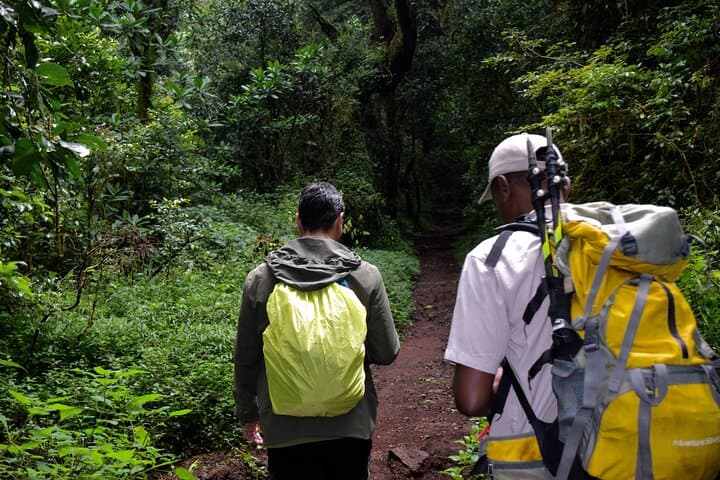
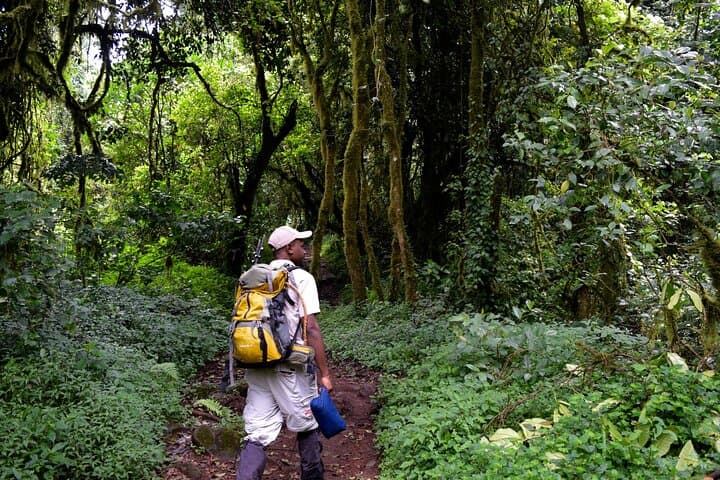
You set out before dawn from Arusha, the van cutting across coffee plantations as Kilimanjaro’s broad profile grows taller in the windshield. At Marangu Gate the air changes—cooler, thick with the smell of damp earth—and the trail pulls you into a green world where clouds brush the leaves and small streams seem to dare you to slow down. The path climbs steadily through montane forest: giant lobelias punctuate stands of moss-draped trees, and bird calls ricochet off trunks as if the mountain is keeping score.
You set out before dawn from Arusha, the van cutting across coffee plantations as Kilimanjaro’s broad profile grows taller in the windshield. At Marangu Gate the air changes—cooler, thick with the smell of damp earth—and the trail pulls you into a green world where clouds brush the leaves and small streams seem to dare you to slow down. The path climbs steadily through montane forest: giant lobelias punctuate stands of moss-draped trees, and bird calls ricochet off trunks as if the mountain is keeping score.
The Marangu Route is often called the ‘tourist’ route because it’s the most established, with a long history. Early 20th-century explorers used these tracks and the Chagga people cultivated the lower slopes for generations; terraces of banana and coffee still color the foothills. Geologically, Kilimanjaro is a dormant stratovolcano—layers of lava and ash built the massif, and the east-facing Marangu path slides up ancient volcanic flanks rather than a single etched summit ridge.
On this day hike you aim for Mandara Huts, sitting at roughly 2,700 meters, a classic stop on multi-day ascents. The forest here feels alive—branches sweep like hands, streams chat over rock, and small waterfalls punctuate the route. Guides point out endemic plants and birds; watch for colobus monkeys moving like ink on the canopy. Lunch at the hut is simple and warming (vegetarian options available), and when the clouds open you can catch the first real glimpses of higher slopes capped in scrub and heath.
Practical side: the outing is a long day—expect about 4 hours up and 3 hours down on trail surfaces that range from packed dirt to rooty, wet sections near streams. Trails are well-marked but can be slippery after rain. Altitude tops out around the hut—enough to feel short of breath if you move fast, but not so high that serious acclimatization is normally required for a day trip. The operator provides a licensed guide; transport time to and from Arusha or Moshi is included in the schedule.
Timing and preparation matter. Start early to avoid afternoon clouds, wear sturdy waterproof footwear, and layer for shifting temperatures. Bring at least 2–3 liters of water, rain protection, and snacks beyond the provided lunch if you want extra energy. Respect park rules—stay on trail and pack out waste. For a single day on Kilimanjaro’s classic eastern flank, the Mandara Hut hike offers a concentrated slice of the mountain: forested steps, honest climbs, and the kind of views that remind you why people cross continents for a morning on a volcanic giant.